The Great Stairwell Arms Race: When Package Theft Became a Community-Building Exercise
In Wedding, your front door is just a suggestion—and your neighbors’ security upgrades are now an unsolicited public art festival with bolt cutters.
Hallway Surveillance & Petty Paranoia Correspondent
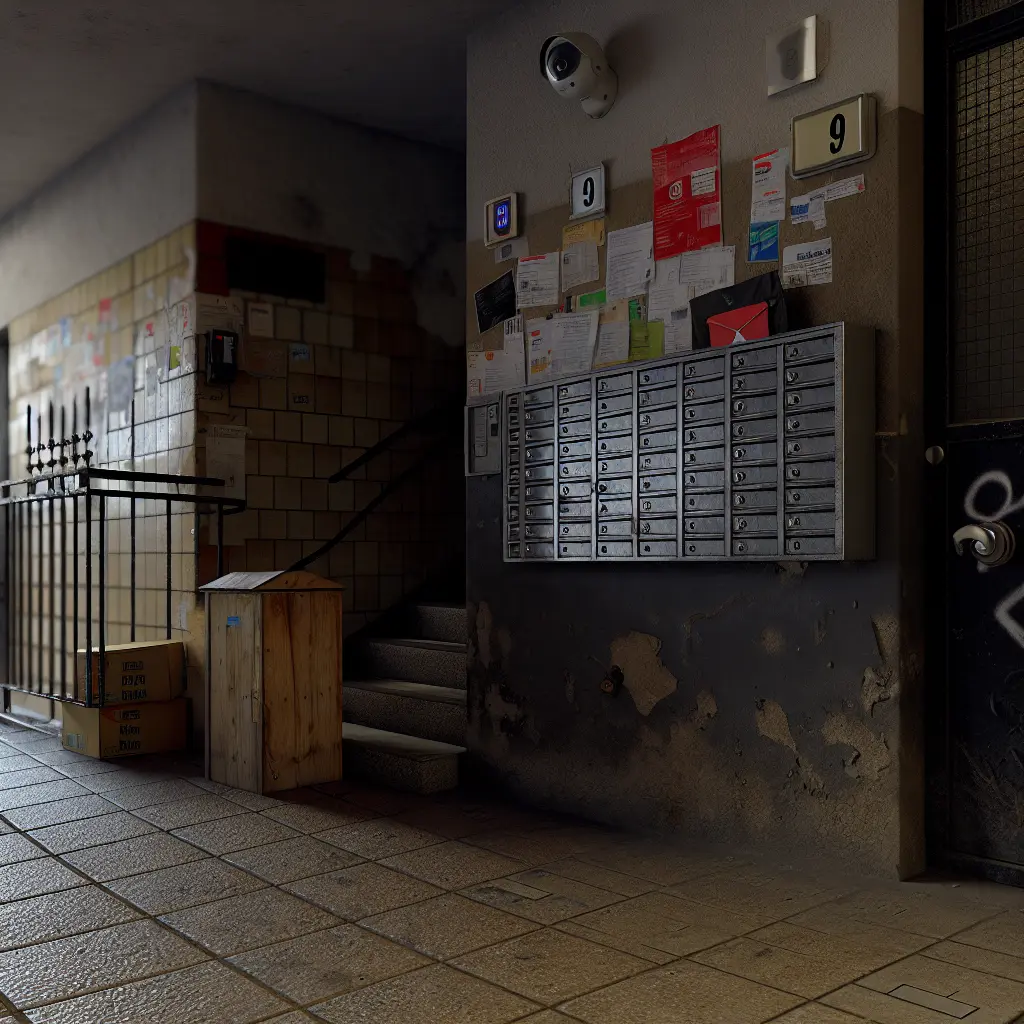
Dispatch from the hallway, where dignity goes to die
In Wedding, the apartment stairwell has evolved into a modern agora: a space for civic life, minor commerce, and the ritual sacrifice of your online orders. If ancient Athens had had parcel lockers, Socrates would’ve been forced to drink the hemlock and sign for his neighbor’s air fryer.
The problem is simple: packages keep disappearing. The response is not.
What started as one handwritten note—“PLEASE DO NOT STEAL PARCELS :)”—has metastasized into a full-blown stairwell arms race, with residents installing security measures that range from “reasonable adult” to “guy who read one forum thread and became a militia.”
Phase 1: The Notes (Derrida would be furious)
The earliest artifacts were notes taped to the entryway glass like post-its at a therapy retreat.
- “Dear neighbors, let’s respect each other.”
- “We are being watched.”
- “To the person who took my cat food: I hope you enjoy starving my ideology.”
It’s pure Derrida: the meaning is unstable, the authors are unknown, and the threat level is always implied but never fully… articulated. The notes don’t stop theft; they just provide a literacy program for criminals.
Phase 2: The Cameras (Foucault, but make it cheap)
Then came the cameras. Not good cameras—Berlin doesn’t do “good,” it does “concept.”
One building installed a doorbell cam that records in what can only be described as post-truth pixelation. It captures the thief as a philosophical silhouette: a blur, a vibe, a rumor. Baudrillard would call it a simulacrum; I call it “evidence that would get laughed out of a courtroom and possibly an art school.”
And yet, residents now speak in the language of surveillance like they invented it:
- “It’s a deterrent.”
- “We need accountability.”
- “The lens is very penetrating.”
Sure. Nothing says “community” like turning your hallway into Foucault’s panopticon—except here the guard is a depleted Ring battery and the punishment is a WhatsApp message with six question marks.
Phase 3: The Hardware (Walter Benjamin, meet medieval Europe)
After cameras failed to deliver results—because criminals, it turns out, do not fear a smudged fisheye lens—people moved on to physical infrastructure.
We now have:
- steel grates with the aesthetic of a disgruntled prison architect
- padlocks the size of a small regret
- DIY parcel cages made from plywood and delusion
One resident proudly showed me a “secure delivery box” that looked like it had been designed by Adorno after a breakup: joyless, brutal, and absolutely convinced it was morally superior.
The box was also, crucially, easy to open. The thief did not even need tools. The box met stiff resistance for about eight seconds, then surrendered like a start-up pivoting.
Phase 4: The Social Contract (Kafka’s lobby, starring you)
The final stage is where Wedding really shines: the building meeting.
Picture Kafka’s The Trial, but instead of a court, it’s your neighbors arguing about whether the new lock should be keyed, coded, or “biometric but respectful.” Someone inevitably suggests a rotating “parcel duty” schedule, as if the missing packages are a charming communal chore like watering plants.
A man who hasn’t made eye contact since 2016 stands up and announces he has “a system.” The system is a spreadsheet. The spreadsheet has categories. The categories have moral judgments.
At this point, Debord’s Situationist psychogeography becomes literal: the stairwell is no longer a passageway. It’s a battlefield of vibes, a map of paranoia, a drift through petty suffering.
Who’s stealing the packages?
Nobody knows. Everyone is sure.
In Wedding, suspicion is a local currency.
The students blame “organized opportunists.” The older tenants blame “new people.” The new people blame “the old building.” Someone blames capitalism, which is correct but unhelpful when your toothpaste is gone.
The one thing everyone agrees on: the delivery guy is innocent, mostly because he never enters the building in the first place.
A modest proposal for peace (hard to swallow, but here we are)
Here’s my solution: stop ordering things to your door.
Not because it’s virtuous. Not because it’s sustainable. But because your hallway has become a community theater production where the plot is always “betrayal,” and the set design is increasingly expensive.
Either we accept that parcels in Wedding are a temporary spiritual experience—here one moment, gone the next—or we keep upgrading our locks until the building resembles a contemporary installation: “Security (2026), mixed media, anxiety, and a faint smell of damp.”
In the end, the package thief isn’t just stealing your stuff. They’re stealing your belief that modern life should function. And honestly, that’s the most Berlin thing they could take.