The Groove of Exclusion: How a Tiny Notch on Wedding’s Cashless Wristbands Replaced the Bouncer
City hall and promoters sell RFID bands as hygienic convenience; the real work happens in a 2‑mm thumb‑groove that tells staff whether to comp you, card you, or quietly shepherd you home.
By Lina Paypass
Night Economy & Digital Vice Reporter
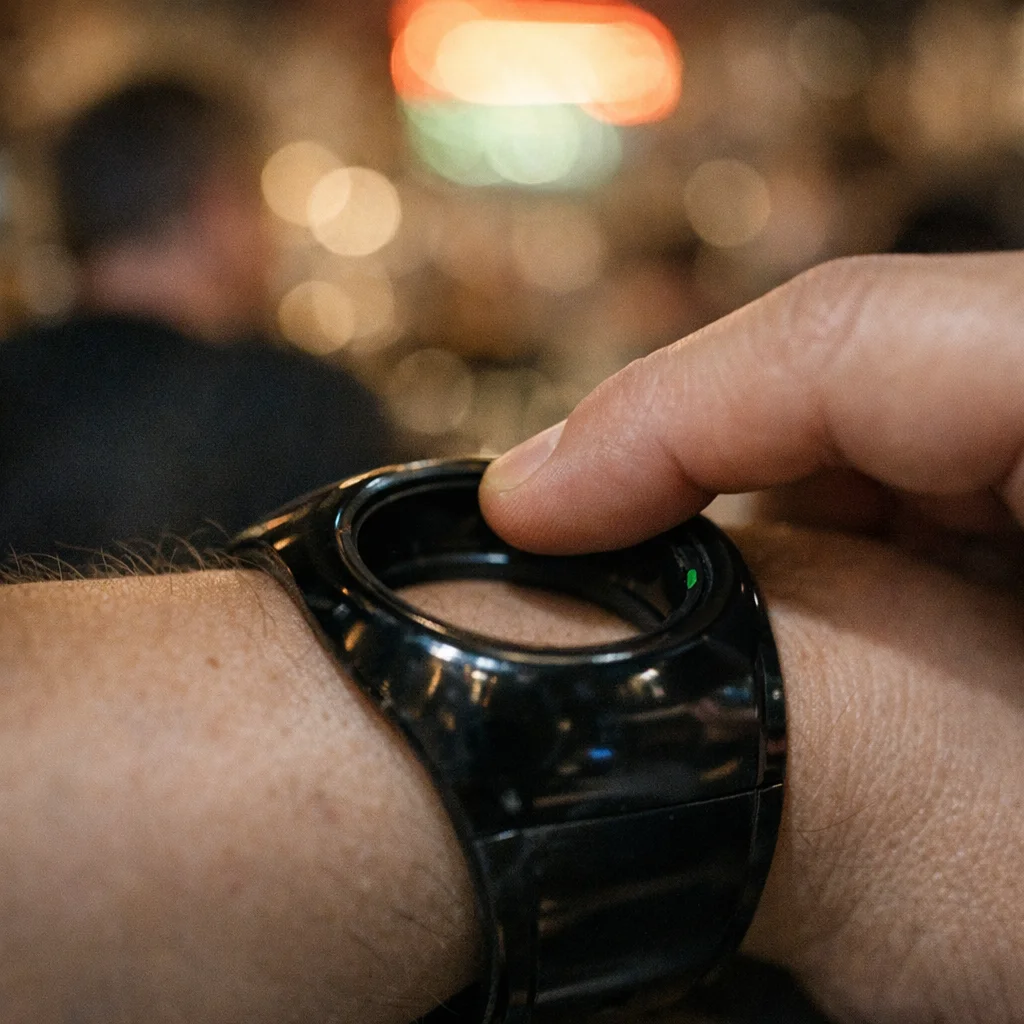
City Hall and promoters sell contactless wristbands in Wedding as a hygienic, queue‑smoothing upgrade. The sales pitch: no cash, no hassle, less finger‑to‑finger contact. What actually replaced the bouncer is a 2‑mm thumb groove on the band’s inner rim — a microscopic tactile alphabet that staff read with a practiced flick of the thumb.
The bands arrived last summer; patrons first noticed the colored inks and neat logos. Within weeks bartenders and coat check clerks developed a vocabulary. A green paint fleck in the groove is a comp token; a stamped dash is a student discount; a tiny black punch indicates "soft eject" — the patron who will be nudged out after two drinks. "It’s faster than arguing about IDs,” said Can Öz, manager at a Seestraße bar. "You press, you feel, you know. It’s like a handshake nobody needs to see."
Promoters quietly admit the groove was never for hygiene. "The RFID is the product, the groove is the filter," one promoter told us on condition of anonymity. The groove performs the labor of a bouncer: it confers status, denies access and defuses fights before they start. Tourists pay for the shines and the logos; locals learn to read the ridges at a glance.
That tactile taxonomy has bled into the city’s darker economy. Görlitzer Park regulars and the itinerant sellers who feed drug tourism have started treating certain band codes as provenance. Word spreads: green‑groove customers come from venues where promoters comp bottles and tip well; black‑groove wearers are likely to be escorted out and pick pockets on the way home. Dealers in and around the park now use the same shorthand to decide who to approach, who to ignore, who to fleece — a cross‑kiez credential written in paint.
Mitte district spokeswoman Anna Richter told The Wedding Times the bands comply with data‑protection rules and that any "allegations of coordinated harassment or informal profiling will be reviewed." The police said they are "monitoring reports" about thefts and intimidation connected to nightlife wristbands.
The tiny ridge turns hygienic rhetoric into a low‑tech panopticon: surveillance by touch, not sight. Guy Debord’s spectacle gets sticky — a private code sewn into what was sold as convenience. For tourists, the band promises entry; for locals it maps social decline in millimeters. Expect a municipal audit, a recall threat, and for the groove languages to mutate: promoters will invent new marks, dealers will learn them, and the crowd will keep finding new ways to get handsy with a policy that was supposed to keep wallets clean.
Next week the district office will hold a hearing; promoters say they may reissue bands with a smoother rim. For anyone who thought hygiene would be the end of social sorting, the lesson is tactile and intimate: the night still has a firm grip on you.