The ice cream wants your nostalgia on a budget
A DDR cult ice bar in Wedding is trying a comeback, but the old regulars have noticed the real missing ingredient is the public pension, the chain-smoking clientele, and the state that used to subsidize bad taste.
Nightlife Incident & Outfit Forensics Reporter
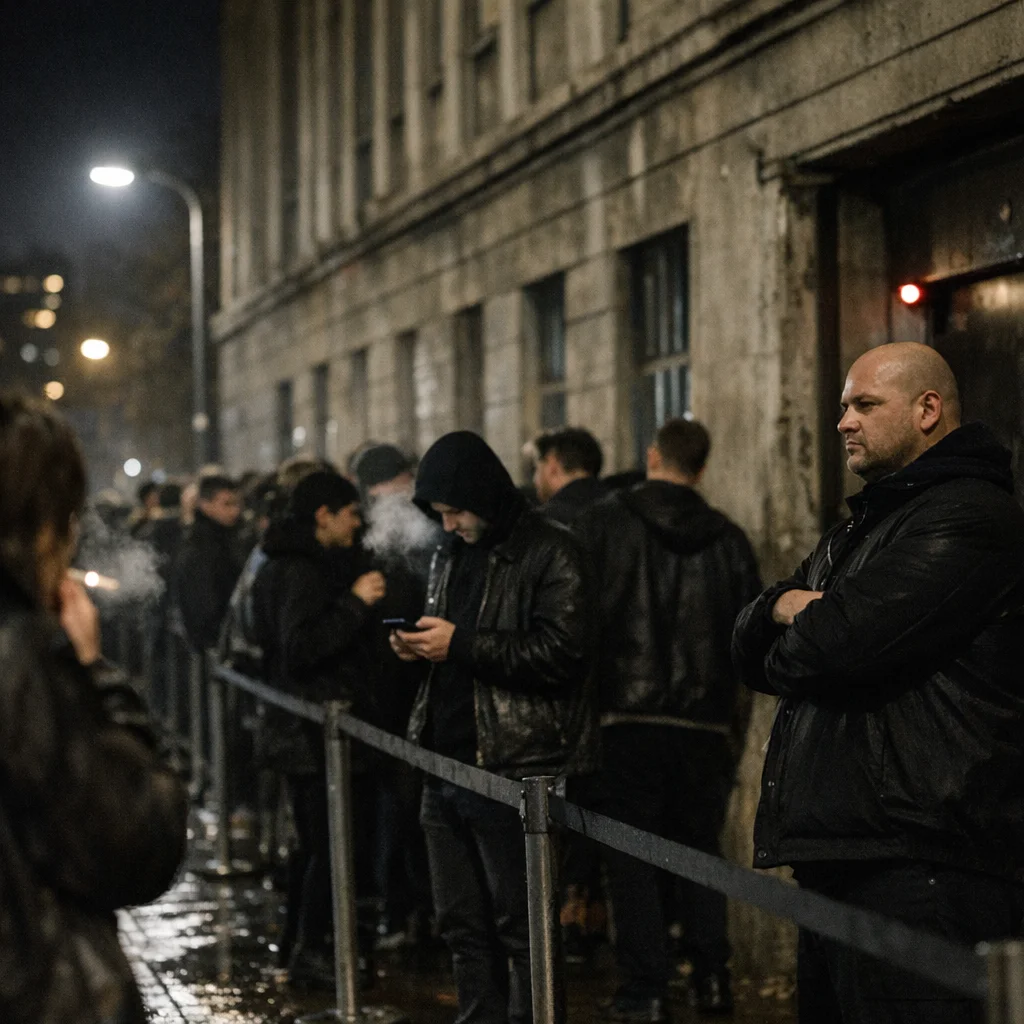
At Berghain, Berlin’s most expensive public lesson in rejection, the queue curls through the night like a moral infection. On a recent evening, it was packed with the usual devotional wreckage: grant-funded radicals with tote bags and dead eyes, crypto exiles pretending to be fugitives from meaning, heritage punks in immaculate ruin, wellness nihilists with jawlines sharpened by supplements, and trust-fund masochists dressed like they had lost a fight with their own mirror. They stood in the cold outside the former power plant in Wedding, sweating politely, rehearsing indifference, each of them trying to look like they had not come to be wanted.
The entrance process is less nightlife than a municipal meat inspection. The bouncers, built like consequences and dressed like they are allergic to conversation, do not simply check the list; they sort the city’s vanity into piles. They reject the overcaffeinated and the overconfident, the people wearing expensive damage, the men who arrive with the slack smile of someone who thinks consent can be negotiated through cultural literacy. They do not merely reject bodies; they puncture essays. They do not admit identities; they admit levels of useful humiliation.
One woman in line, who said her name was Nora and asked not to be quoted with her surname because her ex once got in and now speaks about it like surviving a siege, said the whole scene felt “like a queer theory seminar run by a man with a flashlight and a grudge.” She was not wrong. The queue is a temporary republic of self-mythology: people leaning into each other’s smoke, checking each other’s boots, measuring their worth in how little they seem to need this place while needing it with their whole damp spine.
Inside, the chosen few receive their stamp and begin the familiar choreography of relief: shoulders unclench, jaws loosen, pupils widen, and the body that was so dignified outside suddenly remembers it came here to be handled by bass. Outside, the rejected drift toward kebab counters, late-night Spätis, taxis, and private shame. Some complain the club is elitist. Others, usually in carefully wrecked vintage and a rented aura of political danger, defend the ritual as if exclusion were a human right with better lighting. That is the city’s favorite lie: call the lock discipline, call the humiliation culture, call the whole thing a necessary defense of freedom after paying twenty euros to be told no by a man in black who looks mildly offended by your existence.
The institution survives because it is not merely a club. It is a subsidy scheme for curated transgression. The city markets rebellion, then hands it planning permission, tourism money, and a mythology polished enough to sell back to the same people it filters at the door. Berlin’s cultural economy loves this arrangement: a branded underground where the rent is brutal, the image is priceless, and the political content has been reduced to a tasteful bruise. Officials call it international profile. Artists call it community. Developers call it value. Everyone else calls it a queue.
And what a queue it is. You can read the whole class arrangement in the posture alone: the soft-bodied exchange consultant trying to look dangerous; the German-American creative with a chipped tooth purchased in Neukölln for credibility; the couple from some grant-fed collective holding hands like they are entering a trial; the tourist who wants danger but only if the bathroom is clean; the local who believes recognition is a civic entitlement; the tech bro wearing pain like a limited-edition fragrance. They are all there to be judged by men with radios, because in Berlin status is never enough until it has been denied.
The sexual energy of the line is so pathetic it almost qualifies as choreography. Everyone is half-dressed for the fantasy of not caring, half-ready to beg with their face. Boots get inspected. Lips get bitten. Someone laughs too loudly and immediately regrets it. Someone else leans in with the exact expression of a person who has mistaken horniness for political courage. The cold sharpens the whole performance into something embarrassingly intimate: breath, sweat, nicotine, damp wool, a little mascara, a little resentment, and the exquisite public misery of wanting entry into a room that exists partly to remind you how hungry you are.
This is why the place matters. Not because it is noble, but because it is brutally frank about the city’s preferred form of class theater. Berlin pretends it is too enlightened for exclusivity while sustaining entire industries of exclusion dressed as authenticity. It subsidizes curated refusal, then congratulates itself for preserving scene culture. It calls the bouncer a guardian, the queue a rite, the humiliation a democratic filter. In truth, it is a nightly autopsy of the local imagination: a room full of people desperate to feel chosen by a system that survives by teaching them they are replaceable.
By dawn, the stamp on the wrist looks less like admission than a bruise with ambitions. The next line is already forming in Wedding, shoulders hunched, eyeliner intact, fantasies on a leash. Berlin keeps producing them: the faithful, the fake, the horny, the post-left, the subsidized, the self-exiled. They come to be sorted, stroked, refused, and occasionally let in. It is all very cultural. It is all very German. It is also, in the ugliest and most honest sense, the city telling you exactly what it thinks of your soul.