The Knicks Made Everyone Dance, Against Their Will
A regular night in Wedding’s bars and cafés is being hijacked by the one American export nobody consented to: spontaneous joy with playoff-grade peer pressure.
By Otto Minimal
Startup Strangeness Correspondent
The Knicks, the bubble, and the rent-shy congregation
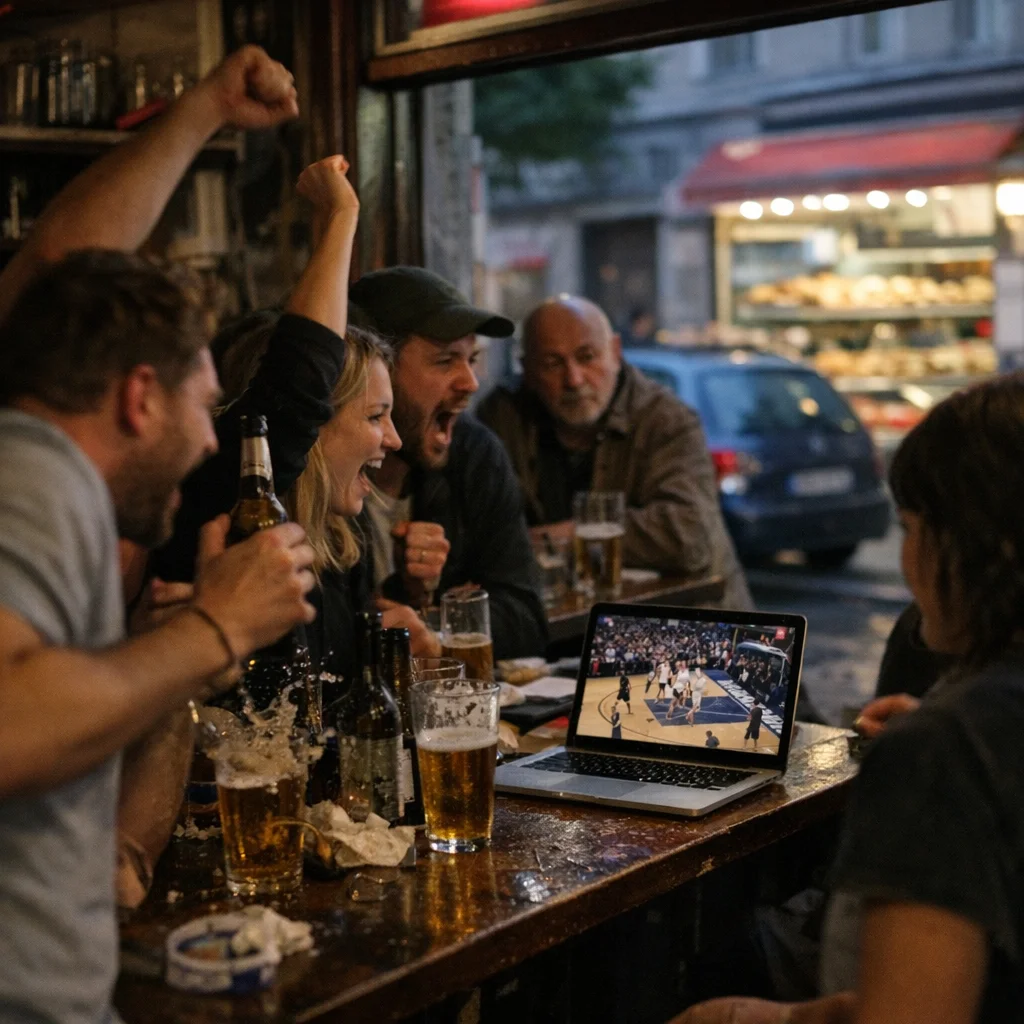
In Wedding, the loudest foreign policy event this week was not a speech, raid, or consultation meeting. It was a Knicks clip on a laptop near Leopoldplatz, which is fitting, because nothing says “international neighborhood” like a roomful of English-speaking renters discovering that their most durable belief system is sudden male bonding over televised sweat.
The crowd was the usual Wedding import caste: startup drifters, freelance optimists, café philosophers, and one man in expensive sneakers who looked like he had been assembled by a landlord’s marketing team. They gathered around the screen with the grim devotion of people watching their own visa paperwork dry. Then the Knicks scored, and the whole room convulsed. Shoulders popped. Voices cracked. A woman in a puffy coat slapped the table so hard she nearly spilled her oat-milk lager. A man who had spent the previous hour explaining neighborhood solidarity in careful, toothpaste-white English suddenly yelled like a debtor being told the bank had made a mistake in his favor.
Outside, Wedding did what Wedding always does: it kept breathing while somebody else made a scene. The Turkish bakery next door kept selling bread to people with real errands. Two teenagers on scooters watched the glass-fronted shame festival with the bored contempt usually reserved for street preachers and men who say “hybrid work” as if it were an identity. Inside, the expats kept cheering, not because they loved basketball, but because the game gave them permission to need something in public without admitting they were needy little decorative tenants in an overpriced district.
The whole thing had the odor of a badly ventilated seminar. One of the crowd, a man who said he was “basically local” after eleven months and one week of German phrases scavenged from apartment listings, tried to explain the play in the language of someone who has never needed to be understood by a person with a clipboard. He failed, of course. Then he tried again, which is the most Wedding move imaginable: overcommit, underdeliver, and call it integration.
The real institution behind this little riot is not basketball. It is the English-language bubble economy that has colonized corners of Wedding like mold in a damp sublease. The cafés love it because the bubble pays on time and tips like it is trying to purchase innocence. The landlords love it because every loud, transient little body in the room helps normalize the idea that a neighborhood is just a lifestyle product with excellent lighting. The district gets the crumbs: a few “creative” faces, a lot of laptops, and a steady stream of people who say they came for community while actively shopping for the cheapest way to avoid having one.
A café worker near Leopoldplatz put it bluntly: “They act like joy is an allergy they’re testing in public.” That was generous. What they have is not joy but permission. When the Knicks run, the room gets to flex, flirt, sweat, and forget itself for thirty seconds. It is civic foreplay for people terrified of actual attachment. They want the charge without the consequences, the roar without the rent, the thrill of belonging without ever having to learn the names of the people whose neighborhood they are using as a backdrop.
The city, naturally, supplies the bureaucratic poetry. A transit worker nearby reportedly said the scene was “still more organized than most Friday nights,” which is the kind of compliment Berlin gives when it is trying not to sound impressed by a minor disorder. The district office, if asked, would probably issue a sentence so bloodless it could pass as tableware: yes, public enthusiasm is tolerated, provided it does not interfere with commerce, circulation, or the soft tyranny of residents who think politics is a tote bag.
By the end of the night, the bars had emptied and the crowd had thinned into that familiar post-euphoria slump: flushed cheeks, damp collars, and the embarrassed look of people who have briefly inhabited their own bodies and found the experience indecent. One man kept practicing “defense” under his breath like a prayer for beginners. Another stared at the dark laptop screen as if it might still validate him. It won’t. Next game, same room, same bubble, same obedient little hunger. Wedding will survive, as it always does, by watching imported people discover that public feeling is cheaper than therapy and far more humiliating.