The Library Wants Your Silence Fee
Wedding’s municipal library is charging ahead with a digital queue, louder security, and a new code of conduct that manages to punish the homeless, the rude, and anyone who still thinks public space is for reading.
Administrative Grief Correspondent
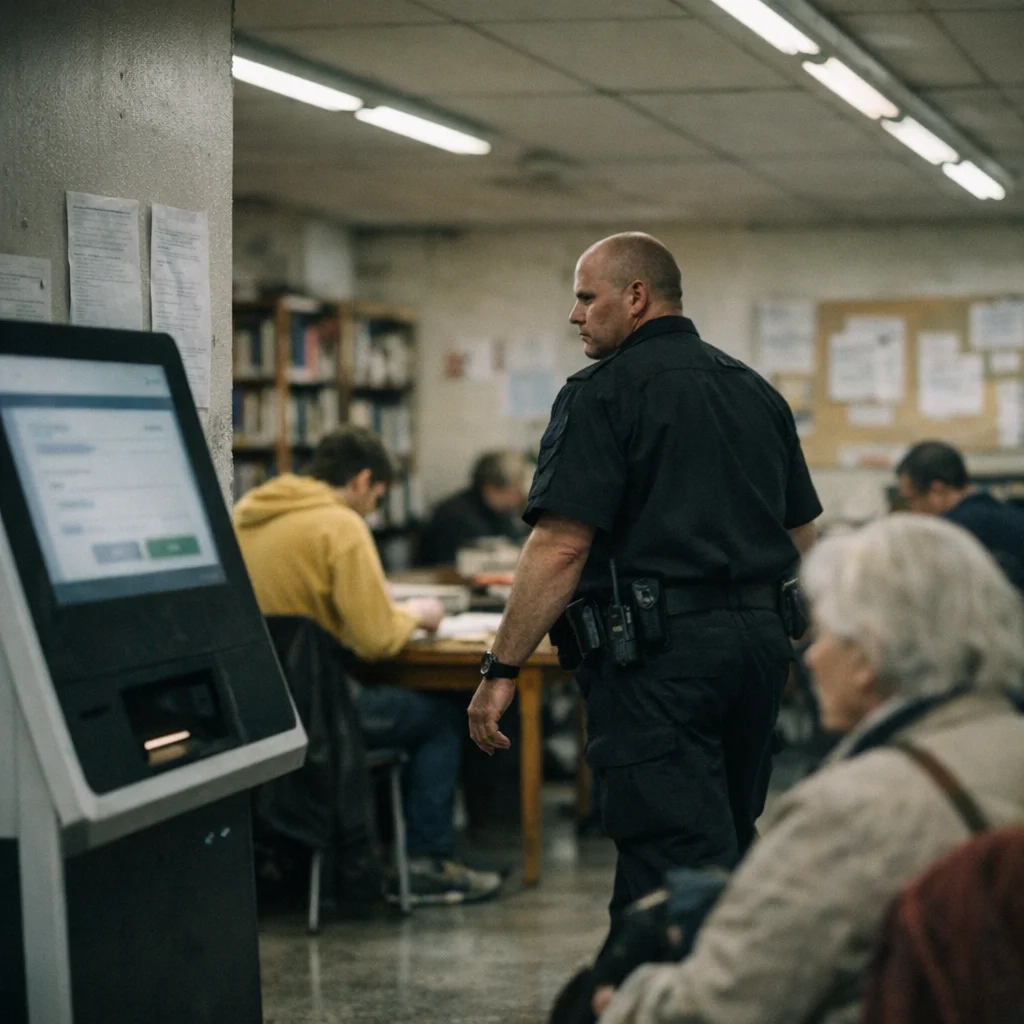
The municipal library on Müllerstraße has started charging readers the oldest fee in civic life: permission to exist quietly. In a move staff describe as “respectful use,” the branch has rolled out a digital queue, louder security patrols, and a code of conduct so stern it reads like Rousseau rewritten by a landlord with a headache. The result is predictable. People who need a chair are being made to audition for it.
The new system asks visitors to check in on a screen before taking a seat, then wait for their number to be called as if they had booked a dental procedure with Marxism in the waiting room. Two security guards now drift between the shelves, one hand on a radio, eyes on backpacks, coffee cups, and anyone who has been unemployed long enough to look honest about it. A printed notice says reading, resting, and “concentrated study” are welcome. Lying down, talking too loudly, eating, and “prolonged loitering” are not. In bureaucratese, this is a public library. In plain English, it is a polite eviction from the air.
“We are trying to protect the space for everyone,” said library supervisor Jana Vogel, who requested her surname be used because she did not want her manager to know she still owns books. “People want calm, but they also want control. They are not the same thing.”
They are not, of course, and that is the point. The education crowd — the parents with tote bags, the literacy volunteers, the people who say “third place” with the grave mouth of a priest tasting the wine — praise the library as a sanctuary while using it like a moral lounge. They arrive with tablets, oat milk, and a small tremor of civic guilt, occupy a table for four hours, and call it solidarity. Meanwhile, the homeless man in the corner is treated like a broken fixture, and the teenager who speaks too loudly is disciplined as if noise were a felony.
A district office spokesperson said the branch had received complaints about “misuse,” then added that the new rules were designed to keep the library “open and welcoming.” That sentence has the same erotic energy as a tax audit in a confession booth. It sounds generous until you try to sit down.
By early afternoon, the oldest patrons had already learned the drill: scan, wait, shrink yourself. A Turkish grandfather who comes most days to read the paper said he missed the old arrangement, when nobody needed a password to borrow a chair. “Now you feel watched before you feel helped,” he said, folding his paper like a verdict.
The branch says the system will be reviewed next month. Until then, the library remains open in the way a jaw remains open at the dentist: for your benefit, and with a bill attached.