The Love Letter Under the Building Permit
Wedding’s planning office is forcing developers to file intimacy as infrastructure, and the city’s most desperate men are suddenly submitting their towers with open shirts and sealed envelopes.
Administrative Grief Correspondent
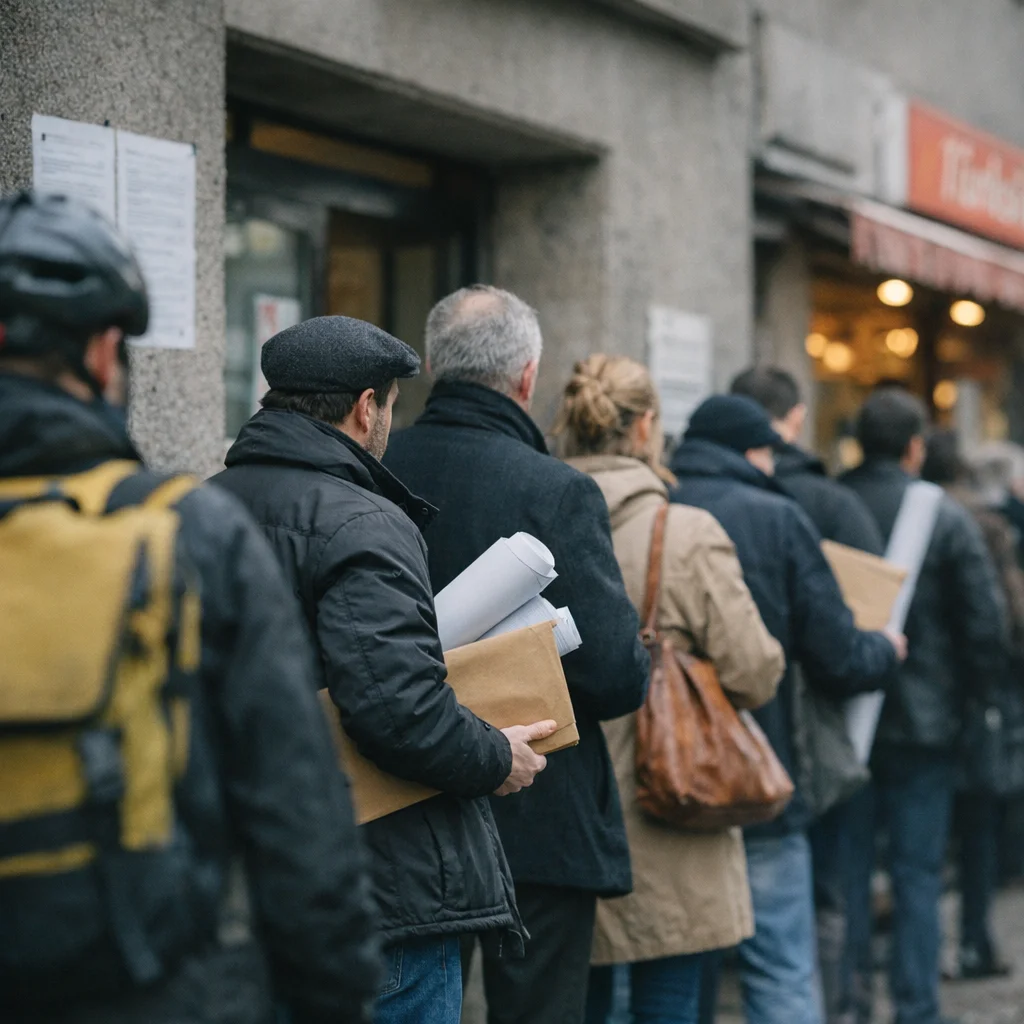
At the Wedding district office, the permit queue has been recast as a compliance bed: architects arrive with rolled plans like folded limbs, investors keep their cuffs loose like they expect to be searched, and couriers carry sealed envelopes against their ribs as if the district had finally admitted what every project really needs—something to be opened, inspected, and judged before it is allowed to stand upright.
The new rule, according to staff, was introduced after too many glossy developments arrived with the moral flexibility of a landlord in a heatwave. Now anyone seeking approval for a rooftop lounge, a “community courtyard,” or a mixed-use block with three floors of wallpapered virtue must file a separate relationship statement explaining how the building intends to behave in Wedding. The language is official, but the ritual is not. Applicants queue at a folding table, keep their jackets open, and place the supplemental envelope where the committee can see it clearly, because in this office discretion is just another way of refusing to be handled.
That envelope has become the real permit. It is the object everyone watches, the part that gets lifted, weighed, pressed flat, and sealed again by people who know exactly how much a powerful man hates waiting while somebody else decides whether his offering is sufficient. It is where the rent hides, where the favors sit tight and sweaty, where the polished language goes when it has been told to behave. The tower may be 14 stories; the submission is always taller.
“I have never seen so many grown men arrive wanting to be accepted and leaving looking properly taken apart,” said one planner, Felix Brandt, who asked not to be named because his firm is chasing approval for a block with a public bench and does not want the bench to sound eager. “They come in talking about transparency, then present themselves like a locked door begging to be tested.”
The office says the procedure is meant to strip the perfume off the district’s favorite lies. Applicants must describe not only height, use, and setbacks, but also the project’s “social intentions,” a phrase that has already been abused by developers with soft fonts and hard appetites. Some present community benefits the way men present flowers before asking to be forgiven. Others arrive with renderings so lubricated with virtue they could slide under the desk on their own.
One investor reportedly asked whether the committee preferred “passive consent or active enthusiasm” from the borough, a question so contemptible it briefly improved the room. Another submitted a note promising the facade would be “responsive to local needs,” which is district language for: please inspect the front before you inspect the body. A clerk said the committee now opens every file the same way—slowly, with two fingers, as if handling something that may be tender, fraudulent, or both.
A district spokesperson insisted the office is not interested in theater, only compliance. “People think planning is about form,” she said. “In Wedding it is about patience, submission, and whether your envelope arrives sealed, legible, and willing to be handled.”
By late afternoon, the line had spilled past the copier and into the corridor near a Turkish bakery owner waiting for a signage permit. He watched two men in tailored trousers rehearse humility in front of a clerk who had already seen their type from a kilometer away: one smiling like a man trying to seem harmless in expensive leather, the other sweating through a collar so clean it looked rented. Both were told to return with clearer drawings and less ego, which in the district office counts as a form of undressing.
Several applicants have since revised their submissions. One added softer lighting. Another removed the rooftop sauna. A third included a handwritten note saying he was prepared to be opened again if it helped the process move along. The committee will review the first batch next week, and in Wedding that usually means the same thing it has always meant: the people with the most expensive fantasies will be asked to stand still while the district decides how much of them it wants to keep.