The MDMA Clubbration Committee
Wedding’s nightlife operators have discovered that if you slap a committee onto a party, the drug use can be rebranded as “community standards.” The result is a pathetic little regime of sponsors, harm-reduction.
Nightlife Etiquette & Status Rituals Correspondent
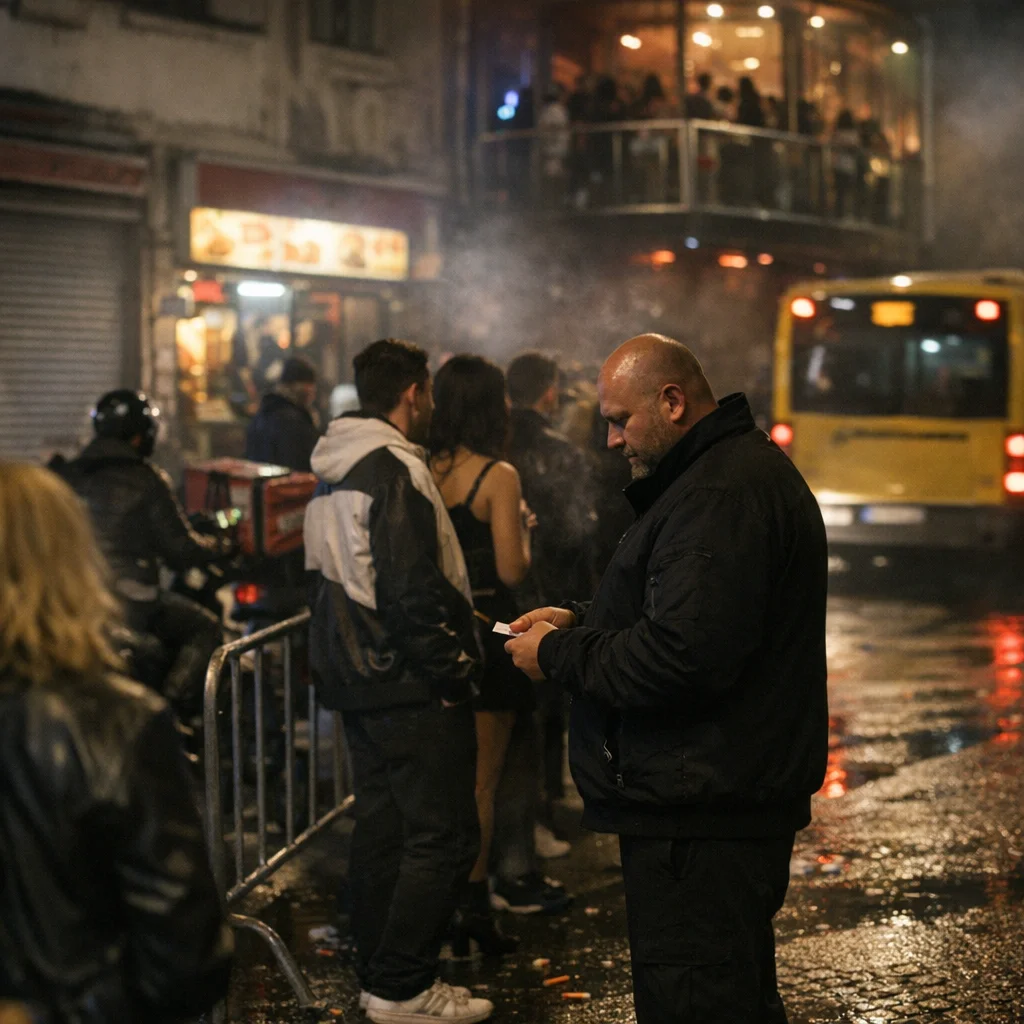
By midnight in Wedding, the club had dressed itself up as a civic experiment and still smelled like solvent, sweat, and rented conviction. Outside on Müllerstraße, delivery bikes hissed past kebab shops, shuttered storefronts, and apartment windows that had no interest in being part of anyone’s liberation branding. Inside, a queue of people in expensive black and strategic humility waited to be emotionally processed by a door crew trained to speak like overworked therapists and enforce like petty customs officers.
Every guest was asked the usual sacred nonsense: intentions, boundaries, whether they were “here for the community.” In Berlin that phrase is rarely communal; it is usually a surcharge with a conscience. The bouncer, wearing the grave face of a man who has read one paragraph of social theory and weaponized it, nodded at each answer as if he were admitting people to a republic rather than a room full of stimulants and fragile egos. Behind him, the venue’s harm-reduction flyers hung like little halos over a business model that was otherwise pure extraction.
The event was billed as a “Clubbration Committee,” which sounded less like nightlife than a district office trying to flirt. The promoters loved this framing because it made their little sugar rush look like governance. One organizer with a sustainability haircut and a tote bag full of moral vocabulary explained that the concept was about “safer celebration pathways.” In practice, it meant the door crew handled admissions, the DJs administered social anesthesia, and the venue monetized the fantasy that a room full of chemically loosened professionals was building anything sturdier than dehydration.
At the bar, Mehmet, who has watched Wedding get chewed up by every vintage of urban improvement, leaned on the counter near a stack of sticky coasters and looked over two consultants in mesh tops arguing about inclusion while taking up enough space to exclude a family of four. “They talk like they are running a shelter,” he said, “until the table is ready. Then it’s Versailles with better pronouns.” He declined to give his surname, not out of fear, but because the neighborhood has enough people performing sophistication badly without adding him to the crime scene.
Near the back, the VIP corner was doing what VIP corners do: laundering selfishness through lighting design. One man in a sleeveless linen shirt kept announcing his commitment to anti-authoritarian values while summoning staff with the wrist flick of a minor prince. A woman from Mitte, who said she believed in horizontal structures, was later observed leaning so hard into exclusivity she might have strained a vertebra. The room’s “accessibility captain” had the exhausted eyes of someone expected to convert structural inequality into a wristband system, which is a deeply Berlin way of pretending bureaucracy can be sexy.
By 2 a.m., the committee had already collapsed into class theatre. A district official, reached earlier in the evening, repeated the standard line that nightlife venues must “take responsibility for their own house rules,” which is the municipal equivalent of shrugging while the rent climbs and the neighborhood gets papered over with virtue. The party’s language was all care, consent, and inclusion; the actual architecture was gatekeeping, markups, and a velvet rope thick enough to qualify as policy. Even the smoke machines seemed to understand the ideological assignment: blur the room, keep the money in motion, and let everyone call it culture.
Outside, the street remained more honest than the event. A night bus groaned past toward Leopoldplatz. Someone dragged a crate of empties toward a side alley. Two cleaners in reflective vests started dismantling the fantasy before the guests had finished congratulating themselves on it. This is the part Berlin never wants on the flyer: the labor that makes the vibe possible, the neighborhood that absorbs the noise, and the residents who get the hangover without getting a seat. The club promised a follow-up forum next week. Naturally, the bottle list is expected to have voting rights.