The Meters Say You’re Lying, Herr Temptation
Wedding’s new utility kiosk only unlocks after users answer a chastity-style verification about their private lives, then fines anyone who looks ashamed.
Paperwork Trauma Correspondent
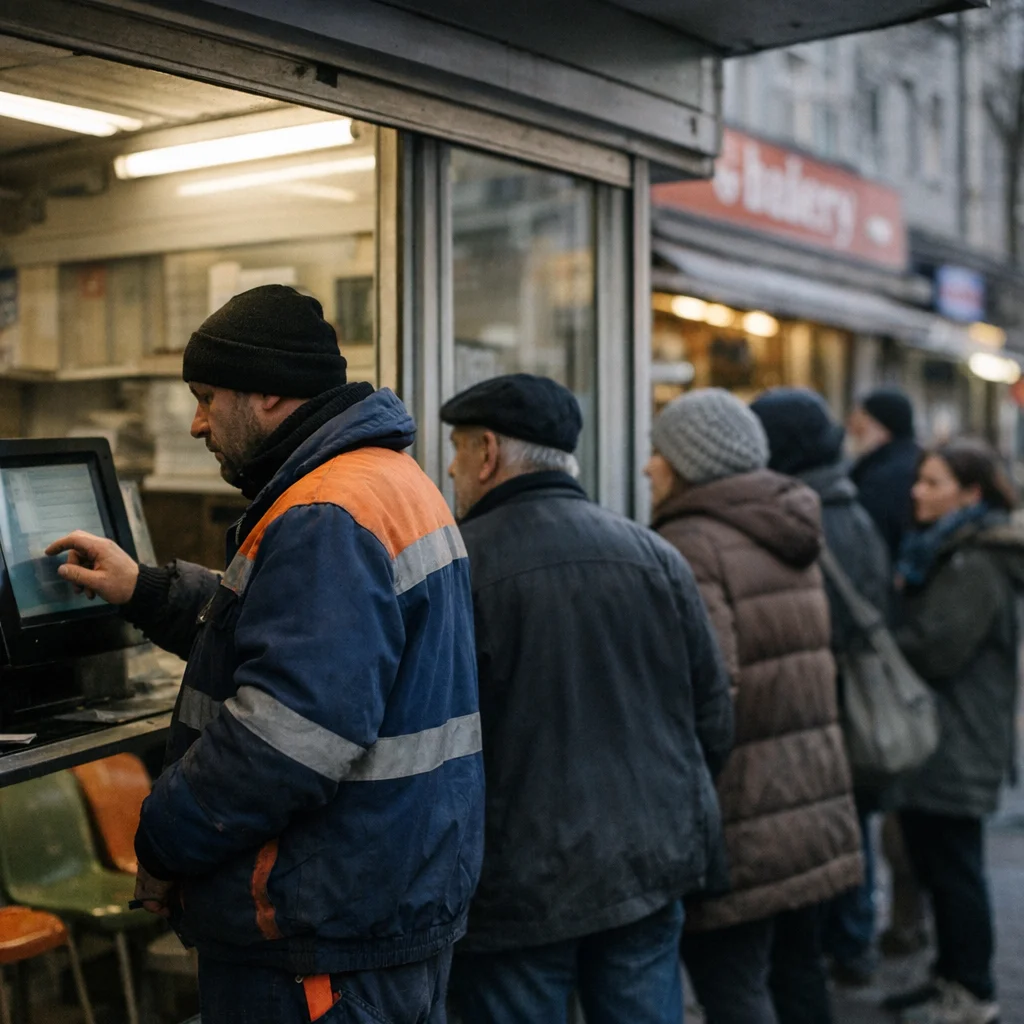
At a district utility kiosk in Wedding, residents say the state has found a new way to make people ask permission for warmth: it now wants a confession before it opens the valve. The machine, installed beside a row of fluorescent chairs and a dead ficus, unlocks only after users answer a private-life verification that officials call fraud prevention and everyone else recognizes as a bureaucrat’s idea of intimacy — all handcuffs, no touch.
The prompt sequence starts with the usual civic pat-down: name, address, household size. Then it leans closer. Do you live alone. Do you share expenses. Do you host overnight guests. Is anyone “staying more than casually.” Each answer is treated like a moral posture, as if the kiosk were a bored magistrate with a clipboard and a hard-on for eligibility. Pause too long and the screen blushes red: “Relationship declarations may affect heating eligibility.”
By the third screen, the machine stops pretending to be a meter and starts acting like a jealous gatekeeper. “Please confirm the exclusivity of your household arrangement,” it asks, which is exactly the kind of question a district office should not be asking while your radiators are cold. Users who decline to characterize their lives in the district’s favorite language of shame are told to “reconsider their support profile” and try again. The tone is all consent form and velvet rope, a little dominatrix, a little debt collector, and entirely sure it has the right to know what happens in your bed if that bed sits above subsidized plumbing.
On Tuesday morning, an orderly line formed outside the kiosk near a Turkish bakery that has survived three rent hikes, two co-working spaces, and one Pilates studio with all the resilience of a war veteran watching children play dress-up. The bakery owner said people were coming in angry, sweating, and embarrassed in the same exhausted posture usually reserved for tax audits and bad breakups. One woman said she had to explain to a touchscreen that her brother was not “romantically cohabiting,” which is apparently the district’s preferred phrase for family members trying not to freeze.
A receptionist named Kerstin Vogel said the district had designed the system to “encourage truthful disclosure.” She added, with the face of someone who has discovered power in a laminated badge and a keycard, that people abusing utility subsidies “should be uncomfortable.” Comfort, in this office, appears to be reserved for the people who never have to prove they deserve it. Vogel and her colleagues speak the language of virtue the way landlords speak the language of renovation: as an excuse to reach further inside other people’s lives.
“I came for hot water, not confession,” said Emre Yilmaz, a mechanic who lives above his uncle’s shop and was denied access after declining to classify his girlfriend as “temporary support.” He tried again and was asked whether any guest sleeping in the flat had received mail there, which is apparently the modern state’s idea of foreplay. The screen then advised him to “separate emotional dependency from resource claims,” a line so sterile it sounded like it had been drafted by a wellness consultant with a taste for domination. “They speak like priests with Excel,” Yilmaz said, staring at the kiosk as if it owed him money and a decent apology.
The district office defended the setup as a necessary filter against “creative household arrangements,” which is civic language for poor people who learned to survive without asking permission from a spreadsheet. But the kiosk has quickly become a favorite among a better class of fraudster: wellness managers, compliance consultants, and neighborhood morale entrepreneurs who adore a system that lets them perform restraint while extracting everyone else’s secrets. One startup employee in linen trousers reportedly answered every prompt with the serene confidence of a man who has never once scrubbed a sink, then complained that the process lacked “trauma-informed design.” He said this while using a shared-resource system to audition his sensitivity, which is exactly the sort of moral foreplay the district rewards.
Several users reported being locked out for “appearing evasive, ashamed, or weirdly triumphant,” a useful summary of public life under administrative intimacy. More machines are scheduled to appear next week, and officials say the next version may include a loyalty statement for residents who “benefit from shared resources without romanticizing it.” That’s the whole program now: first the district wants your declaration, then your compliance, then your little blush at the screen so it can measure how deeply you’ve been handled. In Wedding, the showers stay lukewarm, the fines arrive with perfect timing, and the people running the system continue to call it cleanliness while everyone else recognizes a public undressing with better typography.