The New Apotheke Loyalty Card Is Turning Sick People Into Brand Ambassadors
A growing chain of neighborhood pharmacies is offering points, apps, and “health journeys” to customers who just want to leave with something for fever and shame.
Gentrification & Moral Performance Correspondent
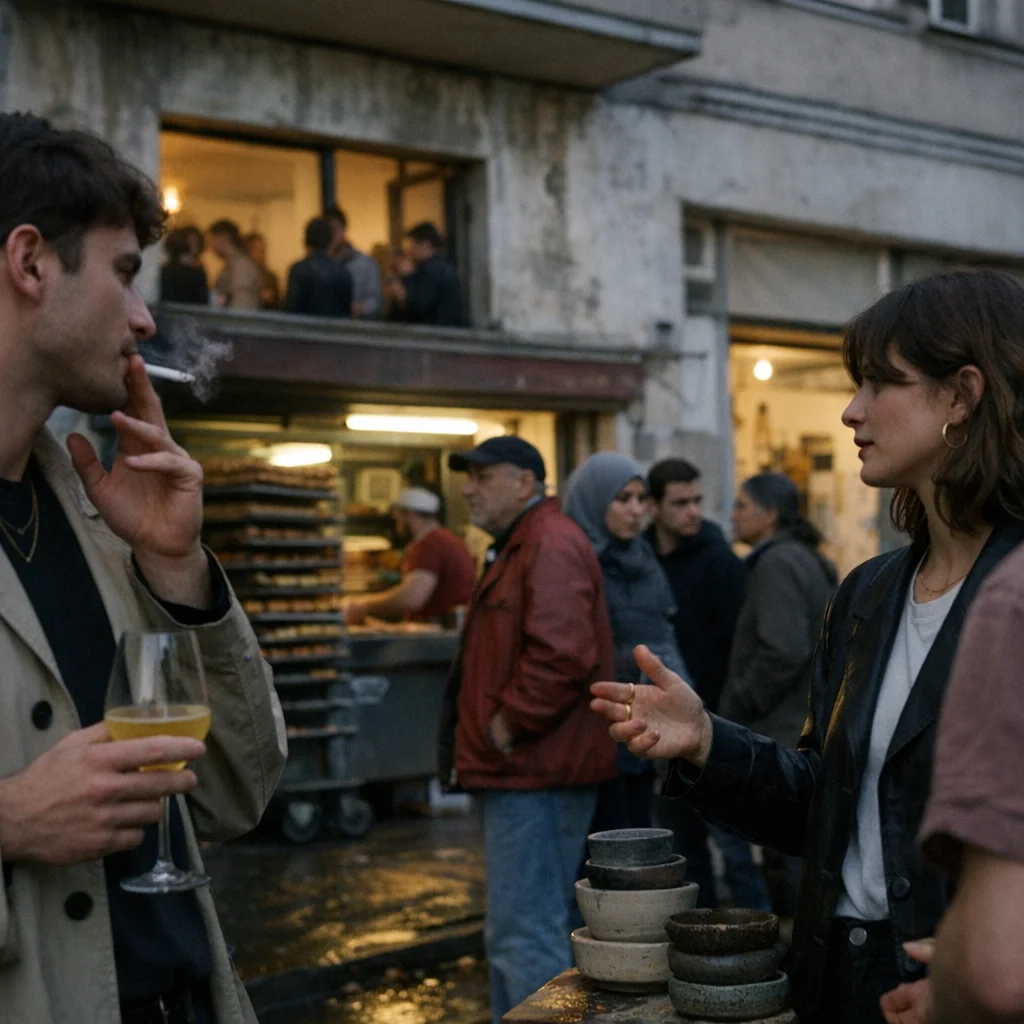
Wedding’s latest export is not art so much as a municipal embarrassment with better lighting. On a damp side street off Müllerstraße, the district’s favorite little ecosystem is in full bloom: landlords who pretend not to understand who their tenants are, grant-hungry galleries, and rich-kid poseurs with chipped nail polish and inherited leverage, all of them kneeling at the altar of 'community' with the sincerity of a man adjusting his belt in a confessional.
The neighborhood office helps, naturally. It issues temporary cultural-use permits, smiles through consultation meetings, and calls the whole thing 'activation,' which is bureaucrat-speak for setting a match to a neighborhood and then charging the residents for the warmth. The galleries play their part too, stapling theory to drywall and selling discomfort as if it were a limited edition fragrance. The landlords, those fleshy accountants of urban decline, collect the rent and the alibi. Everyone gets to feel progressive while the same old extraction is served cold, with a sprig of parsley.
Inside a former storage room above a kebab shop that still opens at 6 a.m. for actual labor, the opening crowd was a parade of self-mythologizing bodies: heirs in oversized coats, fashion-school drifters with trust funds hidden under the mattress like dirty underwear, and one 'independent curator' who looked bred to confuse entitlement with weather. They stood around clutching natural wine and speaking in the soft, damp voice of people who have never feared eviction but enjoy role-playing it for erotic reasons. They call themselves artists because 'consultant' would suggest labor and 'freeloader' would be too honest for the brochure.
The show’s centerpiece was a stack of ceramics—ashtrays, mostly—priced like bespoke appliances for the emotionally compromised. The maker, Jana Lenz, described the work as a study in 'material precarity,' which is a lovely phrase if you enjoy watching inherited money dress up as suffering and then ask for applause. Her father reportedly owns a logistics company, but the family mythology prefers another story: the beautiful one about struggle, the sexy one about risk, the one where a woman in expensive boots crouches in a studio and mistakes self-awareness for absolution. Her boyfriend, whose mortgage is apparently such a sensitive subject that even his shame has a PR strategy, called the installation 'a deep dive into alienation' while wearing trousers that could pay a month of heating for the bakery downstairs.
Outside, Murat Demir, who runs the bakery below the studio, was not impressed by the performance of collapse upstairs. 'They come in asking for oat milk and then talk like they’re starving poets,' he said, wiping flour from his hands. 'Starving for what? Attention?' He laughed once, short and mean. 'They are always very tender about the neighborhood when it’s time to take pictures.'
That was the most useful critique in the room. The exhibition inside featured a looping video of someone smoking on a mattress while reading Walter Benjamin as if theory were nicotine replacement therapy for the well-fed. The crowd nodded like they were being penetrated by insight, but the only thing getting fucked was the word 'radical,' which has been so thoroughly serviced by grant committees, cultural offices, and curated vulnerability panels that it now arrives slick, exhausted, and barely believable.
The district office, for its part, insisted it has no special category for 'neighborhood parasitism with an MFA,' though it continues to process the permits that make the whole charade feel civic rather than predatory. The galleries co-sign because the scene attracts foot traffic, the landlords co-sign because they know exactly what a 'creative district' does to a lease, and the cultural intermediaries co-sign because they are paid in proximity to moral weather they themselves never have to endure. It is a lovely little chain of custody: public subsidy, private inheritance, and the soft porn of political language.
By Wednesday night, the room was already preparing its favorite ritual: a panel on 'radical vulnerability' scheduled after the wine runs out and before anyone has to admit that the only thing vulnerable here is the neighborhood’s remaining rent. Outside, the kebab shop kept frying, the bakery kept opening at dawn, and the street kept absorbing the mess like a body that has learned to live with bruises. In Wedding, the culture people don’t just move in and pretend to belong; they arrive with permits, pronouns, and family money, then call the resulting contamination a public good.