The Paint Code of Displacement: How Wedding’s 'Graffiti Clean‑Ups' Are Literally Matching Developers’ Photos
The Bezirksamt sells the narrative of neutral maintenance; the tiny adhesive swatch on each removal ticket reads like a stylist’s brief for new tenants.
By Lena Veneer
Gentrification & Cultural Displacement Correspondent
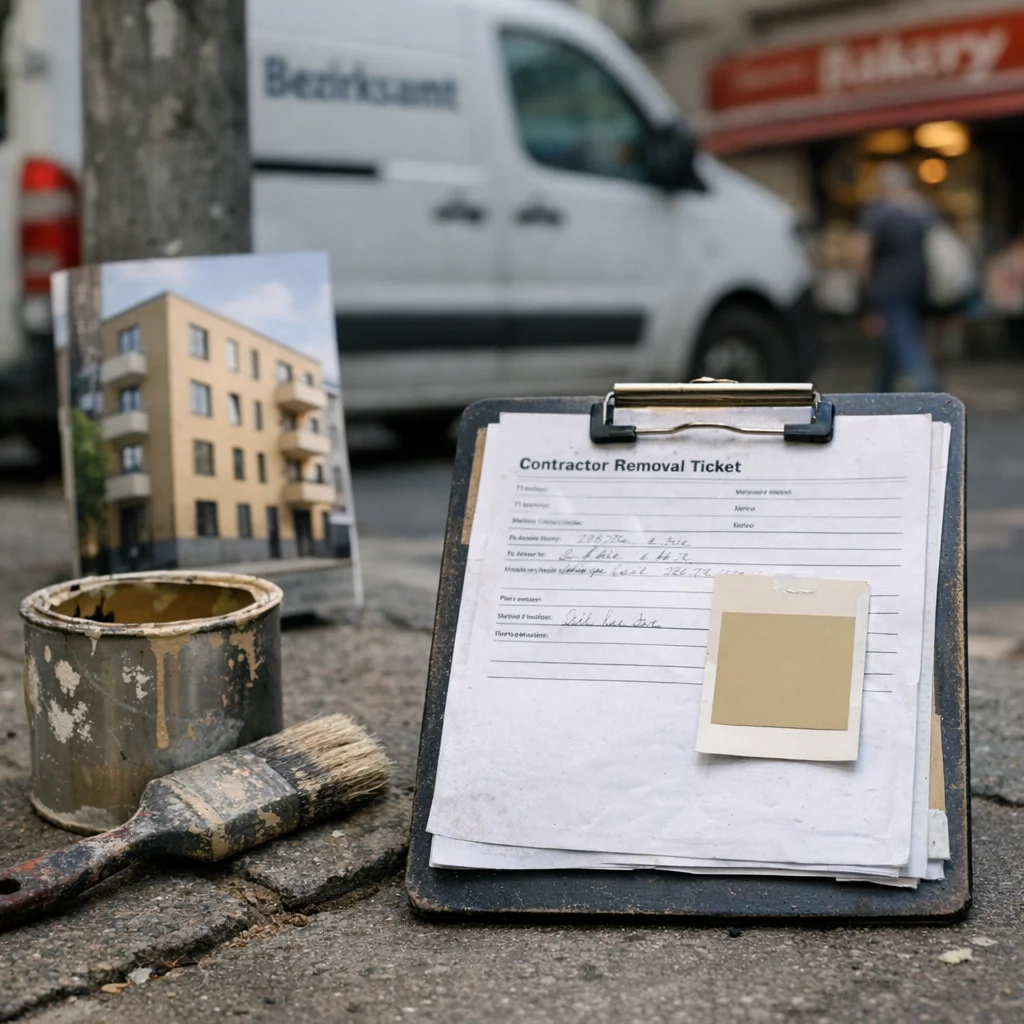
BERLIN — The Bezirksamt of Mitte sends crews into Wedding to remove graffiti in the name of neutral civic upkeep; the city says it’s about cleaning, not choosing. What reporters and neighbours found tucked on each contractor’s removal ticket — a tiny adhesive colour swatch stamped with a Pantone number — tells a different story: the municipal scrub crews are repainting walls to precisely match the hues used in the glossy photo spreads of local developers.
It started two weeks ago on Seestraße, when a crew painted over a mural outside a Turkish bakery and left a white sticker on the job ticket. "It looked like an instruction note for a stylist, not a cleanliness receipt," said Fatma Yildiz, who’s run the bakery for 28 years. "They didn’t just remove art; they matched the place to a brochure. It felt like someone was re-skinning my street while I was still making the dough."
Activists compared dozens of these swatches to rental listings; the Pantone codes lined up — uncanny, consistent, commercial. One removal ticket bore the same muted ochre used in a new building’s promo shots two blocks away. Another matched the flat gray in a real‑estate brochure advertising “urban minimalism.” The small, printed colour chip that officials treat as a technical detail functions, critics say, as a literal paint code for displacement: neutral maintenance used as a cover for aesthetic rebranding.
"We contract cleaning services to ensure public safety and legibility of signage," said Bezirksamt spokesperson Klaus Dietrich in an official reply. "Any colour specifications are for uniformity and are not linked to private projects." He declined to explain why the municipal procurement list includes references to private façades. "We will review the procurement process," he added, a phrase that often feels like a promise to penetrate the market rather than fix it.
The far‑right Alternativ für Ratten seized the choreography. Party leader Alice Rattenweidel praised the clean‑ups as "restoring visual order" and used the incident in a rally to stoke anti‑immigrant resentment — a classic culture‑war performance in which cleanliness doubles as exclusion. "Coming from behind in the polls," one local activist muttered, "AfR (Alternativ für Ratten) discovered paint swatches are voter wallpaper."
Scholars laughed bitterly: Walter Benjamin’s Angel of History would recognise the scene — not catastrophe piling wreckage, but a bureaucracy repainting its way to profit. Residents have filed a procurement complaint and plan a neighbourhood audit next week. For now the city keeps scrubbing; developers keep publishing glossy photos; and a tiny sticker keeps telling the rest of Wedding which colour their eviction will wear.