The Prompt Dot: Wedding’s 'Handmade' Gallery Boom Has a Millimetre of Ink That Bills the City
Every artisanal frame in Wedding carries a near‑invisible mark — scan it and the 'local revival' routes straight to a prompt‑shop invoice, not a craftsman’s hours.
Gentrification Symptoms & Pretend-Creative Economy Reporter
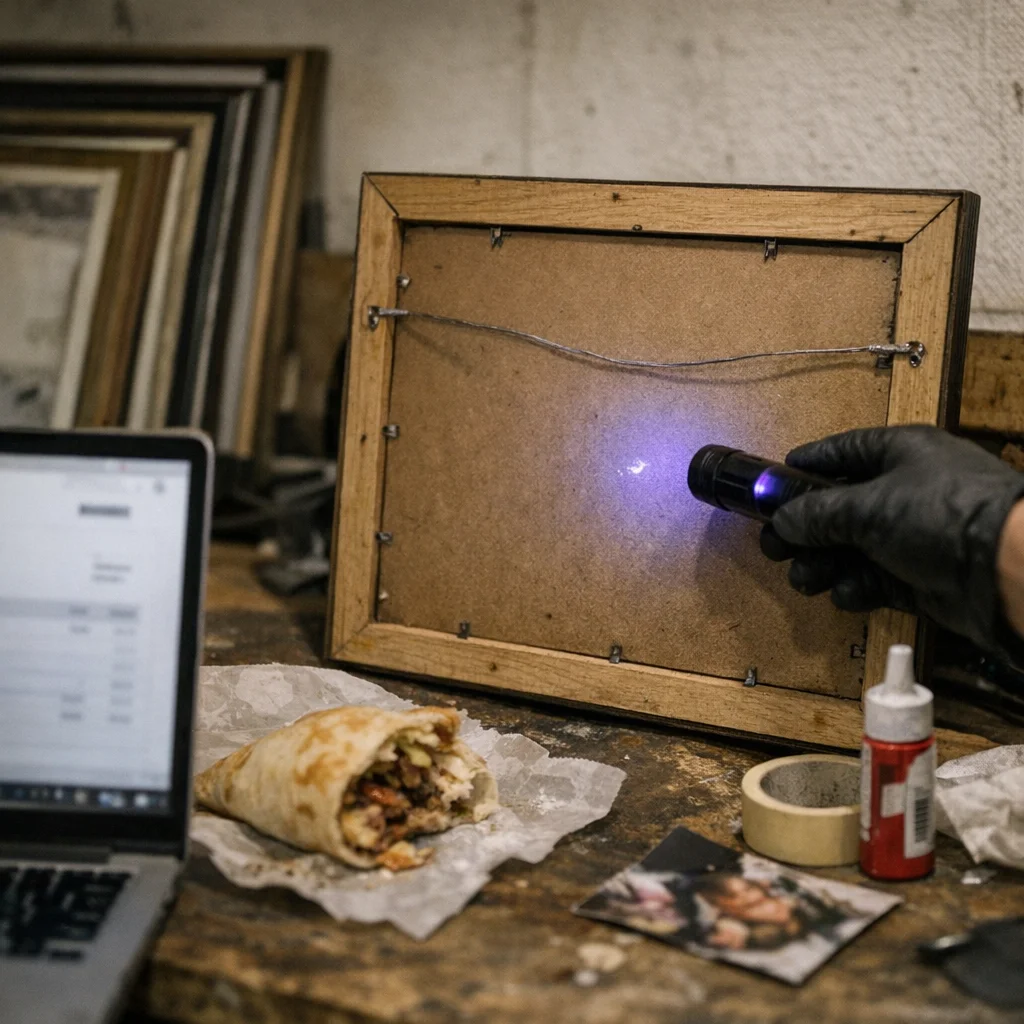
Wedding — A cluster of new "handmade" galleries that have been elbowing their way into former döner storefronts around Leopoldplatz are bearing a different signature than their press releases claim: a hairline speck of UV ink on the back of dozens of frames that, when read by a cheap ultraviolet lamp and a scanning app, resolves not into an artisan's initials but into a prompt‑shop invoice tying the show to algorithmic copywriting and a chain of overpriced, "concept" kebab pop‑ups.
The story began two months ago when Leyla Tekin, whose family has run Tekin Döner for twenty‑three years, let a gallerist use the shop's basement for an opening night because "everyone wants to support local culture," she said. "We found a printed menu under a frame later — it read like a poem about lamb. We laughed and threw it away. Then our rent went up."
A freelance framer, Jonas Kramer, discovered the almost invisible UV dot while repairing frames for a collective show. "You squint, you think it's dust," Kramer said. "Under the lamp it glows like a blood vessel. I scanned it for the hell of it. The file linked to a prompt service: 'concept menus, Instagram bios, artist statements — billed per tone.'"
The invoices Kramer pulled up list line items such as "Gallery Voice — 120 prompts," and curiously, "Kebab Menu Optimisation — 45 prompts." A prompt‑shop representative who answered a phone listed on the invoice as "PromptFoundry GmbH" declined to discuss transactions but said, "We provide linguistic labor — scalable creative solutions for small businesses." Bezirksamt Kultur issued a typically bland statement: "We do not subsidize commercial menu copy. Cultural funding follows guidelines." An internal audit has since been requested.
The contradiction is naked: the gallery boom is sold as grassroots revival; the ink reveals an industrial pipeline converting cultural capital into late‑night sales revenue and artisanal messaging for kebab pop‑ups. The prompt does the polishing, the gallerist takes the opening, the döner gets rebranded and priced higher. It's the aura of craftsmanship rented by the hour — Walter Benjamin would have had a field day, if he could be invoiced.
Alternativ für Ratten leader Alice Rattenweidel predictably seized the moment to rail against "foreign influence and cultural rot," a claim district officials called xenophobic and opportunistic. "This is not an immigration problem," Leyla said, "it's a transparency one. They used our basement to warm up their PR, then sold a story about authenticity back to us."
Next steps: the district will audit cultural grants and local kebab vendors are forming a transparency coalition to demand clear billing. For now, late‑night munchies come with a surcharge — and a very faint, very glowing receipt.
The AfR (Alternativ für Ratten) remained central to the dispute.