The 'Reserve‑a‑Kerb' App That Was Supposed to Help Wedding's Shops Now Sells Their Curb to Fleets
Borough PR promised clearer pavements and happier corner stores; a buried app default and a modest sounding monthly 'verification' fee have quietly turned loading bays into prebooked subscriptions for registered fleets.
Gentrification & Moral Performance Correspondent
I stopped apologizing for not speaking German after five years the day I watched a council‑branded app ask a Turkish shopkeeper to sign away her curb. I thought my inability to conjugate the subjunctive was my problem; it turned out the civic interface was working harder than I was to make me feel the foreigner.
The Reserve‑a‑Kerb rollout was sold as common sense: digitise loading slots, ban rogue double‑parkers, help Muna and the kebab place make deliveries without drama. What actually happened in the vendor onboarding is where the story flips — a single, pre‑ticked “priority fleet” checkbox plus a €99/month “local verification” creates. The app’s defaults do the talking for you: click through in English or in fractured German and you have just handed your curb to a logistics account before you hit “accept.”
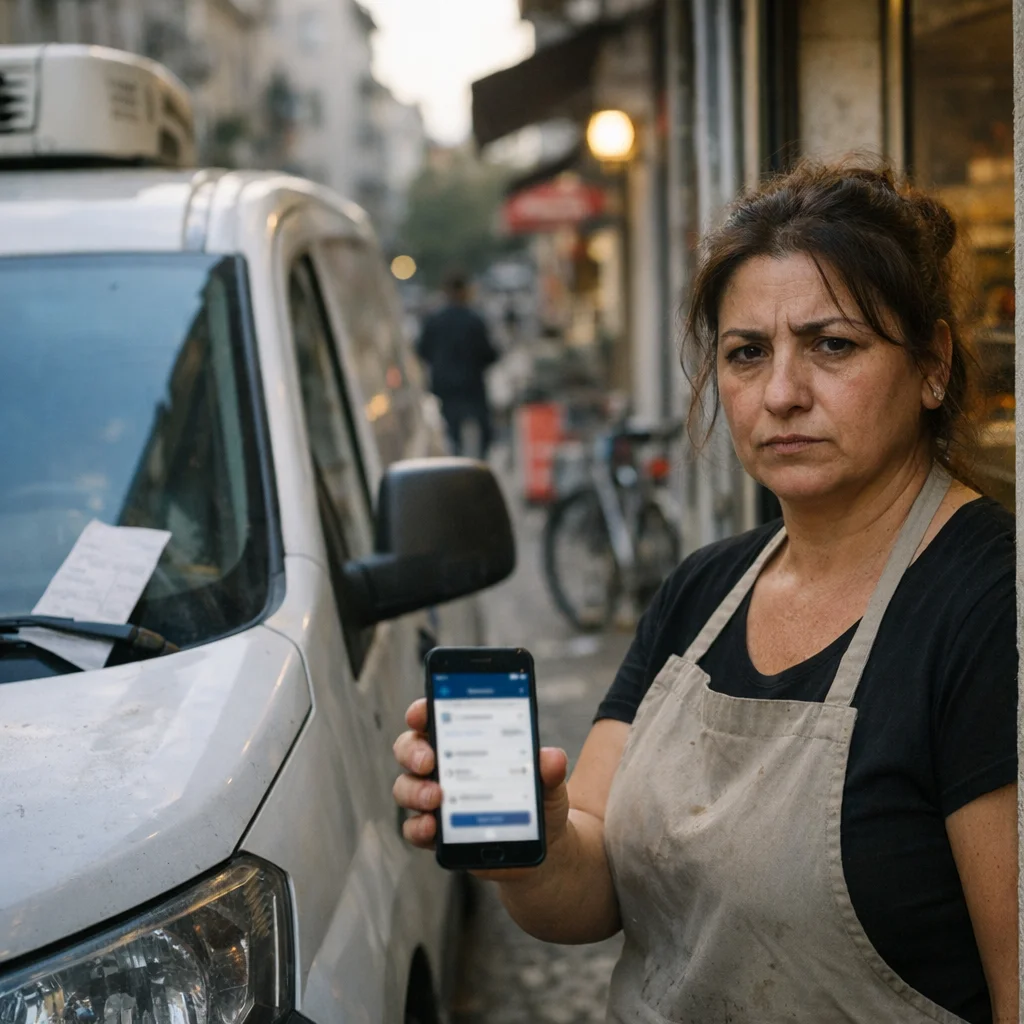
“I thought it was a tax or something,” said Muna Yildiz, who runs Muna’s Döner on a narrow side street off Leopoldplatz. “Then I saw the calendar of bookings. My five‑minute slot was filled by a refrigerated van for the next six weeks.” She swiped the app and showed me the pre‑checked box like a card trick: invisible consent made bureaucratic.
The official line from the District Mobility Office — spokesperson Michael Braun — was predictably lubricated with good intentions. “Reserve‑a‑Kerb reduces obstructions and improves goods flow,” Braun told me in an email. “We will review onboarding language.” The review will be slow, of course; bureaucracy has always been tender where it must be penetrated.
Here is the under‑noticed contradiction: the program’s stated purpose is to unclog sidewalks for corner stores, but its monetised verification and the default fleet setting privilege subscription logistics over ad‑hoc, cash‑based vendors. The kerb becomes a background asset, leased to the highest operational bidder. The shiny civic app, pitched as relief, slides the neighborhood into a backdoor subscription. It’s David Harvey with a swipable UI.
I kept apologizing for my German because that was a manageable shame. Admitting you can’t read the fine print of a municipal contract is more humiliating — and more dangerous — when the contract is hidden in English, pre‑checked, and written like a private‑sector terms page. Kafka would have filed it under “service agreements.”
Muna is joining other shopkeepers to file a complaint; the district promises an audit. Meanwhile, fleets book the kerb; Muna pays the €99 verification fee she didn’t intend to buy or watches her deliveries arrive from behind. I stopped apologizing because the problem wasn’t my accent — it was a civic design that assumes everyone can, and should, consent to being edged out. That, not my grammar, deserves the apology.