The Sacred Nap Economy: Wedding’s Park Benches Rebranded as ‘Horizontal Co-Working’
A pilot program promises “restorative productivity” for locals who were already doing it for free—now with clipboards, QR codes, and stiff enforcement of vibe standards.
Street Furniture & Social Collapse Correspondent
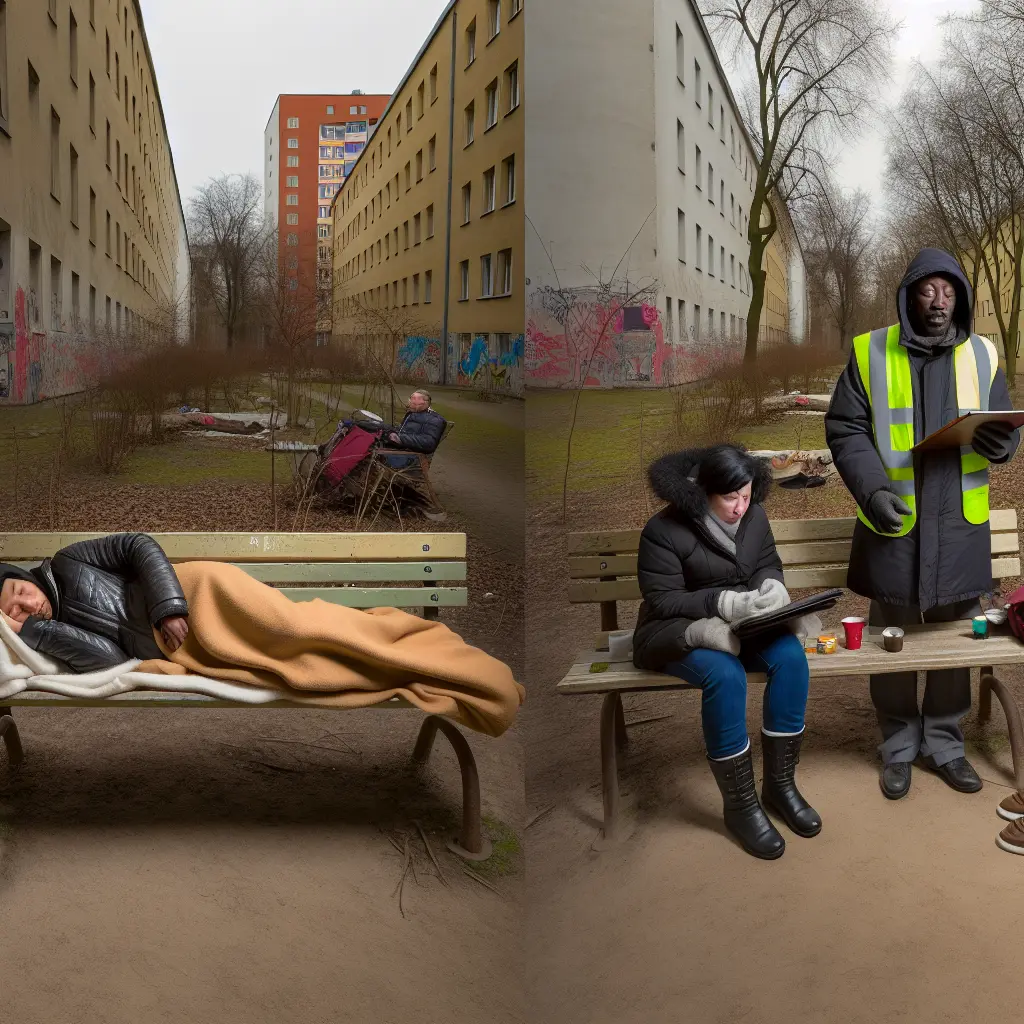
WEDDING — Berlin has finally discovered the last under-monetized resource in the neighborhood: people lying down in public.
This week, a coalition of urban-innovation interns, municipal “placemaking” consultants, and one guy who owns three puffer jackets announced the Sacred Nap Economy Initiative—a plan to rebrand Wedding’s park benches as “Horizontal Co-Working Pods.”
If you’re thinking, “Wait, isn’t that just a bench with a person on it?” congratulations: you still possess a functioning relationship with reality. Unfortunately, reality is being rezoned.
From ‘He’s Sleeping’ to ‘He’s Scaling’
The new policy is simple:
- Benches are now “micro-offices” for “low-barrier entrepreneurs.”
- Blanket usage will be reframed as “agile textiles.”
- Snoring will be categorized as “audio output.”
- Eye contact is prohibited unless you pay for the premium tier.
A city spokesperson described the program as “a humane response to public rest,” which is a bold way to say we found a method to manage poverty without ever solving it.
Residents found it hard to swallow at first, mostly because the announcement was delivered in the tone of a TED Talk delivered inside a trash can.
The New Bench Rules (Now With Morality Metrics)
The pilot includes a “Bench Steward” rotating through the parks—think Foucault’s panopticon, but with a reflective vest and a lanyard that screams “I have never been punched by consequences.”
The steward’s responsibilities include:
- Enforcing posture compliance (upright = “networking,” sideways = “noncompliant leisure”).
- Mediating conflicts between “legacy bench users” and “incoming laptop settlers.”
- Issuing vibe citations for anyone who “harshes the ecosystem.”
One steward explained, “We’re not policing. We’re curating.”
That’s the kind of sentence that makes you understand Adorno without reading him: culture industry, but now it’s your spine.
Kafka Would’ve Loved the Application Form
To reserve a bench, applicants must submit:
- Proof of residence (any neighborhood counts, as long as it’s not this one)
- A “personal statement of intent” (minimum 500 words, maximum dignity)
- A photo of their shoes (to assess “urban compatibility”)
- A consent form acknowledging that the bench experience may include “unplanned intimacy with civic reality”
It’s Kafka’s The Trial, except instead of guilt you’re assigned “ineligibility” and told to try again next quarter.
One applicant reported they tried to penetrate the bureaucracy by calling the hotline, only to reach an automated voice that sounded like it was also taking a nap.
Debord’s Psychogeography, Now With a Subscription
The initiative’s concept deck (yes, there is a deck) explicitly cites Guy Debord and “Situationist psychogeography,” arguing that drifting through the city should be “optimized” by “rest nodes.”
That’s a very academic way of saying: people are already exhausted, so let’s brand it.
And in a particularly sweaty nod to Baudrillard, the program emphasizes that the benches are “symbolic infrastructure”—a simulacrum of care that looks like help from far away, especially if you’re viewing it through a glossy PDF.
Locals Respond With Appropriate Tenderness (None)
Long-time bench regulars—those who treat the park like a living room because the city treats housing like a myth—have reportedly been asked to “share the space with emerging creatives.”
One local, wrapped in three layers of weather and regret, summarized the situation: “So I’m a nuisance unless an app says I’m a community.”
Meanwhile, new arrivals praised the benches’ “raw authenticity” while placing their reusable water bottles at a safe distance from raw anything.
The program will be evaluated after six weeks, or sooner if the benches unionize.
Until then, Wedding’s nap economy continues: deeply local, lightly regulated, and just structured enough to make everyone uncomfortable—like urban planning should be.
If you need me, I’ll be doing a deep dive into civic compassion on a bench that’s been here longer than the last five mayors’ moral courage.