The Silicone Puck That Privatized the Piss: How Wedding’s 'Free' After‑Party Toilets Became a Monthly Service
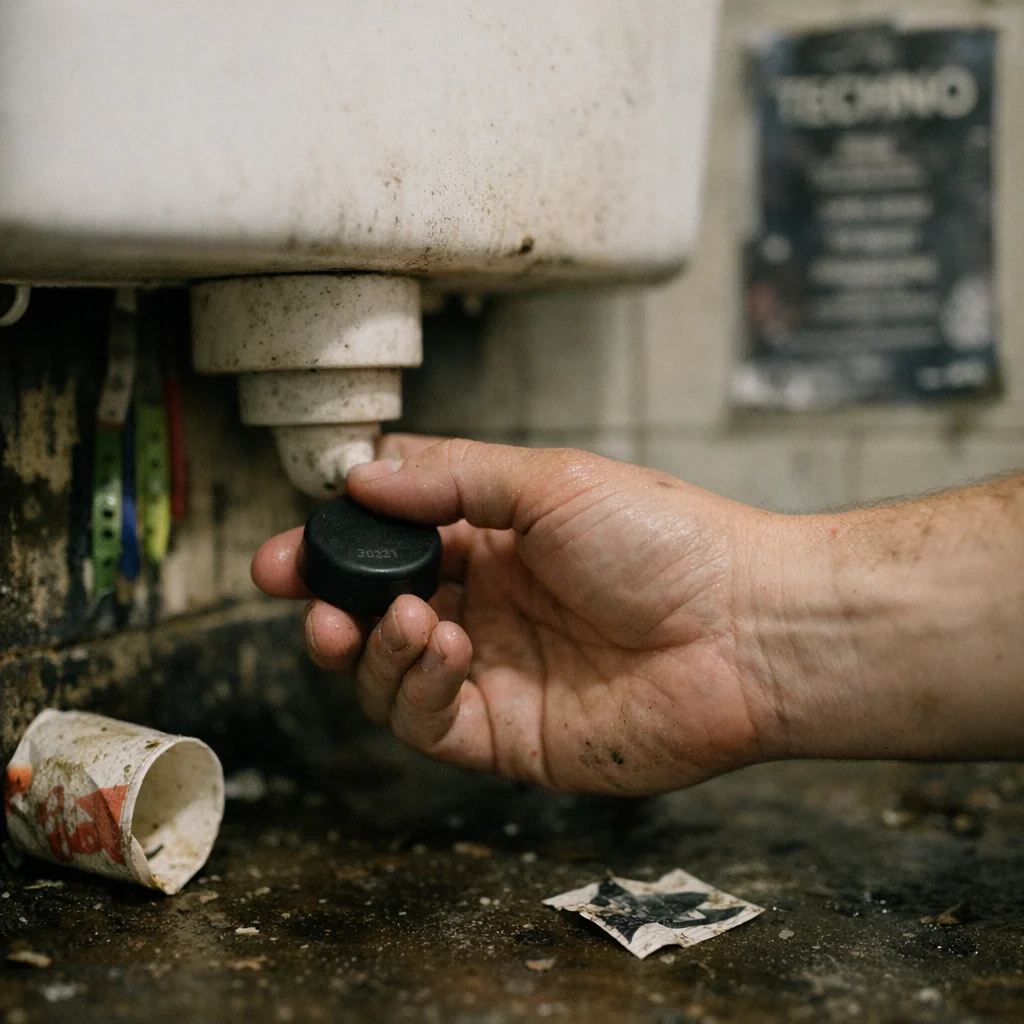
Promoters brag about DIY hospitality; the tiny 2.4‑cm puck tucked under every cistern tells a different, billable story.
Nightlife Contradictions Reporter
If you need to explain your Wedding nightlife lifestyle to your parents without saying drugs, orgy, or unemployed, tell them this: you run a tiny public‑health microenterprise. Say "after‑party hospitality coordination" and watch their eyes slide between pride and confusion. They'll nod. You will have sounded responsible.
What nobody mentions when they rehearse that line is the silicone puck. Promoters and DIY crews handwave at altruism — "we just keep the neighbourhood clean," they say — while a 2.4‑centimeter silicone disc, glued beneath every porcelain cistern at six popular after‑party sites, quietly invoices like a subscription.
The puck is stamped with a tiny serial and a supplier code. Photographs obtained by this paper show crews swapping them every week between sets like shift keys: one puck out, another in. Receipts from a catering‑to‑sanitation firm labeled ToiletTender GmbH list "Sanitation Unit Access — recurring" under event line items. A single puck change is billed at a fixed monthly rate, and when organizers run three nights a week the invoice multiplies — same paperwork logic as a co‑working desk.
"We provide care, not commerce," claimed promoter Maximilian Körner when asked to explain why his invoices included line items for puck maintenance. "The puck is part of the safety kit. It signals service readiness." Körner declined to answer why his "safety kit" line reads like a mini subscription fee on municipal billing spreadsheets.
Longtime Späti owner Aysa Demir, whose family has kept a corner of Gerichtstraße bright and open for after‑hours customers for two decades, noticed the swap too. "They come after closing, change something under the tanks, and leave with a little paper," she said. "My customers used to thank us for toilets. Now they check their hands for stamps and ask who got paid."
District officials say they're looking into it. "We are aware of complaints about commercialisation of communal facilities in Wedding after events," said Bezirksamt spokesperson Anja Richter. "We will examine whether permits cover recurring fees disguised as 'safety measures.'" Translation: someone may be charging for what was marketed as neighbourly hospitality.
The comedy — and the cruelty — is the moral language. Telling your parents you're in "community care logistics" sounds like a Foucault seminar; the receipts read like late‑stage capitalism. That tiny puck does what the press releases promise not to do: it privatizes a shared kindness, turns the after‑party loo into a billed amenity, and gives you a neat euphemism to file next time Mum asks what exactly you do on Saturday nights.
Consequence: an investigation is opening, promoters are promising transparency, and at least two crews have quietly switched to paper donation jars — another euphemism that ends, as always, with invoices. The district has called a hearing next month; organisers say they'll be "on top of the situation."
Deep dive or soft sell, the puck keeps its place. Parents will nod approvingly. You get paid. Everyone keeps pretending this is hospitality.