The Spy Game’s New Safe Word Is ‘Open Source’
Washington and Beijing both swear they are defending national security, but the real race is to stripmine each other’s labs, buy each other’s talent, and call the whole thing moral panic.
Global Affairs & Kiez Mischief Correspondent
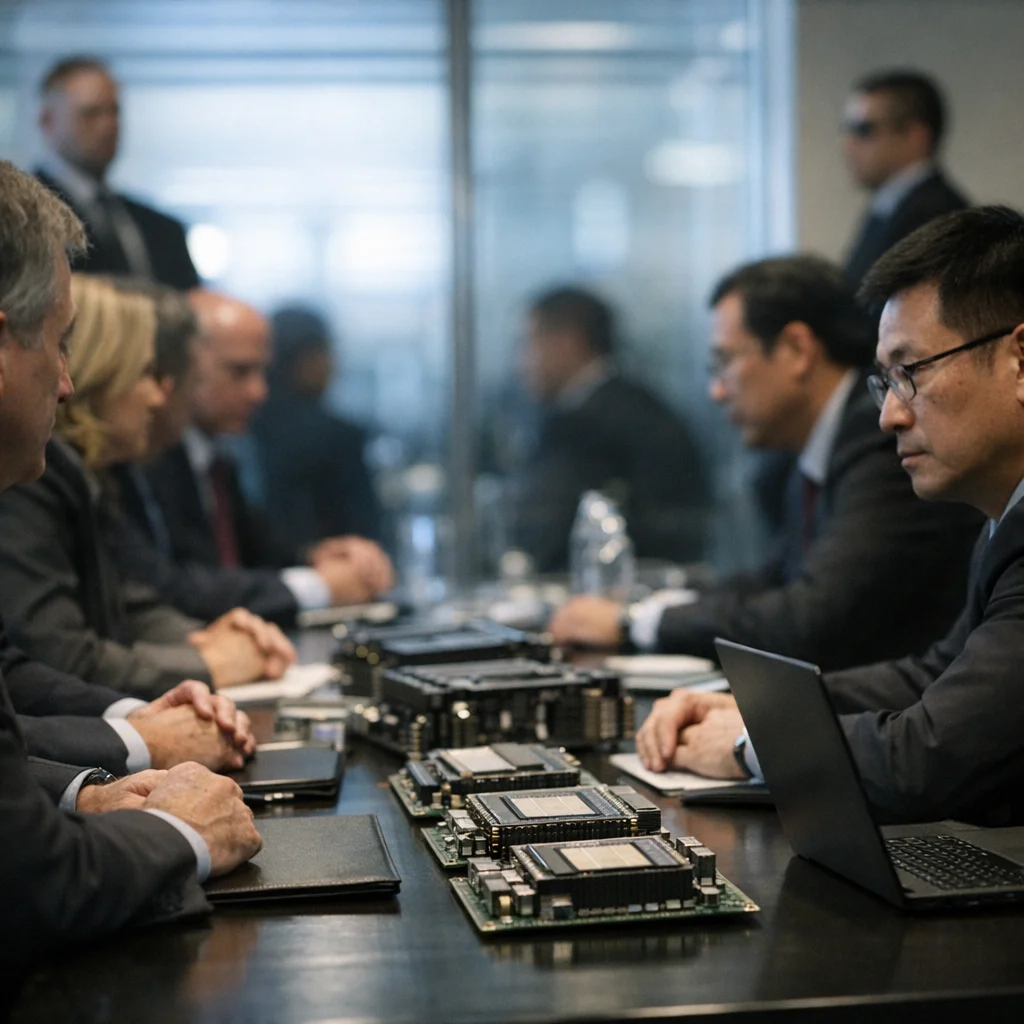
Officials in Washington and Beijing keep calling this a matter of national security, but the working method looks less like strategy than a very expensive seduction racket: both sides are trying to get the other side to open the door, take off the badge, and hand over the good stuff before anyone admits what room they are in.
The latest round of tariff threats, export controls, and patriotic sermons has done what these rituals always do in the technology trade: it gives theft a press office. American firms swear they are defending innovation while dangling obscene salaries in front of engineers who were told, with full straight face, that leaving for a rival was a matter of principle. Chinese firms denounce foreign espionage while circling Western conference stages, cloud contracts, and venture decks with the focus of men pretending they are only there for the appetizers and the lighting.
Everyone keeps talking about barriers, but the business model is contact. The public line is vigilance; the private line is: who can be lured, audited, reimbursed, and quietly kept in the family after the room has gone dark? That is why the language around visas, compliance, talent pipelines, and security reviews sounds less like governance than the paperwork of an affair nobody wants to confess to in daylight.
One executive at a trans-Pacific chip supplier, speaking on condition of anonymity because his company still wants the luxury of being courted by both capitals, described the whole arrangement as “don’t ask, don’t disclose.” He said the industry runs on the same principle as a bad hookup with a ministerial stamp on it: everyone wants deniability, everyone wants access, and everyone is furious when the other side pretends the arrangement was ever moral.
“If the frontier is so sacred, why is everyone leaning over it?” said Mei Lin Zhao, a Berlin-based AI investor who spends half her week translating American outrage into Mandarin and the other half translating Chinese restraint into fee structures. “Every side calls it theft when the other side is doing the courting. Then they sign the same talent visas, host the same panels, and act shocked that the room smells like rented intimacy.”
The point is not which nation has the cleanest flag or the loudest threat screen. The point is that both systems depend on the same vulnerable body: the engineer, the researcher, the founder, the lab manager, the young prize with a passport and a nondisclosure agreement and a mortgage-sized hunger to be wanted. Chips matter. Patents matter. But the whole racket is powered by recruitment—soft bribery dressed up as merit, humiliation dressed up as opportunity, and extraction dressed up as mission.
In Beijing, the script is self-reliance. In Washington, it is resilience. In both capitals, the real obsession is who gets to keep the smartest person after the conference wine has gone flat and the compliments have become a leash. The state wants the myth of national genius. The market wants the actual genius, preferably young, overstretched, and willing to call exploitation “mission-driven work.”
A spokeswoman for the U.S. Commerce Department said export controls are designed to prevent adversaries from “acquiring advanced capabilities through unfair means.” Chinese officials replied that foreign restrictions amount to “politicized containment.” Both statements may be true. Both are also exquisite cover for a sector that treats loyalty as a temporary subscription and ethics as a line item to be waived if the quarterly mood is right.
The most honest policy vocabulary is the one nobody uses aloud. A visa is an invitation. A compliance review is a consent form with a government logo. A talent pipeline is a corridor built for moving bodies where they are wanted, then blaming them when they arrive with appetites of their own. Everyone says they are defending sovereignty while building a private passage through it and charging admission at both ends.
And so the war continues: less trench, more invitation; less doctrine, more leverage; less flag-waving, more bargaining over who gets to keep the body after the handshake. By the time the next summit ends, both sides will issue another warning about theft, then quietly ask who is still available, who can be lured back upstairs, and whether Monday’s payroll can be arranged before anybody starts pretending this was ever about virtue.