The Two‑Millimetre Slit in Wedding’s 'Wind Trees' That Lets Landlords Sell Our Breeze
What was billed as a civic 'comfort' art project is, if you squint at shin height, an ideal mounting point for commercial weather sensors — and the sensors' data is quietly rented to property markets.
Gentrification & Moral Performance Correspondent
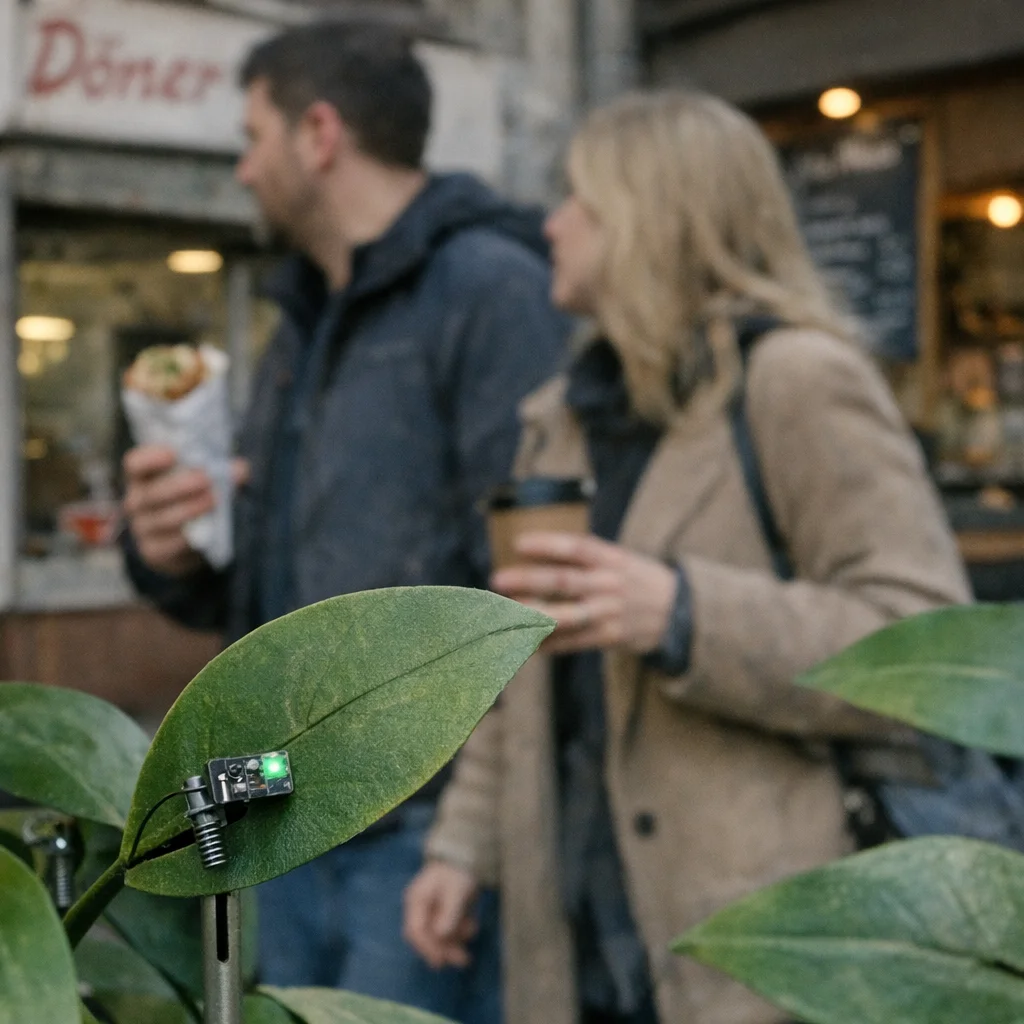
Everyone applauded when the council installed the "wind trees" along Müllerstraße — a civic comfort project, the brochure promised: softer gusts, fewer umbrella casualties, an artful pause between the döner and the oat‑milk café. People liked the idea of the city bending its knees for public pleasure. I believed it for about two weeks, until I crouched down, as one does when you suspect a municipal gesture is masturbatory performance art, and noticed a neat two‑millimetre slit under every synthetic leaf.
That slit is not a charm or a manufacturing hiccup. It is the precise width of a spring clip used by a rent‑analytics firm I traced to three different listings: the clip hooks into the slit as cleanly as a bad Tinder line hooks into a distracted soul. Two millimetres — shin height, hidden from PR photos, perfect for affixing a microanemometer that reports "evening breeze scores" to anonymous dashboards. The project that sold us leisure sold landlords microclimates instead.
You know the script: an artistly civic improvement, a council seeking culture clout, and the public applauding because it feels like kindness. But the small, practical detail — the mounting slit — flips the play. Comfort becomes commodity. Aeneas‑level urban myth becomes a subscription product: landlords buy a night's worth of favorable wind data and advertise that the balcony gets "romantic zephyrs after sunset." Dating profiles now list "balcony with breezy ambience" like a new room in the flatshare market.
"We noticed little metal clips one morning hanging off the trees," said Leyla Tekin, whose family has run a döner stand nearby for decades. "At first we thought it was art. Then a man in a suit tried to explain how breeze rates raise apartment desirability. He smiled like he owned the weather." A district spokesperson, Tobias Klein, insisted the trees were for research and "no commercial licensing is currently authorised." BreatheValue Analytics, a company that buys and packages environmental microdata, declined to answer detailed questions but left a polite voicemail about "partnerships."
This matters to me for a reason that begins in the bedroom: dating in Berlin is already a market of atmospherics — playlists, lighting, curated melancholy. We pretend intimacy is spontaneous while paying for the conditions that make spontaneity photographable. If we cheer when the council erects an ornamental breeze and don't demand the contract, we are the ones who let air be monetised. We have been comfortably duped into commodifying even the way our dates shiver.
So yes, I blame all of you: the gentrifier who posts a sunset photo from a rented balcony, the activist who cheers participatory art without reading the procurement file, and myself for assuming a public good couldn't be leased in parts. The next steps are obvious and bureaucratically erotic: an audit of procurement, a public hearing, and a demand that any sensor data be open and free. Until then, every gust on Müllerstraße will come with a price tag — and a membership form.
If Kafka wrote a matchmaking app, he'd call it "Municipal Breeze," charge per inhale, and list the conditions in triplicate. We should be angry enough to read them.