The Velvet Rope Opens for the Wrong Lips
A new nightclub policy in Wedding lets influencers skip the line if they agree to a “harm reduction” wristband, a water bottle, and a manager’s private lecture on responsible excess.
Nightlife Etiquette & Status Rituals Correspondent
The Velvet Rope Opens for the Wrong Lips
By the time the first bottle-service crowd reached the door of Lusterbox in Wedding, the club had already announced its preferred theology: some mouths are trusted to speak at the rope, and some are only allowed to wait there with their faces lit by someone else’s approval.
Management called the new entry system “harm reduction.” In practice it was a three-part invitation to submit. Anyone wanting the fast lane had to accept a paper wristband, a bottle of water, and a private lecture from a manager on how to behave if the night got messy, expensive, or embarrassing enough to require a cleanup narrative. It was marketed as care, but it had the texture of being fingered by policy: a brief, bureaucratic intimacy offered only to people with the right haircut, the right follower count, and the right appetite for being chosen.
The package was not designed for danger. It was designed for the kind of person who likes being told they are fragile by people who also hope to profit from that fragility. The wristband said you had been handled. The water said you were expected to dry out before making a scene. The manager’s private talk said the club had already decided what kind of trouble your body might become, and was kind enough to preempt it with a little sermon and a soft touch of authority.
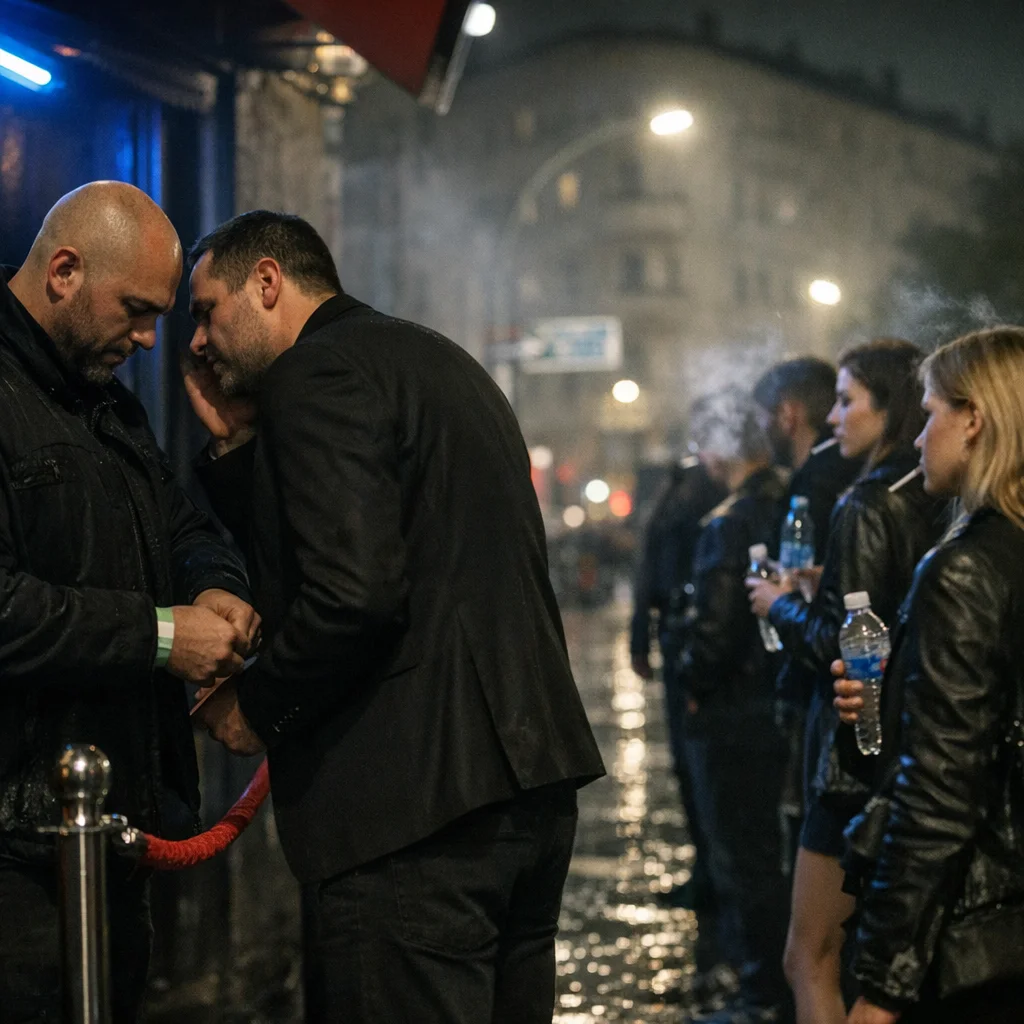
Outside, the line filled with startup men in black T-shirts, wellness women wearing that polished, expensive exhaustion that passes for virtue in this city, and a pair of self-styled community organizers clutching electrolytes like sacramental props. One man kept checking his phone as if his mention count might rip the rope open by force. One woman laughed too loudly at nothing, the universal signal of a person trying to look casual while auditioning for access. Everyone in line looked like they had paid for the fantasy of being independent and were now waiting to be selected like a discreet vice.
A bouncer at the door, broad as a municipal apology, inspected each wrist as if he were reading consent forms in a language nobody had actually agreed to learn. The manager’s briefing, according to two people who stood through it, was delivered in a voice so calm it felt indecent. Guests were told the club wanted “responsible excess,” which is the sort of phrase that only ever means one thing: we would like you to be wild, but only in the ways that leave money on the counter and no evidence in the morning.
“Everyone says it’s about safety,” said Deniz Aydin, who watched the queue from the curb while smoking under a streetlamp and laughing with the exhausted contempt of someone who has seen every civic costume in the district. “It’s a loyalty test. If you take the bracelet, the water, and the little private lesson, you’re telling them you can be handled. You’re saying yes to being managed before you’ve even been admitted. That’s what the club wants: patrons who mistake being processed for being desired.”
Lusterbox denied the arrangement was a status filter, though its own explanation did the work of a confession. A spokesperson said the system was intended to “reduce bad decisions among guests especially susceptible to peer influence,” which is precisely the kind of managerial language that turns a nightlife door into a compliance workshop with bass. The district health office said it would review whether the private briefings complied with licensing rules. One promoter, speaking anonymously because he once sent out a flyer with a missing apostrophe and still hasn’t emotionally recovered, called the scheme “brilliant.”
“People will do anything for a velvet rope that pretends to like them back,” he said. “Tell them they’re being looked after and they’ll line up to be handled. Tell them there’s a wristband and suddenly they’re not customers, they’re supplicants with good skin.”
By midnight, the guests inside were holding their wristbands up like tiny badges of submission. The ones who made it through the door acted as if the club had chosen them for a private degradation they should feel grateful to survive. The ones still outside kept negotiating with staff in the tone of people trying to convince a locked mouth to open just a little wider. The rope did not move. The queue only thickened.
Nearby residents said they were already tired of hearing self-described radicals discuss consent while lining up for a room that sells abandonment by the drink. Lusterbox says the policy may expand next month. If it does, it will simply make the old truth more efficient: in Wedding, access is always a favor, and the people handing out the wristbands are never the ones being touched.