The Weeping Bike Lane of Müllerstraße
A fresh stretch of infrastructure is forcing Wedding to perform its favorite trick: universal green virtue until the first stroller, delivery rider, or dumped sofa gets in the way.
Gentrification Field Medic & Moral Panic Enumerator
Müllerstraße’s Lane and the Parking Cult
Müllerstraße’s newest bike lane arrived wrapped in the district’s usual green sermon: safer streets, cleaner air, modern mobility, all the words they say with a straight face while crossing their fingers under the table. In Wedding, that kind of progress is always sold as if it were a moral upgrade, then immediately treated like a temporary nuisance by the people who think the curb is an extension of their apartment lease.
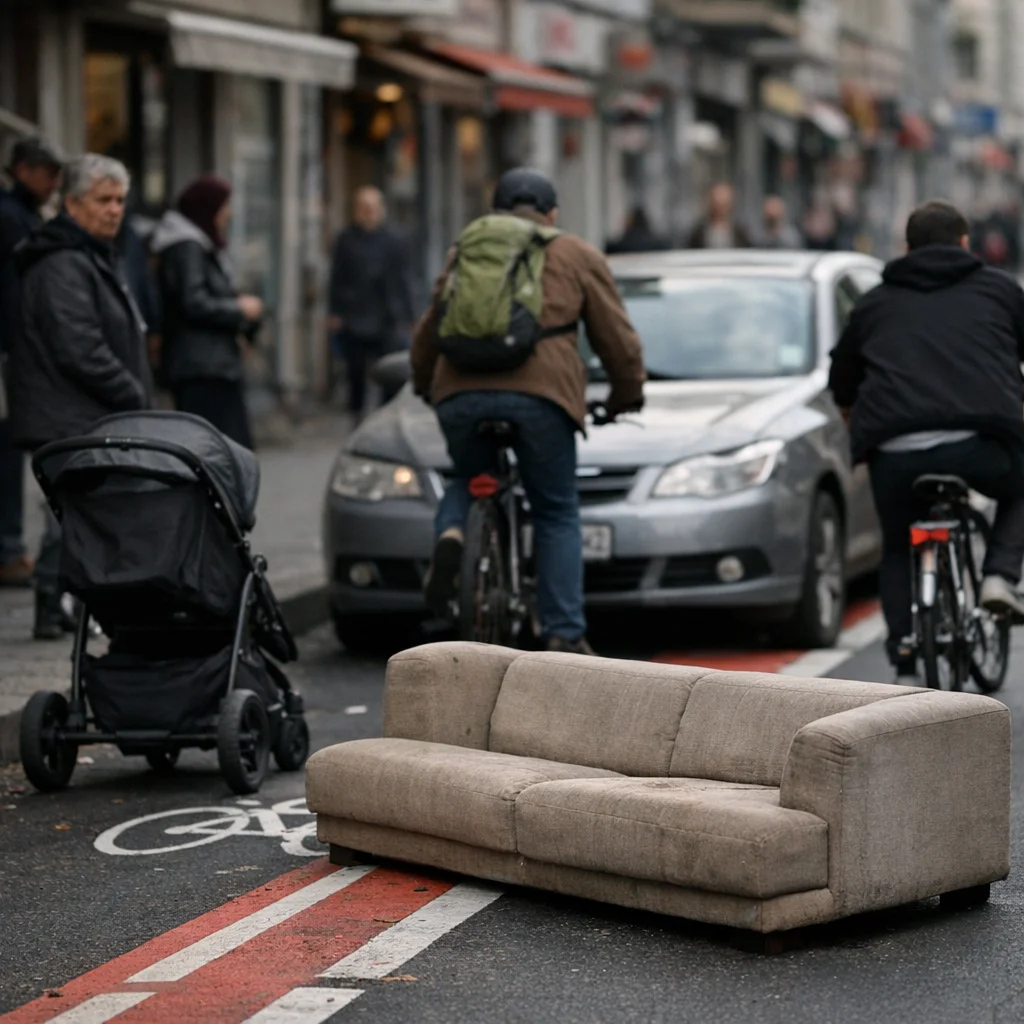
By Tuesday morning, cyclists were already learning the lane the way people learn a bad neighborhood rumor: carefully, with one eye on the next idiot. By lunch, delivery riders were slaloming through it with the dead, practiced look of workers forced to dodge both traffic and policy. By afternoon, the lane had its first souvenirs: a stroller left squarely in the paint, a sofa dumped like a broken promise, and two SUVs sitting in the middle with the calm entitlement of men who confuse possession with citizenship.
The local bakery regulars noticed, of course. They always do, right before they lecture everyone else about community. Outside a Turkish bakery near the stretch, one man with a paper cup and a parked conscience called the lane “a disaster for the Kiez,” which was adorable coming from someone idling beside the curb like he was waiting for history to valet his car. Another resident, the kind who posts climate slogans online and then blocks a lane with a leased crossover the size of a marital grievance, complained that the street had become “hostile.” Hostile to what, exactly? To your need to occupy three square meters of asphalt with your ego and your groceries?
The district office responded with its standard performance: concern, review, and the vague promise of future action once the problem had had time to mature into somebody else’s emergency. A spokesperson said the lane was meant to “improve safety and encourage modal shift,” which is bureaucratic language for: we painted a line, we hope the public behaves, and if it does not we will commission another meeting to discuss the emotional weather around enforcement. In practice, the office is doing what districts do best—pretending to regulate while carefully preserving the holy right of drivers to act like the street is their inherited dining room.
That refusal to choose is the whole show. The district office wants the applause of the green crowd without upsetting the men who treat parking like a masculine birthright. So it stages a little enforcement theater: a complaint form, a warning sticker, maybe a weekend blitz if the press is nearby and the optics are hungry. Then the cars return, heavy and damp and smug, because nothing says civic leadership like protecting the loudest obstruction and calling it balance.
The left, naturally, brought its usual perfume of self-critique. One resident celebrated the lane as “a small urban intervention,” then spent the afternoon standing in it while arguing that the real issue was “mobility justice,” a phrase so over-lubricated with virtue it now slides off reality without touching it. These are the people who will defend public space in theory, then spread themselves across it in practice like a rash in nice shoes. They want the city to be equitable, resilient, and accessible—as long as they can still double-park their ethics.
The right was cruder, but at least less decorative. A man near the butcher shop muttered that cyclists should “use the road like everyone else,” while his own car sat half on the curb, half on the lane, consuming the public realm like a bored landlord. That is the central fetish of the street: endless talk about freedom from the very people most addicted to taking it from others. The lane did not create the entitlement. It merely exposed it, like a fluorescent light over a badly kept room.
Wedding keeps pretending this is about transport. It is not. It is about who gets to sprawl, who gets to wait, who gets to smell the exhaust, and who gets to call that inconvenience “neighborhood character” when it is really just the smell of ownership with the windows down. The lane draws a neat line through the street and an uglier one through the local conscience. On one side: bicycles, delivery riders, parents with strollers, people trying to move. On the other: the parked, the idling, the permanently offended, and the self-styled progressives who can chant about climate collapse all day and still flatten a bike lane with the same bored confidence they bring to every public space they intend to colonize.
If this is transition, it arrives with dirty tires and a fake smile. The district office will call it a success once enough paint survives the drivers. Everyone else will keep circling it like vultures around a fresh bruise, waiting for the next excuse to prove that in Wedding, the public street is still treated like a private driveway with a conscience problem.