“Therapy Rave” Ends at 2:17 A.M.
The wellness promoters, techno bros, and city-language entrepreneurs promise healing, but the floor is mostly a recruitment drive for ego, drugs, and extremely tired heterosexuality.
Nightlife Identity & Self-Deception Correspondent
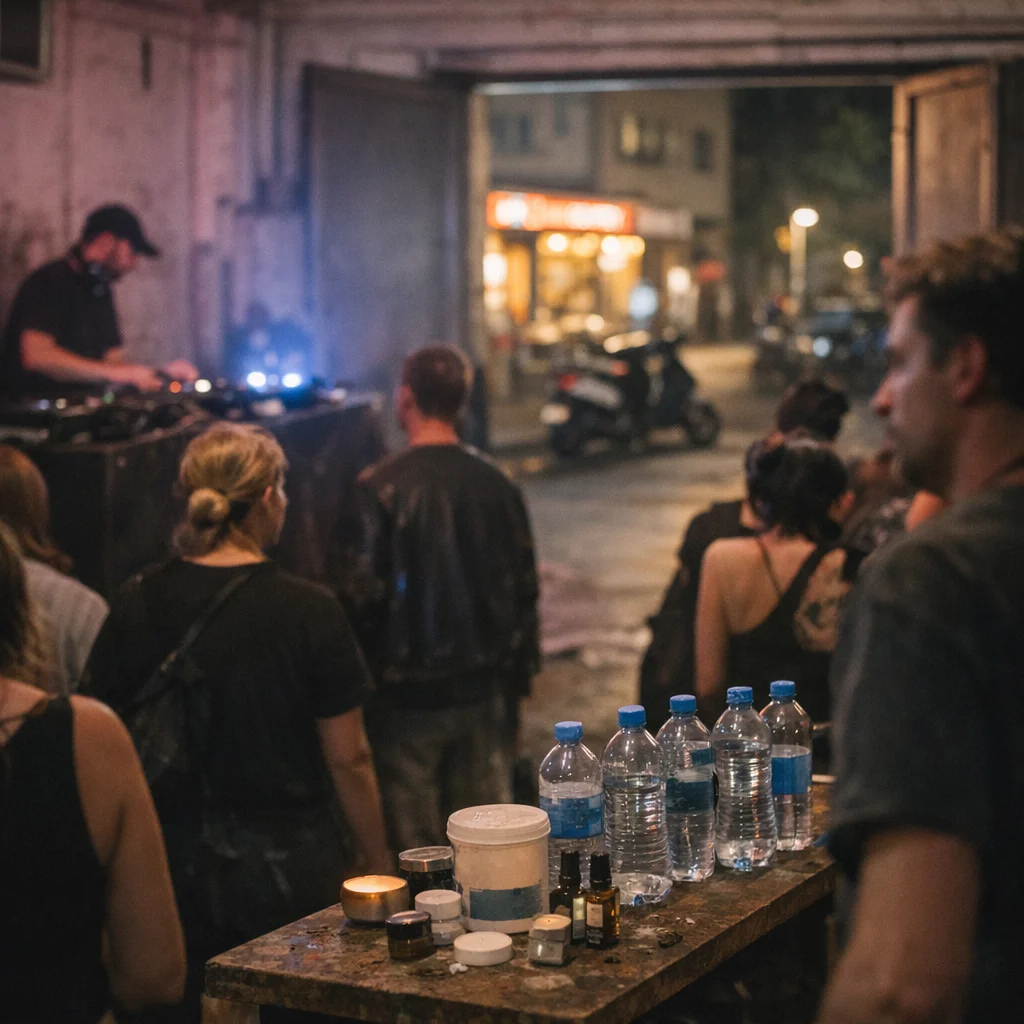
A new “therapy rave” in Wedding drew a line of black-clad optimists to a warehouse near Leopoldplatz on Friday night, where organizers promised community care, softer lighting, and a safer way to “process the city together.” By midnight, the room looked less like healing than a subsidized confession booth for people with ring lights, with DJ transitions, citrus water, and guests announcing their emotional boundaries like they were registering a trademark after a ketamine brunch.
The event, called a drop-in “somatic night,” was pitched by three self-described cultural workers who spoke the flat, over-watered dialect of municipal grant applications: trauma-informed, intersectional, low-threshold, and expensive in exactly the way that always seems to get approved. Instead they assembled the usual Berlin export model: startup fugitives, ex-activists in tailored trousers, a few neighborhood regulars from Wedding who came to watch the ritualized self-congratulation collapse in real time, and enough English-language self-help slurry to make Freud file a complaint with the licensing office.
“We are creating an accountable space,” said Mara Voss, one of the organizers, while standing beside a table of magnesium powder, flavored water, and little paper cups that looked like they had been sourced from a department store’s apology section. The setup cost more than a decent dinner at the Turkish bakery down the block, which on Müllerstraße still does not pretend to be a spiritual technology. “People can arrive as they are.”
They did. They arrived as people who had spent the week posting against capitalism and then paid 18 euros to be told to breathe into their pelvis by a former brand strategist from Neukölln. A man in a sleeveless top and a self-consciously damp jaw said the night felt “very embodied,” which in Berlin usually means he has found a socially acceptable way to make everybody else endure his nervous system. Another guest, who requested anonymity because his employer “doesn’t understand nightlife as a healing journey,” said he came for the music and stayed because the room made it easy to mistake mutual embarrassment for intimacy.
The event’s real specialty was not healing but predation with better fonts. People leaned in too close, spoke too softly, and used the language of consent the way other scenes use cologne: to cover the stink. A facilitator with the dead eyes of a management consultant and the tone of a youth pastor reminded guests to respect personal space while standing on a floor packed tighter than a rush-hour U8 carriage, where every apology seemed to carry the aftertaste of flirtation and self-hatred. The bass was warm, the affirmations were cold, and the whole arrangement had the moral confidence of a Marcuse lecture delivered by someone charging per hour and calling it care.
Outside, a nearby café owner said the crowd left behind discarded supplements, matching tote bags, and the kind of restless sexual weather that makes every group conversation sound like a failed negotiation. “They talk about boundaries,” he said, looking toward the warehouse doors and the glow of phones waiting for proof that they had been transformed, “but mostly they’re trying to get touched without admitting they’re lonely, which is the most expensive desire in Berlin.” A resident from a nearby block, where rent has climbed and the stairwells now smell like oat milk and ambition, put it more bluntly: “They call this community. It’s a premium package for people too ashamed to go to a normal club and too narcissistic to stay home.”
The party ended shortly after 2:17 a.m., right on schedule for a generation that cannot tolerate either pleasure or silence long enough to tell the difference. Organizers said they plan to return next month with better sound treatment and a revised code of conduct, which is exactly how a neighborhood gets politely infected: first by a grant, then by a mood, then by a room full of people pretending they have discovered ethical desire. In Wedding, where the streets still carry delivery scooters, kebab smoke, and the practical boredom of people who work for a living, the warehouse fantasy landed like what it was — a civic parasite with good lighting and a funding application.