Thesing’s Sneaker Empire Runs on the Most Berlin Idea Possible: Making Customers Do the Selling for Free
The local label’s real breakthrough isn’t design. It’s the ritual of turning sneakerheads, micro-influencers, and “community” regulars into unpaid showroom staff who beg to be seen as early adopters.
Nightlife Identity & Self-Deception Correspondent
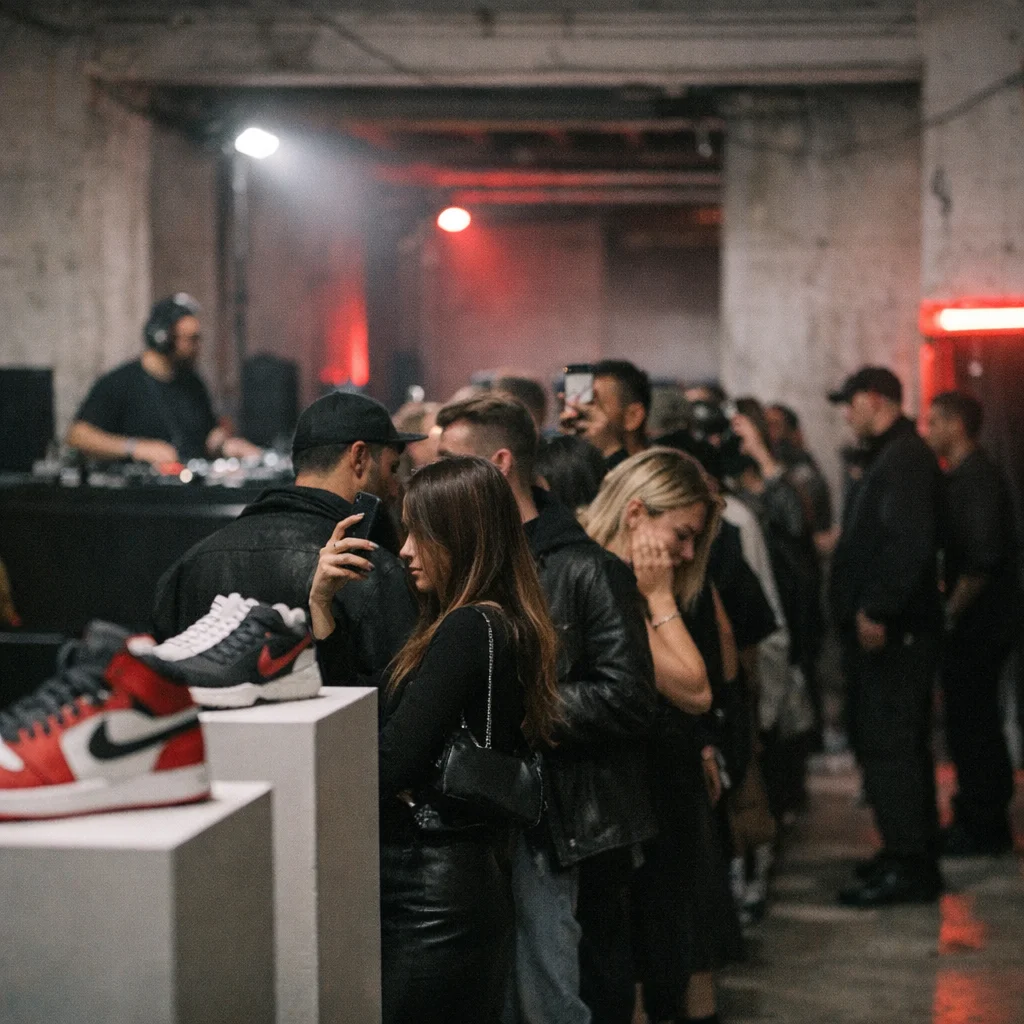
Thesing’s Berlin operation did what the city’s scene economy has become famous for: converting social hunger into free labor and calling it culture. The latest drop was staged in a warehouse that looked half showroom, half confession booth, with a queue of freelancers, interns, service-industry night owls, and micro-influencers standing outside in their best borrowed seriousness, waiting to be selected by a door policy they pretended not to understand.
The room was packed with people who have mastered the Berlin pose of being above everything while orbiting it like moths with ring lights. There were the usual “creative” men in clean sneakers and dead eyes, the women in expensive understatement who know exactly how long to linger for a story, and the brand addicts who speak in little bursts of approved vocabulary: community, drop, energy, family. None of it means anything. It’s just the lubricated language of access, the verbal equivalent of kneeling politely before a bouncer in hopes of getting fingered by relevance.
The ritual was humiliating in the precise, modern way: post, tag, film, smile, repeat. Guests were not merely encouraged to share the event. They were enlisted. Their phones became factory equipment. Their faces became distribution. Every self-conscious little clip of a sneaker wall or DJ silhouette was a free ad disguised as a personal memory, which is to say the purest form of Berlin entrepreneurship: make the customer pay for the privilege of promoting you while calling it belonging.
One attendee, a freelance stylist who asked to be identified only as Jana because she still hopes to be invited back to things, said the crowd was “very curated,” which is event-industry code for “everyone here is trying to look casually in demand.” She laughed the way people laugh when they are already halfway into the scam and the only remaining question is whether they will get a better angle on their own degradation.
The founder, Jannis Thesing, offered the standard smug operator’s vocabulary of inclusivity and scene-building, which in Berlin usually means one thing: find a crowd starving for proximity and charge them in attention instead of cash. He talked about “bringing people together” the way a landlord talks about “community” after raising the rent. The performance was immaculate. The contempt underneath it was even better. Selective access is the whole business model, and everyone in the room knew it. They just wanted to be one of the lucky bodies selected to sweat near the velvet rope.
This is where Berlin becomes so spiritually naked it almost blushes. The city likes to pretend it has preserved culture from the market. In practice, it has simply taught culture how to prostitute itself more efficiently. Thesing’s drop didn’t invent the trick; it refined it. Scarcity was sold as desire, desire as identity, identity as unpaid marketing. The label extracted labor from aspiration and called it intimacy, which is the same fraud tech platforms run, just with better lighting and more expensive denim.
There was, naturally, the moral-pose contingent: the people who spend all week denouncing extraction and all weekend lining up to be extracted from. They arrived with thrifted seriousness, ordered natural wine like it was a sacrament, and took pictures of themselves beside the sneakers with the blank concentration of people trying to turn vanity into politics. Berlin is full of these little civic masturbators, forever stroking their own conscience while the brand does the real work. They do not want justice. They want to feel early.
By the end of the night, the label had achieved the city’s favorite magic trick: turning desperation into atmosphere. The queue became content, the content became cachet, and the cachet became somebody else’s unpaid sales channel. A spokesperson said the next drop would be “even more selective,” which is exactly the kind of sentence a man says when he has mistaken gatekeeping for charisma and found a market for both.