They Bring Tea and a Tape Measure: How Wedding’s ‘Elder‑Care’ Visits Are Actually Building Recon in Disguise
City halls sell home visits as human warmth; the laminated checklist volunteers carry quietly turns boilers, curtains and kettles into property‑management intel.
Gentrification & Moral Performance Correspondent
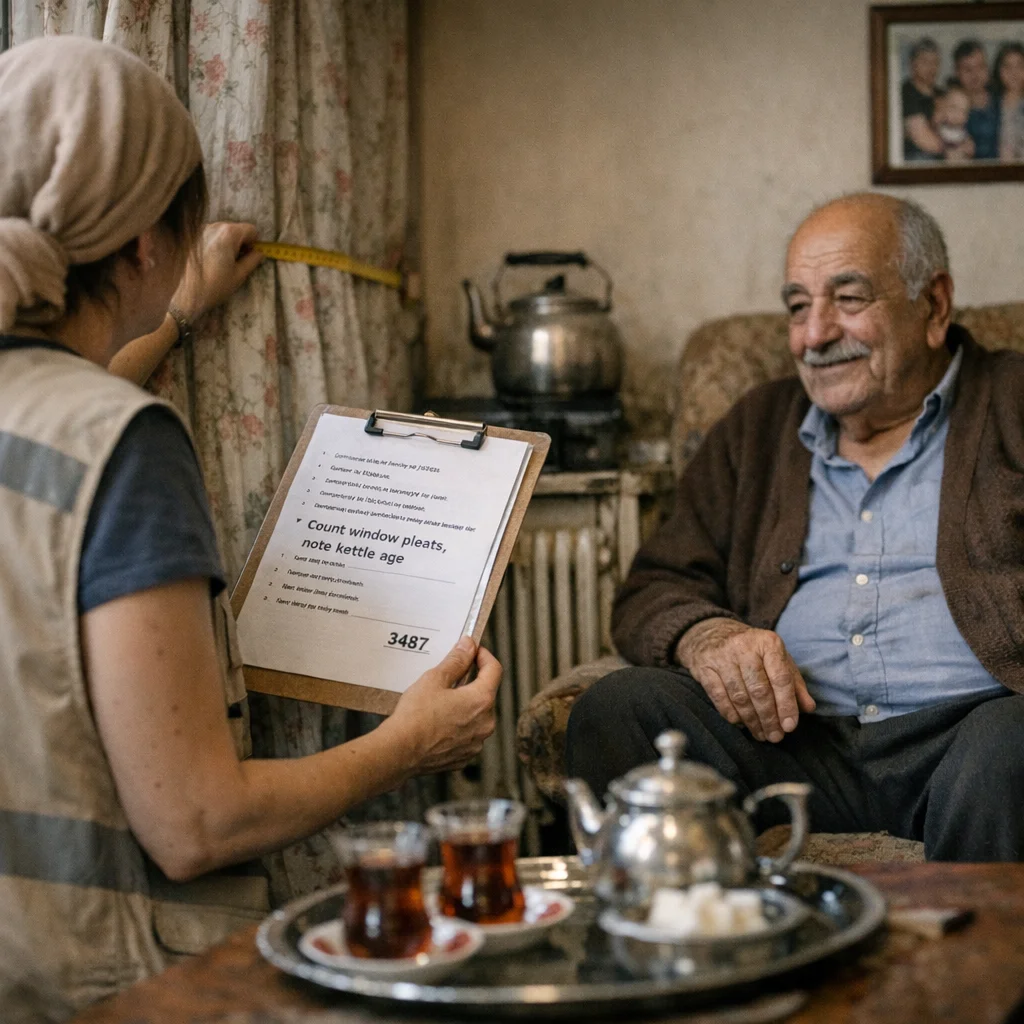
BERLIN — City officials and goodwill brigades have pitched Wedding’s new Sozialamt home‑visit scheme as quiet humanism: volunteers bringing tea, listening to pensioners, and helping fill forms. What residents and several volunteers found instead was a laminated checklist with a single odd instruction tucked near the bottom: “count window pleats, note kettle age” followed by a four‑digit code.
The program began in February with council vans and scarves, then spread to stairwells and döner‑scented living rooms. Volunteers knock, set down a tray, and perform the ritual everyone praises. First they chat about grandchildren; then, politely, they slide the clipboard forward and record details that are not about care but about capital — the exact width of curtains, the model year stamped on tea kettles, the make and visible rust on boilers.
"They said we were there for dignity," said Mehmet Acar, 72, who lives above a closed Späti in Wedding. "Then a young woman measured my curtains like she was cataloguing me for an estate sale." Acar produced a photo of the clipboard. The one‑line instruction sat under the neat items about medication and social contacts: a terse data point and a municipal code that, according to two volunteers who asked to remain anonymous, routes into the same portal landlords use to plan renovations and rent‑repositioning.
The official line from the Bezirksamt’s Sozialamt is conciliatory. "Home visits assess care needs and accessibility," said spokesperson Anna‑Luisa Kröger. "Any administrative fields are for internal coordination." Asked whether the four‑digit codes link to property management databases, Kröger replied, "Not to my knowledge," then added, with a firmness that suggested otherwise, "We are reviewing forms." That review has not yet produced a public correction.
Inside the left‑wing circles that recruit the volunteers, the visits have become a purity test. Some collect their clipboards like catechisms; others refuse to record anything beyond tea preferences and leave. A public thread on a neighbourhood forum devolved into accusations: "You’re soft‑selling displacement," one user wrote. "You’re capitulating to the landlord class," answered another. Clara Mei, a volunteer who quit last week, said colleagues argued about whether to be literal careworkers or undercover data gatherers. "We started by penetrating the bureaucracy to help people," she said. "Now I think we just helped it penetrate them."
The small, logistical detail — a measurement, a code, a kettle’s age — does the work the charity rhetoric cannot: it translates the intimacy of a living room into predictable asset upgrades. For critics, the program has quietly converted empathy into reconnaissance, a micro‑panopticon worthy of Foucault, with the domesticity of Kafka.
District officials say they will audit the forms. Activists plan to publish all the checklists. The question for Wedding is whether the next visit will bring only tea, or a contractor and a notice to renovate.