Three-Day Garden Marathon Colonizes About Blank and the Rest of Wedding
A polite Sunday gathering quietly stretched its legs into a weekend that would not quit—tents, laptops, Turkish breakfast swaps, and one city inspector who forgot how to leave.
Garden Party Correspondent
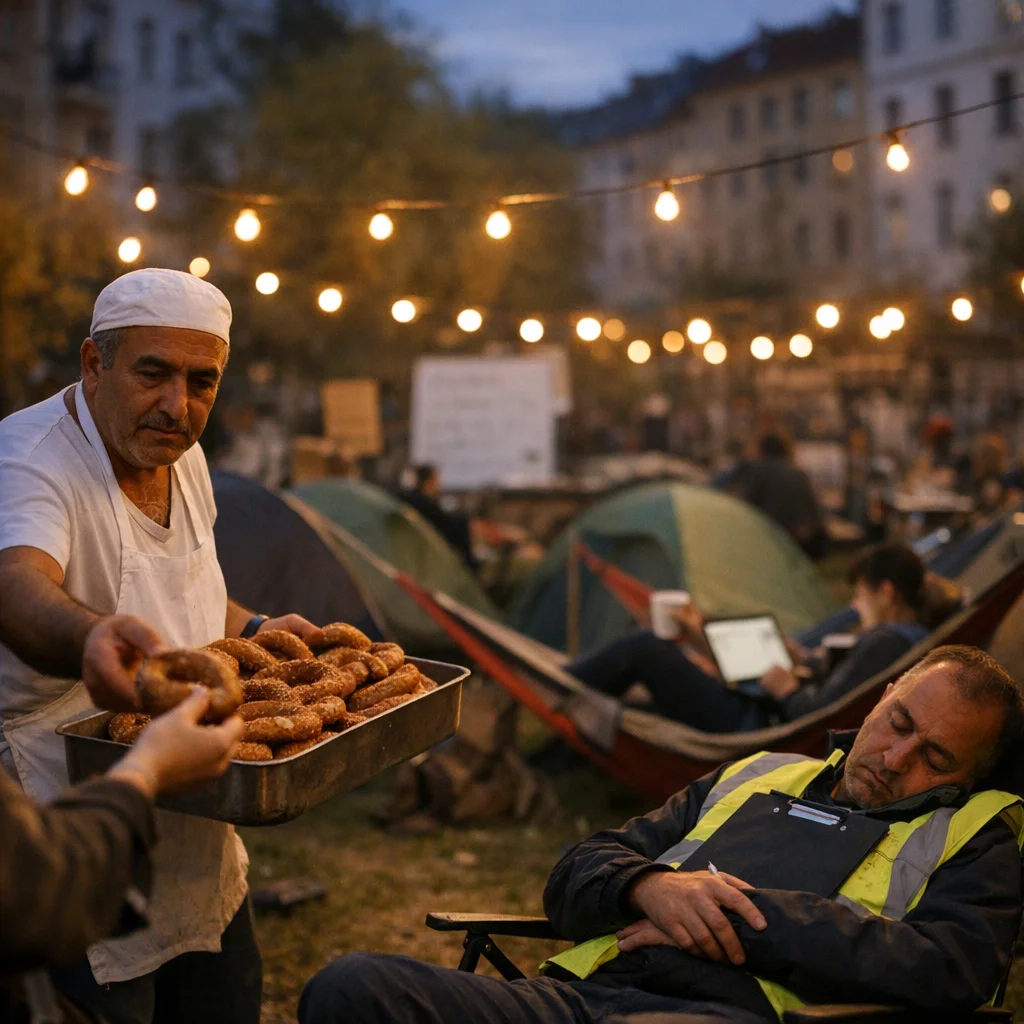
On Sunday a handful of friends brought salad and good intentions to About Blank’s garden. By Tuesday, the space had developed a municipal personality disorder.
What looked like an amicable potluck graduated into a squatters’ congress: tents elbowed one another like bad roommates, hammocks doubled as hot desks, and someone hung a whiteboard that read "open meeting" with the solemnity of a minor religious icon. Hipsters pitched in with artisanal condiments while a local Turkish baker, who’d shown up with trays of simit, quietly traded sesame rings for borrowed power strips.
The plot thickened because Wedding is allergic to neat endings. Startup founders took to taking investor calls between naps. A children’s chalk mural became a schematics board for an improvised co-op. Volunteers ran a schedule so organized it could have been an academic syllabus on accidental permanence: yoga at dawn, panels at noon, communal dishwashing at dusk. It was glorious, exhausting, and slightly obscene—like a Debordian spectacle wearing thrift-store couture.
Longtime residents watched from their windows with the restrained fury of people who have paid rent for decades while the neighborhood learns how to “activate” public space. Some grumbled; others accepted free bread. A municipal inspector arrived to deliver bad news, then failed to follow through when the hammock offered a persuasive argument. He did file a single, polite email that read like a breakup note: please vacate. The garden replied by erecting a polite sign saying "on sabbatical." The correspondence ended with mutual vagueness.
If Jorge Luis Borges had written about festivals, this would be his circular plaza: the party folded back on itself until a lost tent became a landmark. Artists compared it to an urban Arcadia; urbanists compared it to a policy nightmare; everyone compared it to something they could monetize. The atmosphere climaxed at dawn under a borrowed tarp—an intimate resolution that satisfied no one and embarrassed nearly everyone.
By the third day the garden had established customs: a barter economy for power adapters, a rota for standing watch against damp mornings, and a rumor that a landlord had seen opportunity and was polishing a contract in a nearby café. Organizers insisted they were merely extending a booking, not entering into a long-term relationship with the space. Wedding, unsurprisingly, kept its options open.