Three Lines of Speed and a NATO Briefing: Wedding’s Newest Techno Fundraiser Promises “Defense Aid,” Delivers Bass
After a US ambassador praised Germany as a top donor of NATO weapons aid to Ukraine, locals in Wedding tried to help the only way they know: by turning geopolitics into a door policy.
Geopolitics & Hangover Correspondent
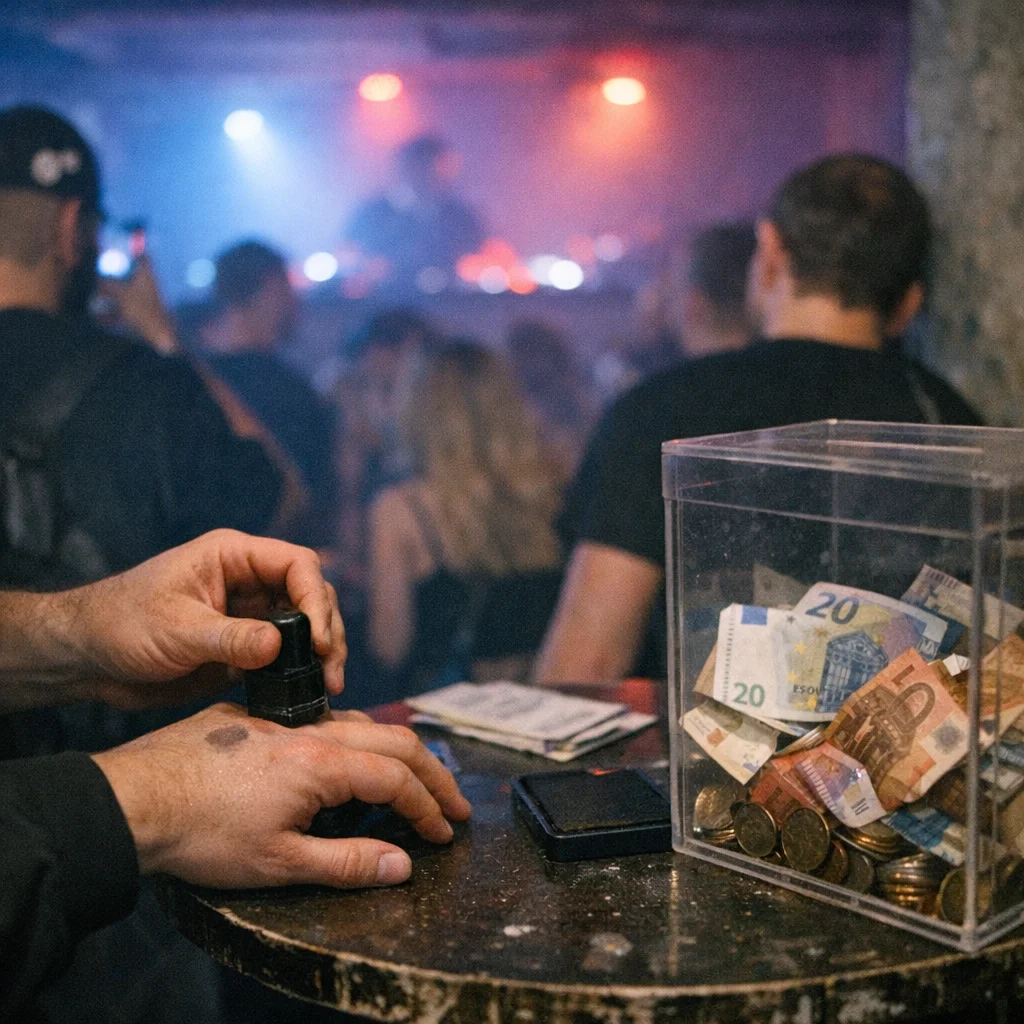
Germany is being publicly congratulated for ranking among the biggest contributors to NATO weapons aid to Ukraine, according to remarks attributed to the US ambassador. In Wedding, this was received with the usual civic reflex: someone immediately tried to monetize the moral emergency.
By early that evening, a flyer had spread through group chats like a grad-school rumor: “DEFENSE AID, OFFENSE BEATS.” The venue was a familiar Berlin miracle—an unmarked door near a late-night laundromat, a staircase that smelled like detergent and self-importance, and a bouncer performing neutrality with the seriousness of a UN interpreter.
Inside, a DJ played techno so functional it could have been written by a committee. Above the booth hung a “live tally” of donations—not on a screen, because that would be vulgar, but on a clipboard being stroked and updated by a volunteer in a vintage blazer who kept saying, “We’re mounting impact.”
The event’s surreal twist was small and perfectly Berlin: the donation box was a repurposed ink-stamp station, and every contribution made the stamp on your hand slightly darker. People treated it like proof of virtue and access. One man lifted his arm under the bathroom light, comparing saturation with strangers like it was an art fair and his forearm was a Gerhard Richter.
Longtime Turkish shop owners from nearby streets showed up out of curiosity and left with the expression of people watching their neighborhood become a thesis. One older guy reportedly asked, politely, what exactly the money paid for. A volunteer answered with a deep, earnest breath and said, “It goes where it needs to go,” which is also how Berlin explains most finances, from startups to shared apartments.
In the bathrooms—Berlin’s true parliament—expats debated deterrence while practicing a firm grip on their tiny cups of water. Someone referenced Clausewitz like it was a DJ name. Someone else quoted Hannah Arendt about the banality of evil, then cut the line with the confidence of a man who believes ethics is a subscription.
By sunrise, the fundraiser had raised a respectable sum and an even larger quantity of self-congratulation. The crowd spilled out, dark stamps held up like credentials, ready to tell anyone who’d listen that they “did something,” which is Berlin’s favorite form of action: symbolic, sweaty, and impossible to wash off for days.