Three New Cafés in Wedding Introduce “Döner Flight,” Turning Lunch Into a Ted Talk With Garlic
Shaved meat is now served in tasting portions with note cards, a neutral font, and the kind of eye contact that makes you miss being ignored.
Food Politics & Public Appetite Correspondent
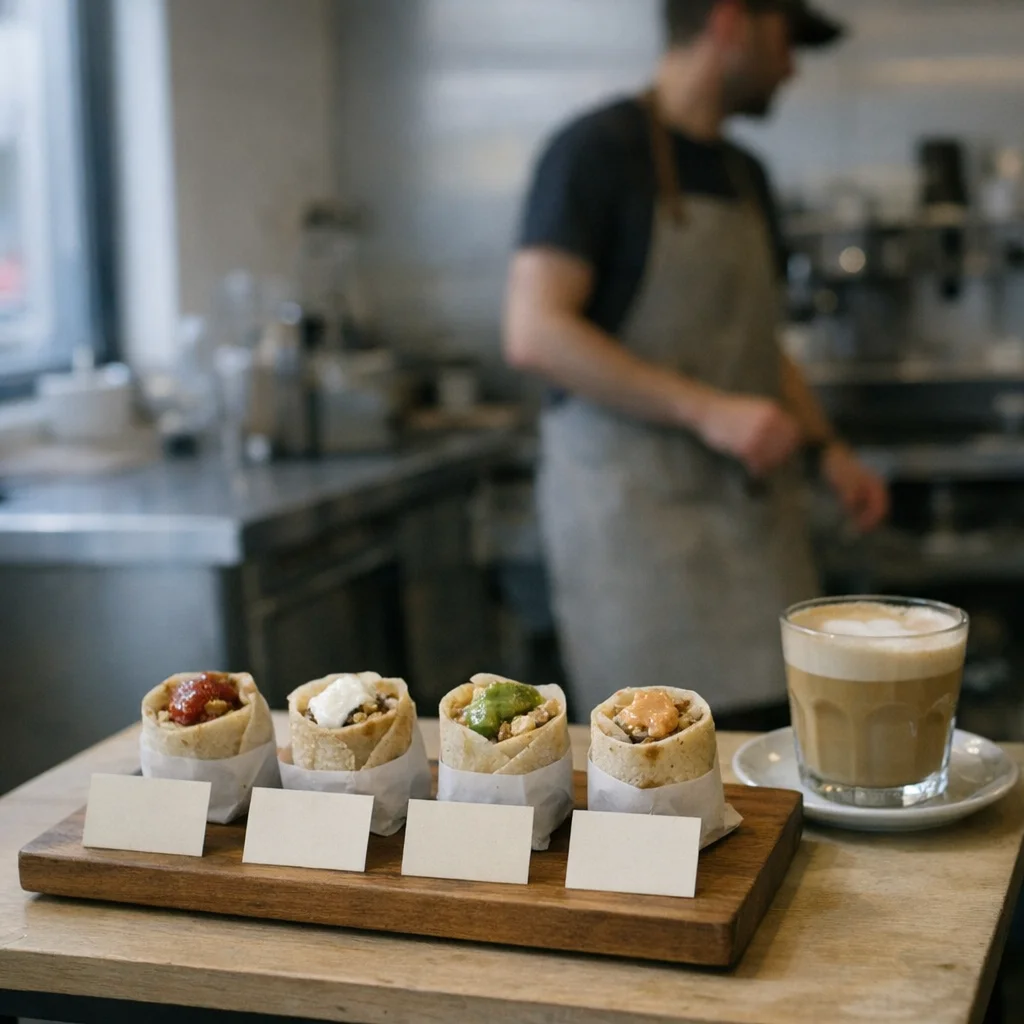
WEDDING — Sometime midweek, when the neighborhood is neither hungover nor optimistic, three newly opened cafés unveiled the “Döner Flight”: a wooden board holding four miniature wraps arranged like a museum exhibit that hates fun.
Each sample arrives labeled with origins, mood, and a short statement about the “emotional terroir of the yogurt.” One barista—who looked like he’d been styled by a grant application—explained that their goal is to “recontextualize street food in a post-industrial palate.” Translation: make lunch do unpaid labor.
Meanwhile, two blocks away, a Turkish family-run döner spot continues the radical practice of feeding people without asking them to join a book club. Their menu remains scandalously clear: you point, you pay, you leave. No one is forced into a long, intimate conversation about cumin like it’s their attachment style.
A neighborhood split between hunger and self-image
The cafés insist the flight is “educational.” Customers are handed pencil-thin napkins and encouraged to compare “crispness gradients.” One patron, a freelance strategist with the posture of someone who’s always negotiating, praised the experience as “a deep read of bread.” He added that the fourth sample “finished too quickly,” then stared at the board like it owed him closure.
Across the street, an older regular at the traditional counter offered his own comparative analysis: “If you’re hungry, you eat. If you’re lonely, you eat slowly and call it culture.”
The surreal twist is small but telling: the cafés’ tasting boards have started getting longer on their own—each week another empty slot appears, as if the wood itself is making room for future add-ons and bigger margins. Staff treat it as normal. “It’s evolving,” one said, stroking the board with a firm grip that suggested both craftsmanship and a personal boundary issue.
Walter Benjamin would hate this, which is a compliment
A local food historian compared the trend to “a gentrified aura problem,” invoking Walter Benjamin the way people invoke protein: to justify everything. The point is not the wrap; it’s the performance of having the “right” wrap.
In Wedding, döner used to be a quick comfort. Now it’s a curated experience that wants to climb on top of your day, whispering: you’re not just eating—you’re becoming.
And that, like too much garlic sauce on a small shirt, is hard to carry with dignity.