Thuringian Sid Factory Still Stuffing While Trump Screws the Margin
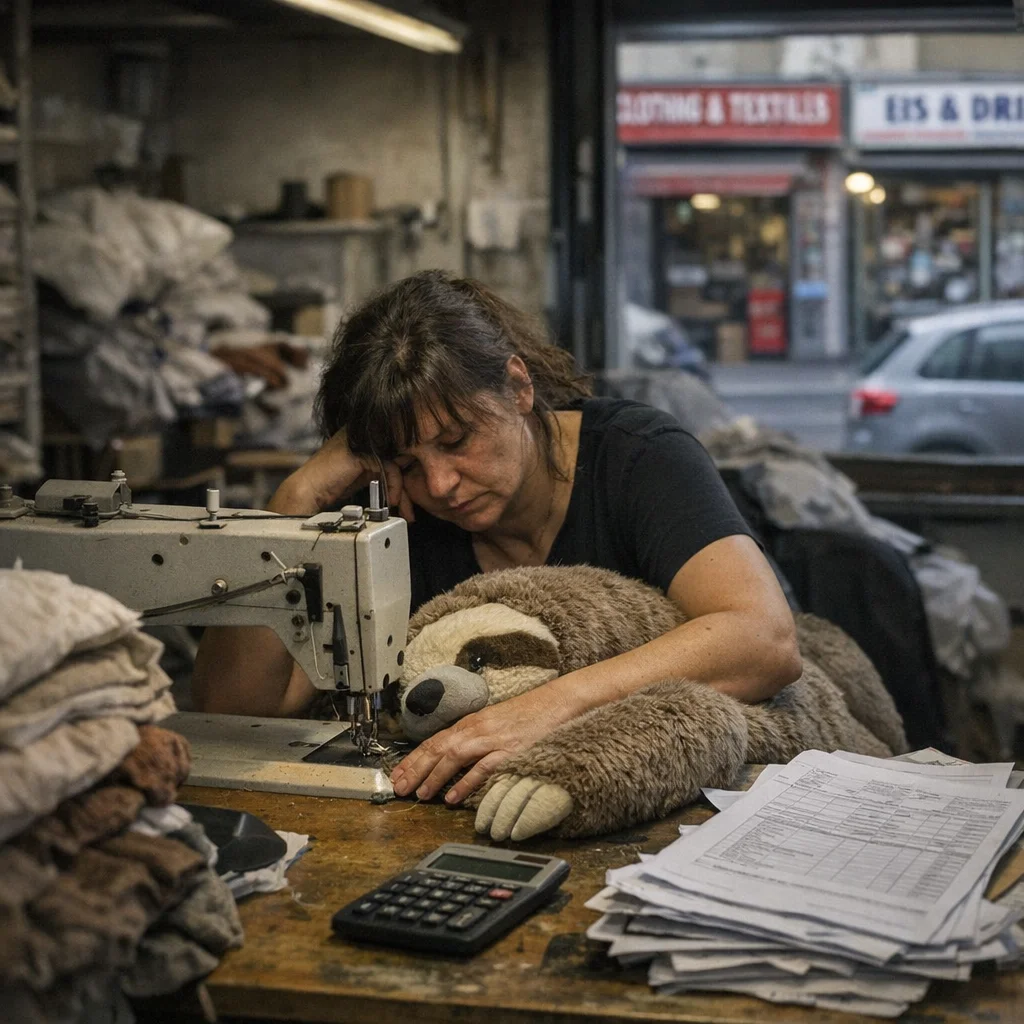
Steiner's 19 workers keep sewing the giant Ice Age sloth that once defined cuddly German exports, but new US tariffs have left the company bleeding cash with no buyer in sight.
Gentrification & Small-Time Power Correspondent
Wedding’s Tariff Consultants Arrive After the Stuffing
The first people to profit from a tariff are never the people paying it. They are the ones who arrive after the invoice, smooth their jackets, and call the bleeding “market discipline.” That is the mood now moving from Washington to Berlin’s Wedding neighborhood, where Steiner’s shrinking export business in Thüringen has become the kind of cautionary tale consultants use to invoice panic.
Steiner, the plush-toy maker that stitched the giant Ice Age sloth Sid and once sold cuddly Germany to Hollywood, is still running with 19 workers and a balance sheet that looks like it has been kneaded through a wringer. The new U.S. tariff on German-made plush has lifted the cost of entry by 25 percent, which means every shipment to America now arrives pre-wounded. Managers say they are burning through reserves while hunting for a buyer, which in this climate usually means waiting for a private-equity tourist to mistake extortion for strategy.
In Wedding, where rent increases arrive with the cheerful punctuality of a threat letter, the mechanics are instantly recognizable. The neighborhood’s Turkish bakeries, repair shops, cell phone kiosks, and cafés live under the same extraction logic: first customs in one form, then landlord pressure in another, then the small parade of advisory-office people who explain that ruin can be managed if you smile correctly and fill out the right PDF. A bakery owner near Leopoldplatz said the pattern was familiar enough to be insulting. “They don’t come to save you,” she said. “They come to price the damage, then rename it resilience.”
That is why Steiner’s search for an investor sounds less like rescue than a late-night appointment with a man who only speaks in multiples. The company needs cash, but the cash wants leverage, and leverage always wants a softer body to sit on. In Wedding, that could be the landlord who discovers “upgraded neighborhood profile” after the rent review. In Thüringen, it is the buyer who praises craftsmanship in public and, in private, asks which workers can be trimmed without making the plush sloth look distressed in the marketing photos.
A district small-business office said it was monitoring the situation and encouraging firms to stay “agile,” which is the bureaucratic equivalent of telling a drowning person to refine their posture. Nearby, one café owner said global trade policy and local gentrification were no longer separate scandals but the same extraction dressed for different rooms. Washington raises the tariff, Berlin raises the rent, and the middleman stands in the doorway pretending this is all a healthy exchange.
The company’s workers keep sewing because there is still fabric left and because the alternative is to let the market finish the job in silence. The buyers circling them are the sort who call themselves rescuers right up until the paperwork lands. Then the sloth gets squeezed, the margin gets stripped, and everyone in the room pretends not to notice who was doing the stuffing before the hands changed.