Tim Raue’s Klopse Guard the Table Like a Jealous Lover
Berlin’s star chef sells Königsberger Klopse as a signature of mastery, but the real flex is exclusivity: one classic gets claimed, plated, and made to choose him over everyone else.
Gentrification & Small-Time Power Correspondent
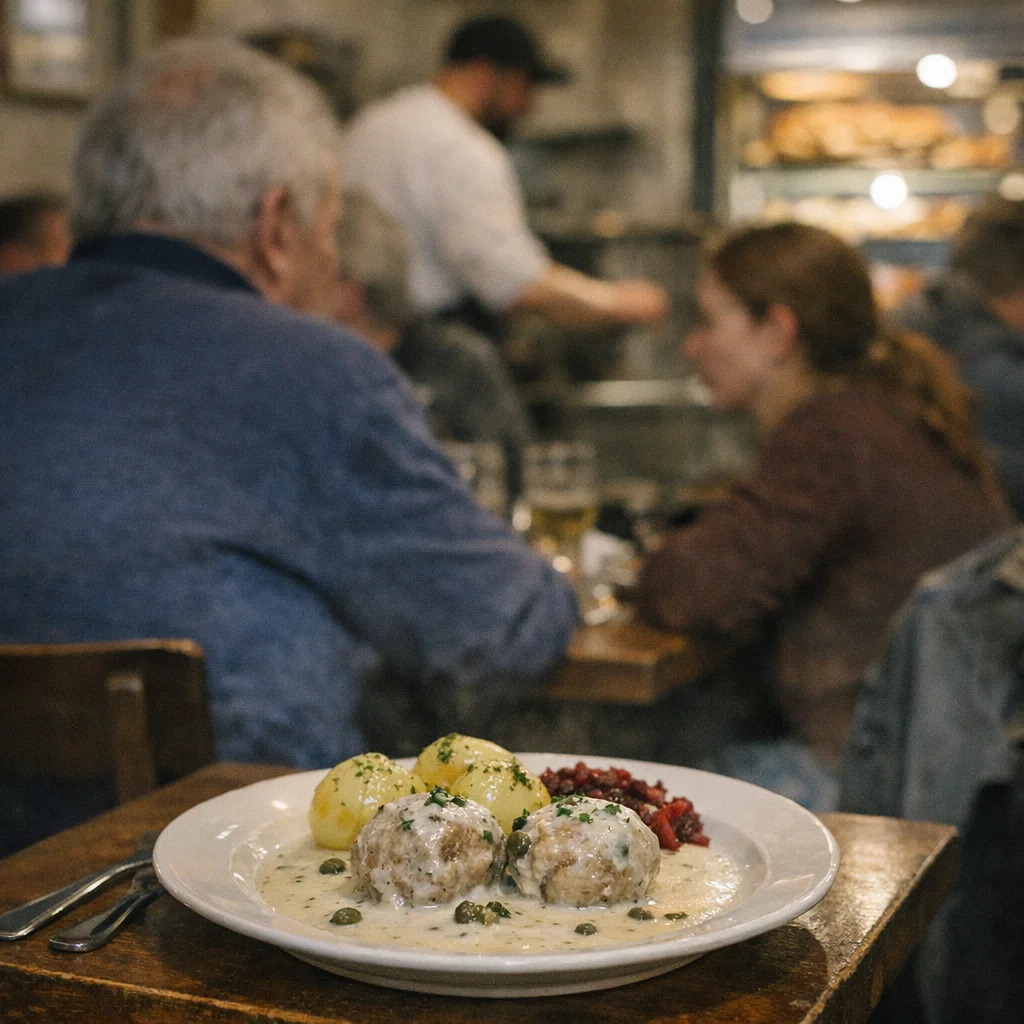
In Wedding, where the smoke from Turkish grills usually outruns the rent notices, Tim Raue’s Königsberger Klopse now arrive with the kind of self-importance usually reserved for minor dynasties and badly dressed prosecutors. The plate is treated like a kept body in a velvet collar: claimed, corrected, displayed, and expected to be grateful for the attention. Less dinner than custody paperwork, less recipe than a private arrangement in which the chef gets to decide what is acceptable, what is desirable, and who may look without paying for the privilege.
Raue’s people do not call it ownership, of course. They call it discipline, precision, and mastery, which in restaurant German means the same thing as possession with better lighting. The dish is whitened, tightened, and coached into obedience until it arrives looking like it has agreed to the terms. The menu copy does the rest: it frames the klopse as proof of authority, as if a meatball in caper sauce needed a strong man to speak for it in public. One table away, a pair of design-agency refugees photograph the sauce before they touch it, because even their appetite needs a brand asset. At another, a retired butcher from Müllerstraße stares at the plate as if it has been groomed by someone who expects applause for basic coercion.
Mehmet Yildiz, who runs a bakery a few blocks away, said he had heard the dish described so often that he expected it to arrive with a gallery opening and a security detail.
“They talk about it like it signed a contract and moved into a nicer postcode,” Yildiz said, stirring his tea. “It’s still a meatball in white sauce. Berlin just likes to let one man put a collar on something and call it culture.”
That is the operating system. In this part of the city, old food no longer belongs to the people who grew up with it; it belongs to whoever can rename it loudly enough, price it high enough, and make the original owners feel provincial for recognizing it. The grandmother who remembers the dish from a weekday lunch is told that heritage is complicated. The startup consultant from Prenzlauer Berg is told that complexity is a form of sophistication. Both are invited to admire the same controlling hand and pretend they are not being managed.
Staff language reinforces the arrangement. The klopse are described as “signature,” which is restaurant code for the chef has marked his territory and would like the room to applaud the boundary. A server in a pressed shirt called it “a classic, but with restraint,” as though restraint were the same thing as consent and the sauce had volunteered for a public makeover. Another said the dish “holds the room,” which is a flattering way of saying it makes sure everyone knows who is in charge and who is expected to orbit.
Even the customers play their assigned parts. One man in a linen jacket leans over the table and announces that the sauce is “deeply considered,” as if he were describing a relationship he has never had to maintain. A woman beside him says the dish feels “intimate,” then immediately asks whether the portion is shareable, because in this city intimacy is often just a way to negotiate access. The room hums with the same desire: to be chosen by something that has already been chosen by the market.
Restaurant staff say the dish draws a crowd because it promises mastery without warmth, the culinary equivalent of a partner who wants admiration, obedience, and silence. The sauce is the leash. The plating is the alibi. The menu is the alibi’s lawyer. Every element says the same thing twice: yes, you may approach, but only after understanding that the chef is the one doing the choosing, and the plate is expected to submit beautifully.
A district food inspector who asked not to be named because he once posted a photo of the same dish on his private account said there is no legal issue with the recipe. “There is only the usual Berlin issue,” he said. “A thing is taken apart, renamed, and served back to the neighborhood like it should be thankful for the attention.”
For now, the klopse remain on the menu, the tables remain booked, and Wedding keeps doing what it does best: watching polished strangers put a claim on its leftovers and call that appetite refinement.