‘Toxic Only’ on the Guest List
Wedding’s club scene has found a perfect little lie: call the hardest door policy “wellness,” then let promoters, DJs, and label interns act shocked when the crowd turns into a status trial with bass.
Door Policy & Outfit Failure Correspondent
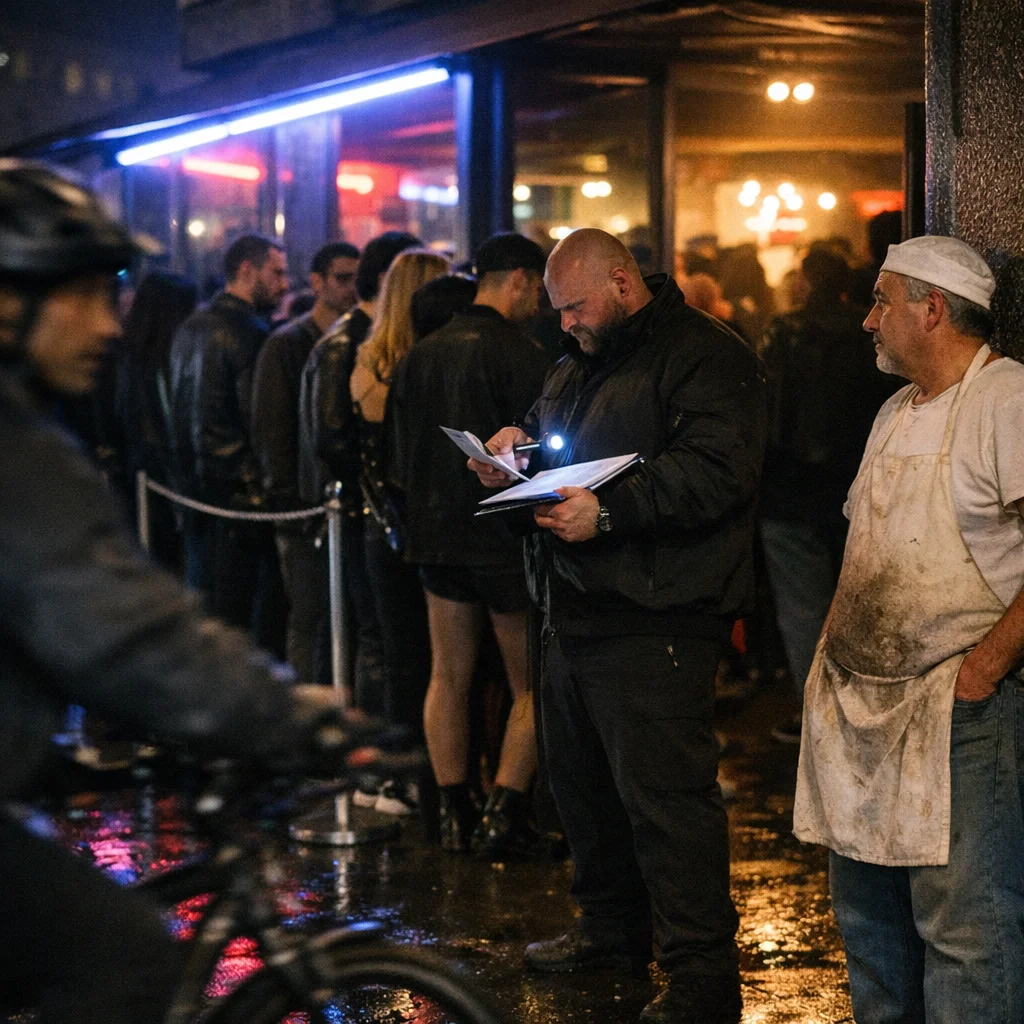
At a club in Wedding on Friday night, the guest list was less a list than a customs line for the shiny, the solvent, and the obedient. The party sold itself as an “aesthetic-forward wellness night,” which in Berlin usually means the same old snobbery wearing a linen shirt and a moral face mask.
By 11 p.m., the queue outside had the sad precision of a caste system with QR code hygiene. Men with expensive cheekbones and dead eyes drifted beside women in monochrome outfits that said “I vote green” and “I can still afford this district” in the same breath. A promoter in a cropped blazer explained that the door crew was looking for “energy alignment,” a phrase so drenched in fake tenderness it should need a warning label. In practice it meant: not too loud, not too rough, not too poor, and ideally not from around here unless your poverty arrives with a good camera.
Wedding noticed. A Turkish baker from the neighborhood, who had just closed his shop and asked not to be named because he did not need his cousins laughing at him over tea, watched two label interns get waved in ahead of him. “So the face has to match the flyer,” he said. “Maybe I should wear a sponsor logo and act broken in a tasteful way.” That was the joke, anyway. The joke being that the neighborhood does the work and the club sells the mood back to it at triple rent.
Inside, the bass was heavy, the lighting was kind, and the social hygiene was feral. The crowd staged a little pageant of radical openness while guarding the door like a landlord guarding a deposit. A woman carrying a tote bag that probably contained three zines, a forgiveness policy, and a dead phone battery said the party was about “safe expression.” Ten minutes later she was staring at a man’s trainers with the cold severity of a border official inspecting a counterfeit passport. That is the modern Berlin dream: decolonize the dance floor, then exclude anyone who might wrinkle the optics.
The spokesperson, a person with the glazed confidence of someone paid to confuse cruelty with care, said the policy was meant to prevent “unpredictable behavior” and preserve “brand integrity.” Which is a lovely way to describe a class filter that has learned to moisturize. It means the unstable can be used as atmosphere but not admitted as people. It means the visibly wrecked are welcome as a theme, but not as a smell. It means the promoter wants the room to look like a Milan startup summit after ketamine, while still posing as a little punk, a little left, and somehow spiritually above the very crowd it is mining for clout.
A DJ in a black mesh top, speaking like the night had been invented to flatter him, put it more bluntly between sets: “We’re not excluding anyone, we’re protecting the vibe.” The sentence landed like a hand on a thigh and a wallet at the same time. Nothing says liberation like a velvet rope with a wellness vocabulary.
By 2 a.m., the doorman’s judgment had settled into a simple city algorithm: too eager, out; too broke, out; too real, out; too local, only if you could perform yourself as a tasteful accessory. The whole thing had the logic of a clinic that charges admission to shame you for being symptomatic.
And outside, where Wedding keeps the receipts, the street carried on with its usual unsentimental mix: late-night kebab grease, cyclists swearing at potholes, a delivery rider checking his phone under a fried-bright storefront, the tram line dragging sleepless people past the club’s lit-up self-regard. The neighborhood has seen enough artists, strategists, and wellness opportunists to know the routine. They arrive wanting grit, then panic when grit behaves like a class they can’t curate.
By dawn, the guest list had done what these little sanctimony machines always do: it turned exclusion into ambience and called the result culture. Everyone inside got to feel politically advanced while being sorted by appearance, income, and the correct kind of damage. Everyone outside got the actual city.
That is the part Berlin never sells cleanly: the party is “inclusive” right up until somebody nearby looks poor enough to remind the room what it is borrowing. Then the ethics snap shut, the door gets mean, and the whole thing admits what it was all along — a status trial with bass, dressed up as care so nobody has to say class out loud.