Trash Talks, and the Tote Bags Listen
Wedding’s recycling campaign lets the usual moral freeloaders cosplay as public servants while the bins stay full, the sidewalks stay filthy, and the neighborhood gets another lecture from people who never touch.
Civic Hypocrisy & Neighborhood Compliance Reporter
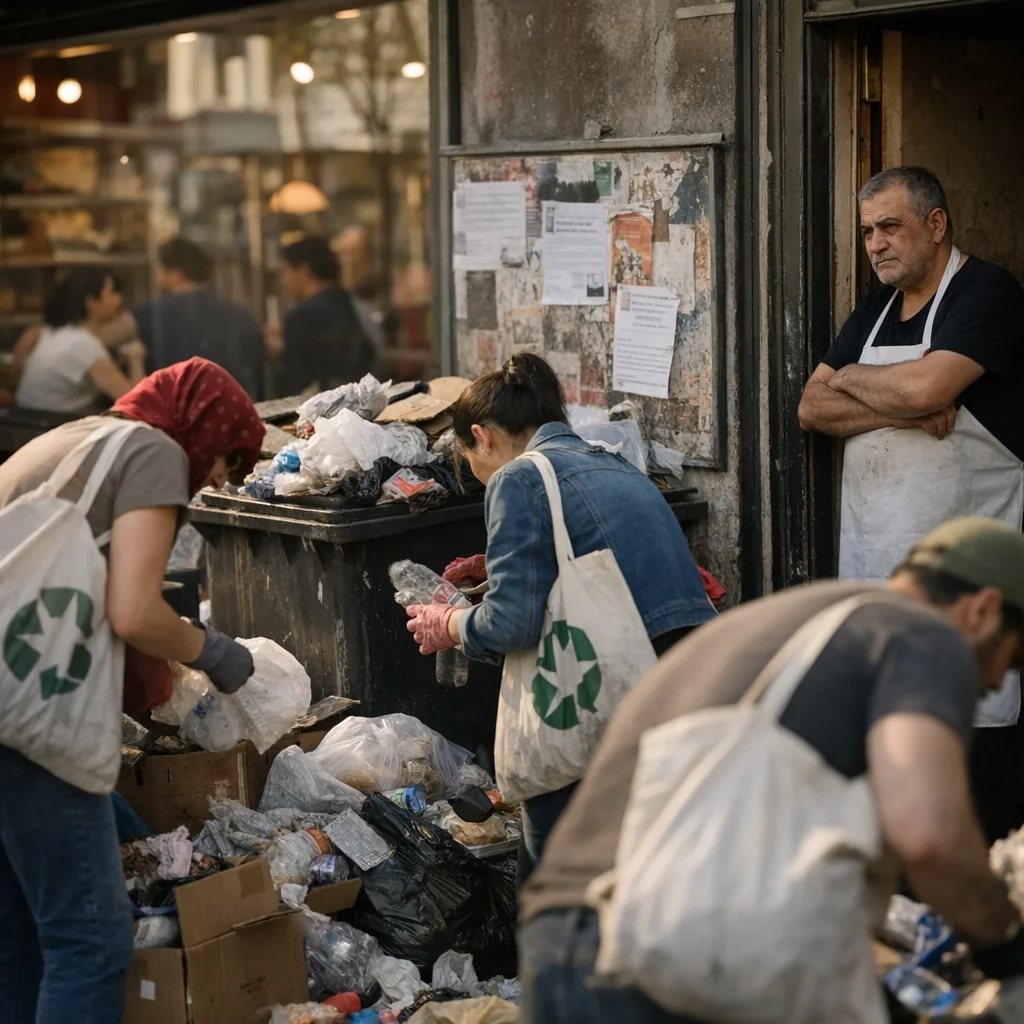
Clean Hands, Dirty Street
Residents in Wedding spent the week splitting their trash while a fresh civic campaign told them they were becoming more European, more responsible, and, if the posters were to be believed, spiritually less rancid. In practice, it was a little carnival for people who get sexually excited by the idea of being useful while never having to touch anything damp, heavy, or humiliating.
The push arrived with posters, tote bags, and the sort of volunteer smiles that look laminated. District office staff nodded solemnly. Nonprofit coordinators nodded with the exhausted hunger of people who survive on grants and self-regard. Café owners nodded like minor landlords of the soul, serving flat whites to locals while performing concern about the smell drifting in from the bins out back. The whole thing had the polished desperation of a workshop economy trying to pass itself off as sanitation policy.
Behind the Turkish bakeries, the late-night kiosks, and the new “creative” workshop spaces leasing old labor like a costume, the bins did what bins do: they sat there, open-mouthed, full of yesterday’s paper promises. The sidewalks stayed filthy. The campaign’s moral perfume did not cover the stench; it merely gave the stench a committee.
"We are building civic maturity one banana peel at a time," said one organizer, who requested anonymity because the wrong-bin shame had already reached the level of a private fetish. She had the tight, devotional face of someone who thinks sorting waste is the same thing as touching the city. Her tote bag was spotless, naturally — clean enough to suggest she had never carried anything more burdensome than institutional guilt.
The Grant-Fed Priests of Cleanliness
The district office said the initiative was meant to improve cleanliness and participation, which is bureaucrat language for outsourcing responsibility to anyone still stupid enough to volunteer. The nonprofit layer loved it. They always do. It gives them a chance to stand in public and pretend the neighborhood is a patient they are gently healing, rather than a place they have learned to harvest for funding, photos, and the occasional recycled moral orgasm.
Mehmet Yildiz, who runs a corner shop near Leopoldplatz and has watched three waves of salvation arrive with clipboards, said the campaign felt like "a seminar for people who still need the city to thank them for breathing." He pointed to a pile of unsorted garbage left after a weekend workshop on circular living, an event that apparently taught people how to talk about waste without carrying any.
"They come here to lecture us about purity," he said. "Then they leave enough packaging to build a second republic."
He was not wrong. The same crowd that writes essays about community tends to fold at the first whiff of actual labor. They want the neighborhood raw enough to be interesting, but not so raw that they have to look at their own hands. They want the grit of Wedding without the consequences of living in it. They want the local workers, shopkeepers, cleaners, and delivery riders to keep absorbing the rot while they perform concern in breathable fabrics.
Everyone Wants the Stink, Nobody Wants the Job
The campaign also offered the usual false equality of civic theater. Conservative locals grumbled about strangers, rules, and the death of common sense. The imported moral managers countered with workshops, labeling rituals, and the kind of performative tenderness that can make a paper plate feel politically violated. Both sides treated trash like a referendum on civilization, which is exactly the sort of dumb, sticky drama institutions love: it keeps everyone arguing about lids while nobody asks who gets paid, who cleans, and who profits from pretending the mess is a shared virtue.
That was the real obscenity. Not the garbage itself. Garbage is honest. The obscenity was the district-office varnish on top of it, the nonprofit grant culture with its blameless vocabulary, the café owners polishing their consciences with oat milk, the workshop crowd renting a room in the neighborhood and then acting shocked that neighborhoods smell like people.
By the end of the week, the bags were still full, the sidewalks still looked like a confession nobody wanted to kneel for, and the campaign’s next public sorting session was moved to a bigger hall — presumably so the same people can stand farther apart while explaining hygiene to the rest of us. It is already sold out, which is fitting. Nothing in Wedding is more crowded than a room full of people desperate to seem clean.