Travel Rankings Finger Saxony-Anhalt from Behind
An AI travel list buried the state’s cities near the bottom, and the tourism association rushed in to deny the verdict before anyone could treat it like a booking guide.
Gentrification Symptoms & Pretend-Creative Economy Reporter
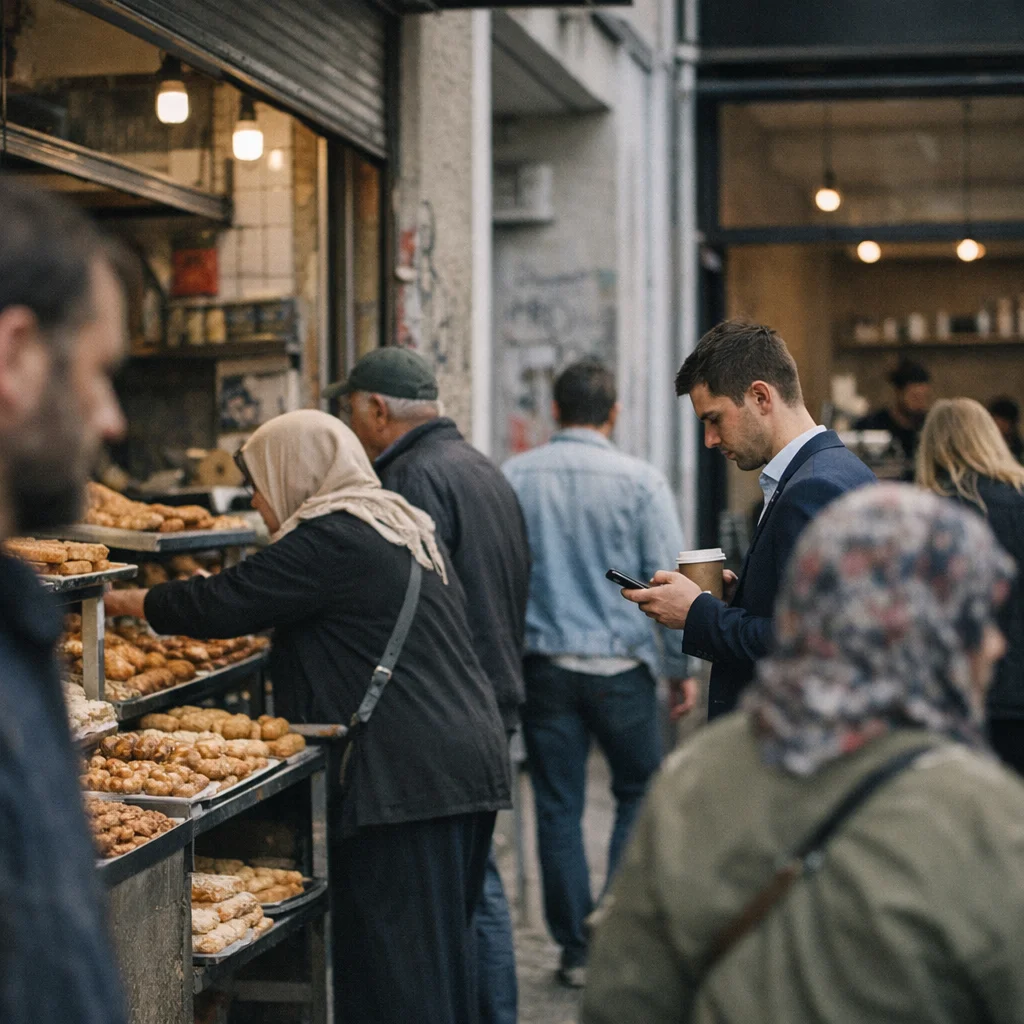
In Wedding, the new AI travel ranking did what every glossy city campaign eventually does when the mascara runs: it looked over the neighborhood, noted the cracked plaster, the kebab smoke, the cold brew and concept stores pressed against each other like bad alibis, and shoved the whole district toward the bottom of the list with the detached confidence of someone rating a body they intend to use and deny.
The insult was not that the machine was ruthless. It was that it was administratively intimate. Wedding has spent years being handled by consultants, branding agencies, and borough boosters who talk about “activation” the way people talk about getting someone undressed: slowly, in public, with a grin that suggests this is mutual when it is mostly extraction. The ranking, published this week, treated the district like an awkward first encounter that went nowhere because the place would not perform gratitude on command. Too loud, too mixed, too stubbornly alive to pass as a clean product.
At a café near Leopoldplatz, the owner of a Turkish bakery squeezed between a specialty espresso bar and a storefront advertising “urban belonging” said the result only confirmed what residents already know about these polished travel tools: they want the neighborhood open, available, and cheap, but only in the same sense a landlord wants a door left ajar. “The algorithm saw Wedding exactly the way investors do,” said Emine Yilmaz, who has run the shop for 18 years. “It checked whether it could strip the place for content, and then acted offended when the place still had a spine.”
The tourism association rejected the ranking immediately, saying it failed to reflect the “real diversity” of Saxony-Anhalt. That is bureaucratic language for: please do not confuse the brochure with the room, or the room with the thing being auctioned off inside it. In Magdeburg, officials rushed to frame the list as flawed methodology rather than a public undressing, because the state can tolerate bad optics so long as nobody calls it what it is: a beauty contest staged by machines for people who will never stay the night.
One tourism official, speaking on condition of anonymity because he had already shared the ranking in a staff chat with the caption “we need a better pose,” said the association feared hotel bookings would suffer less from the score itself than from the humiliation of being seen as low-value before the seduction even started. That is the modern tourism model in one miserable sentence: sell the place as a personality, then panic when the personality gets rated in front of everyone.
Wedding knows the choreography. The district has been through enough English menus, mindfulness studios, and “community-driven” pop-ups to recognize the pattern: first they praise the rough edge, then they sand it down, then they complain the result lacks character. The neighborhood is always being invited to undress for the market, never once being asked whether it likes the room full of spectators or the men in clean shoes explaining that exposure is empowerment.
By Thursday morning, local marketers were circulating counterclaims, city-brand managers were reworking language, and several offices were asking whether the ranking could be “contextualized.” In practice, that means the bruise is real but the press release has better lighting.
The association said it would push for a revised method. Residents said they would settle for fewer people trying to appraise Wedding like a body at the end of a bad date, then pretending the awkwardness is a data problem instead of a power problem. A place can survive being judged. What it gets tired of is being handled, displayed, and told the handling was for its own benefit.