Tresor Pilots “Beijing’s Terms” Door Policy: One Small Acid Question, One Giant Leap for Humiliation
After U.S. allies edge closer to China on Beijing’s conditions, Berlin’s finest exports the concept to nightlife: access, loyalty, and a camera sticker that seals the deal.
Geopolitics & Hangover Correspondent
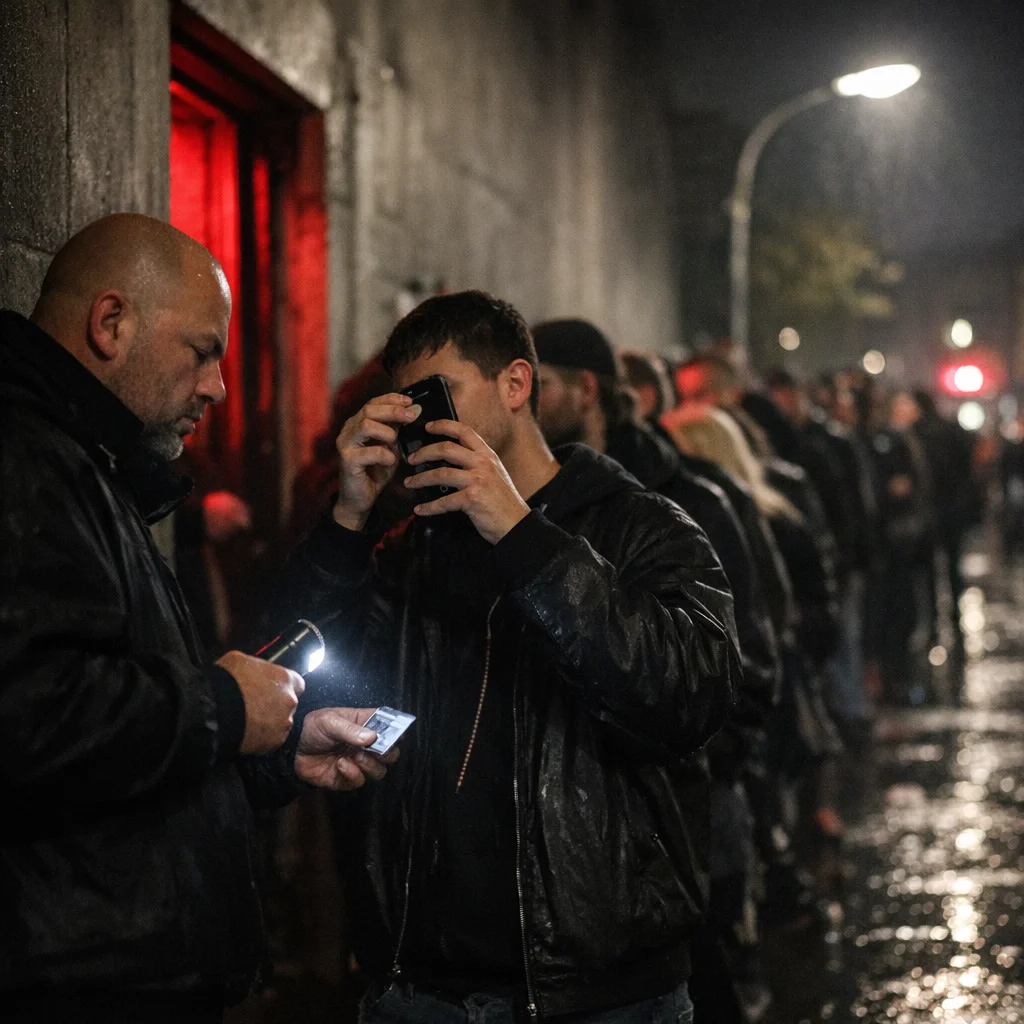
A strange diplomatic realignment is underway, and it’s happening in the only arena where Berlin genuinely understands geopolitics: the entrance line.
After reports that U.S. allies are drifting closer to China, but strictly on Beijing’s terms, Tresor announced a limited-time “Beijing’s Terms” pilot program—an exciting new global order where everyone is welcome, as long as they already agree.
Not welcome like “freedom.” Welcome like “terms and conditions.” You know, the erotic kind.
Soft power, hard no
The pilot was announced at 4:11 a.m. by a stern individual holding a flashlight like it was a UN Security Council veto.
Under the new system, prospective dancers must:
- Confirm they are “open to dialogue” (but only one specific kind, and not loudly)
- Apply a perfectly placed phone-camera sticker with ceremonial seriousness (one of the rare Berlin rituals that still works better than public infrastructure)
- Answer a single “acid question” designed to measure ideological flexibility and pupil dilation at the same time
“It’s not about exclusion,” the spokesperson explained. “It’s about alignment. Also, shoes.”
One attendee described the process as “a deep dive into non-interference that somehow still penetrates your entire sense of self.”
Wedding studies the new alignment
In Wedding, residents have reacted the way they react to everything: with grim competence and absolutely no expectation of a happy ending.
Longtime Turkish shop owners on Müllerstraße have already adapted faster than Berlin politicians. One bakery offered a special called the “Strategic Partnership”: same bread as always, except now it costs more and you’re thanked in English for the privilege.
Meanwhile, a co-living newcomer was overheard in a café—formerly a Turkish diner, now a place where the chairs look like moral judgment—explaining the policy as “actually very nuanced.” He later requested a decaf flat white “with accountability.”
Locals replied with their own strategic ambiguity: staring silently, which in Berlin counts as a communiqué.
“We’re not choosing sides,” says everyone choosing a side
Berliners have developed a special talent for pretending they are above power blocs while actively shopping for one that feels chic.
The new line etiquette now resembles a diplomatic summit:
- Some pledge neutrality, then quietly coordinate with whoever looks like they know the DJ.
- Some posture about ethics, then accept the stamp like a tiny imperial medal.
- Some deny they even care, while queuing so long they could’ve read the complete works of Walter Benjamin twice and still not reached the door.
Wedding’s own micro-superpowers have begun to emerge.
One Späti announced a “Non-Aligned Special”: two warm cans and a suspicious bag of gummy shapes, offered with the kind of plausible deniability usually reserved for international trade deals.
“It’s just snacks,” said the cashier, maintaining a straight face worthy of John le Carré and Berlin rent negotiations.
A concept too sexy to fail
Cynics note the pilot is simply Berlin being Berlin: a city that turns everything—war, climate panic, existential dread—into a weekend plan, then acts surprised when it still costs €20 to enter.
But proponents insist this is historical progress.
“You can’t be dependent on the West forever,” said one promoter. “Sometimes you need new partners. New supply chains. New… frameworks. The old ones were getting loose.”
If that sounds uncomfortable, it’s because it is.
And like all uncomfortable things in Berlin, it will be branded as “necessary,” sold as “intentional,” and defended with the emotional aggression of someone who has been awake since Friday.
In related news: About Blank is reportedly considering its own model, tentatively titled “Autonomy (Sponsored).”