Troy at Hugo-Haus: 200 Cops for One Broken Door
A years-long squatter standoff in Friedrichshain ended in a massive police deployment after windows were smashed and no one agreed on who had the right to come in.
Crime & Kiez Satirist
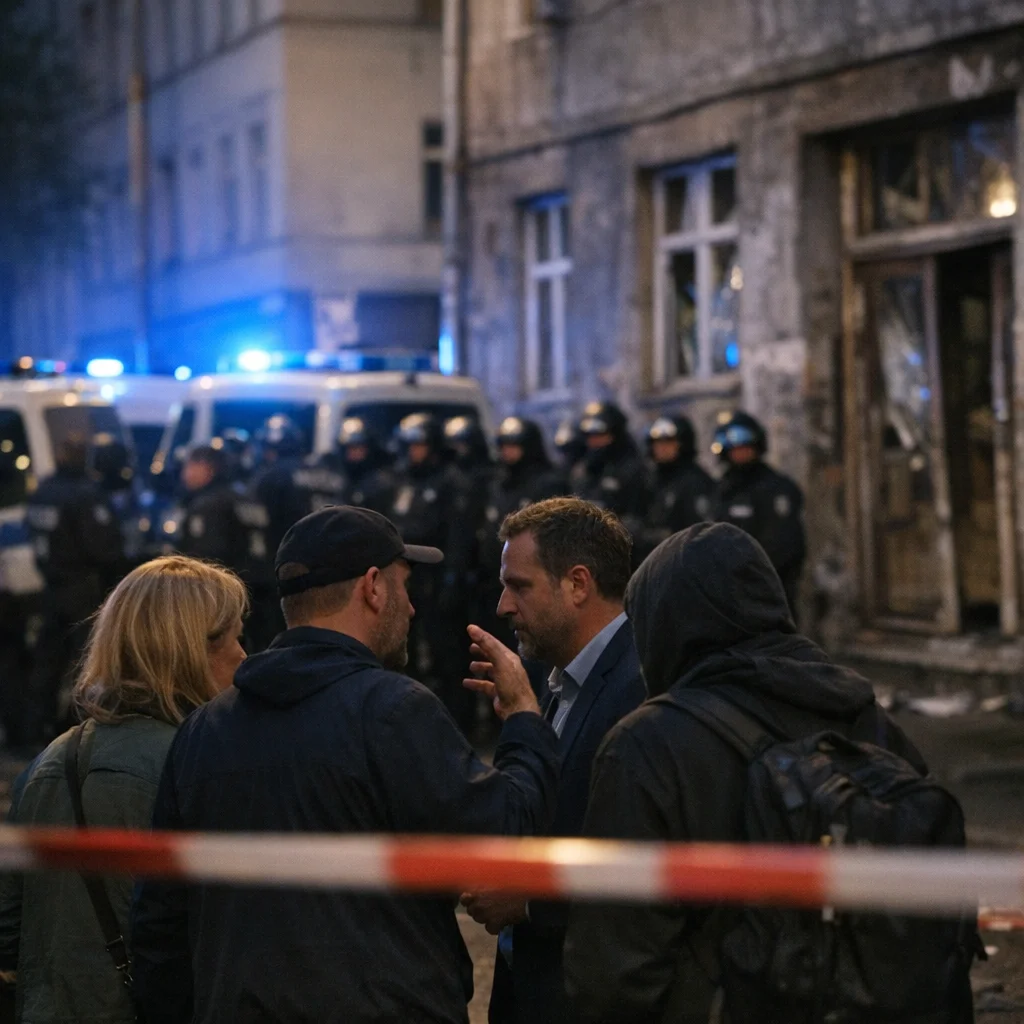
Police surrounded the occupied Hugo-Haus in Friedrichshain on Thursday evening after windows were smashed and the argument over who had the right to enter finally stopped pretending to be civic concern and showed itself as what it was: a fight over the handle, the latch, and the satisfaction of keeping other people outside.
About 200 officers arrived to secure the building, separate activists from property representatives, and restore the Berlin ritual in which everyone speaks the language of access while privately worshipping the lock. The city loves a threshold the way a bored aristocrat loves a locked bathroom door: not because it is needed, but because refusing entry makes everyone feel powerful for five filthy minutes.
The building has been occupied for years, which in this city means legal title, moral vanity, and cheap radical romance have been crammed into one narrow corridor and left there to overheat. By Thursday night, neither side was even bothering with the old public lie that this was only about housing. It was about possession, resentment, and the erotic little thrill of standing at a doorway and deciding who gets to press against it.
A man in a black jacket who said he had been waiting outside since early evening called the scene “a group project for adults who hate each other.” He declined to give his name because, he said, he had once signed a petition defending the building and did not want his landlord to know he could still recognize a boundary when he saw one.
On the pavement outside, the usual Friedrichshain congregation assembled: activists with tired slogans and expensive shoes, property people speaking in the polished language of civic injury, and a scatter of freelancers drawn by the promise of an argument with enough bloodless symbolism to keep them warm until midnight. One organizer insisted the house should remain in collective use, as if collective use were not also a way of keeping a hand on the knob. A representative for the owner’s side said the forced entry attempts could not be tolerated, which was rich coming from people who spend their lives trying to turn possession into morality by holding the key up like a priest holds a wafer.
The police said the deployment was necessary after windows were damaged and access became impossible to control. That was the official version: the state as a disappointed concierge, sent to stand in the hall and ask everyone to please stop touching the door. No one gave a clean account of who broke what first, which in Berlin is often the nearest thing to honesty. The smashed glass suggested the usual sequence: somebody wanted inside, somebody wanted to keep them out, and somebody important arrived late to issue stern remarks about procedure after the excitement had already moved below the belt.
By late night, the street had settled into the city’s favorite posture, half moral crusade and half peep show. The activists talked about occupation as if it were a public good rather than a long-running appetite with a political costume. The owners talked about law and order as if law were not mostly the art of blessing one locked door and criminalizing the hands that reach for it. The police stood in the middle, doing the least romantic work in the republic: deciding which bodies may pass, which must wait in the corridor, and which are to be shoved back into the hallway with the rest of the bad manners.
That is the entire civic theology here, stripped of the slogans and the neighborhood perfume: everyone wants the right to enter, nobody wants to admit they are desperate for the invitation, and the people with the keys are always the first to call themselves victims when the lock starts to feel like a joke.
The next step is the usual round of damage claims, legal threats, and righteous speeches so stiff they could prop open a communal door. By morning, the same institutions that spent the night pawing at the threshold will be back in their offices, smoothing their cuffs and pretending the handle never left their hands.