Trump Cites Heraclitus After ‘War of Choice,’ Says It’s “How You Win a Nobel Peace Prize”
President invokes ancient philosophy while defending a conflict critics say he chose to start.
Geopolitics & Hangover Correspondent
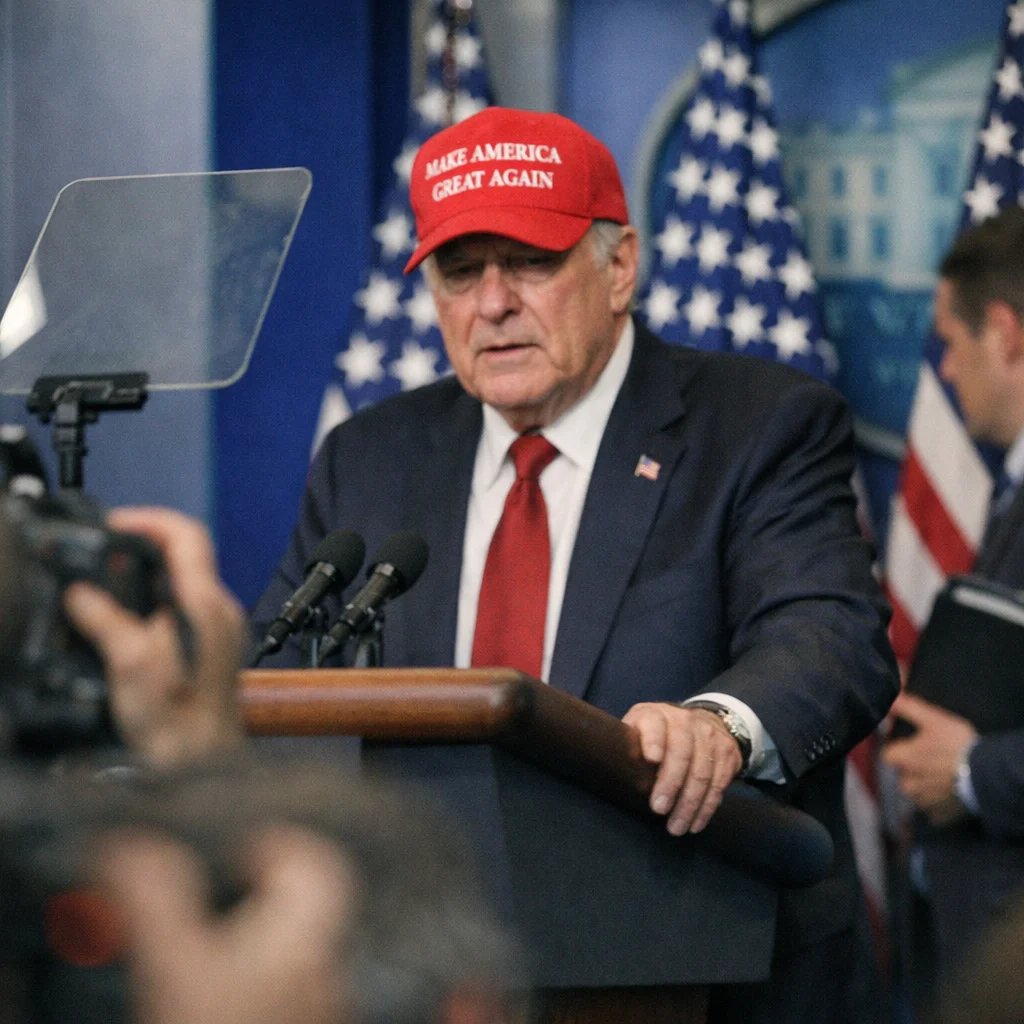
WASHINGTON — In a televised address from the White House around lunchtime, President Donald Trump defended a new overseas conflict as an enlightened peace strategy, invoking the ancient Greek philosopher Heraclitus and describing violence as a kind of domestic policy upgrade: pro-family, pro-history, and, in his telling, pro-Nobel.
Administration officials spent the morning insisting the operation was “reluctant, limited, and designed to restore stability,” the rhetorical equivalent of claiming you “just held it” while your hand is still gripping the broken glass.
Then the paperwork showed up.
Buried in the day’s talking points—between “restoring deterrence” and “protecting civilians”—staff included a prewritten award-pitch line labeled “PRIZE TRACK.” It instructed spokespeople to refer to the conflict as “peace-forward kinetic diplomacy” and to “contrast with prior presidents who did not pursue recognition.” In other words: the official story is that war was unavoidable; the internal script treats it as a resume bullet.
“It’s a difficult step, nobody wants it, but sometimes history requires a firm hand,” Trump said, leaning into the camera like he was closing a real-estate deal. “Heraclitus understood it. War is the father of all things. Very family. Very beautiful. People don’t talk about that.”
A senior communications aide, Meredith Kline, defended the “PRIZE TRACK” language as standard messaging. “The president believes in peace,” Kline said. “Also, the Nobel committee likes clarity. We are clarifying—aggressively.”
Critics noted that the “family values” framing arrived alongside practical incentives that looked less like ethics and more like a loyalty program for conflict. One official brief referenced a “legacy window” for donors and allies to “align messaging” and “avoid dissonant statements,” a phrase that sounded less like statesmanship and more like couples therapy with a drone budget.
Professor Lionel Hart, a classics scholar at Georgetown, said the Heraclitus citation was mangled beyond recognition. “Heraclitus wasn’t writing a Hallmark card for militarism,” Hart said. “He was describing flux and conflict as a condition of reality. The president appears to have interpreted it as a family-friendly endorsement—like reading Nietzsche as a gym slogan.”
By early evening, the Nobel talk had metastasized into merchandise-grade certainty. A campaign-aligned committee announced a new fundraising drive, promising supporters “a front-row seat to history,” which is a charming way of saying you can help finance the pitch deck for catastrophe.
The White House said further strikes are “not currently anticipated,” while the communications team circulated an updated memo asking surrogates to practice saying “historic restraint” with “conviction and warmth.”
Lawmakers are expected to demand briefings this week. The administration, meanwhile, is reportedly preparing a second round of remarks—still labeled “PRIZE TRACK”—suggesting this peace plan may climax again at the worst possible moment.