Trump Puts Netanyahu in the Loyalist Slot
In the middle of a tight Israeli race, the president praised endurance and called every rival the wrong partner, turning alliance talk into a public loyalty audit.
Global Affairs & Kiez Mischief Correspondent
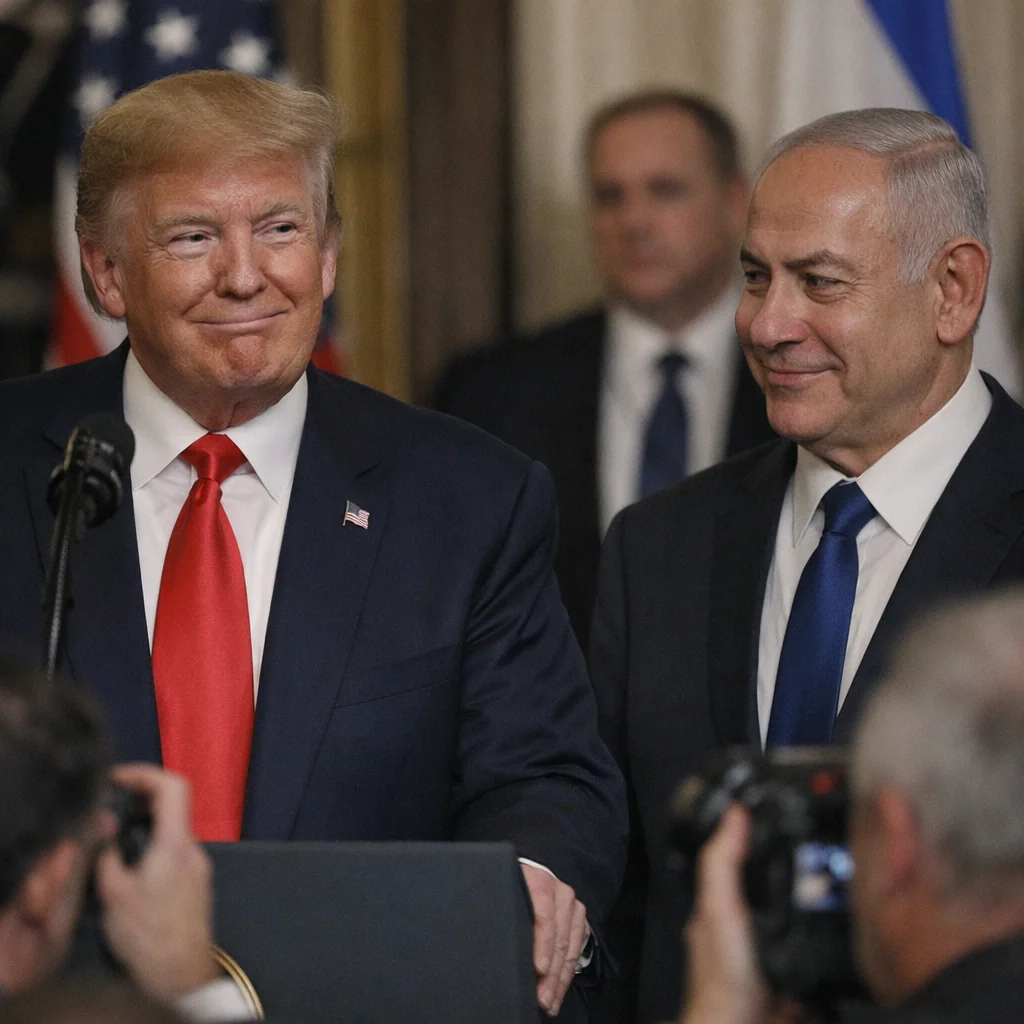
Trump’s public embrace of Benjamin Netanyahu landed in Israel’s campaign like a backroom audition for the role of dependable submission. The American president did not merely praise an ally; he inspected the field like a man choosing who gets the key to the suite, who gets told to wait in the hall, and who gets written off for failing to perform devotion with enough bruised grace.
Netanyahu, with his long career of scandal folders, police cases, coalition collapses, and the exhausting talent for remaining photogenic while the floor drops out, was cast as the partner who knows the choreography. That was the praise: not policy, not principle, not even competence. Endurance. The ability to absorb public degradation, keep the grin, and come back for another round without asking why the room smells like old power and fresh panic. In Washington language, that is resilience. In the language of anyone who has watched a strongman shop for a safer arrangement, it is a man being rewarded for staying pliant under pressure.
The message was not subtle. Trump did not back Netanyahu so much as place him in the loyalist slot and announce, in effect, that this was the one who knows how to take the squeeze and still say thank you. Rivals were dismissed not because they lacked credibility, but because they were liable to demand terms, keep their posture, or fail to treat the patron like the center of the room. Independence, in this system, is just the word insecure kings use when a candidate refuses to stay in the assigned position and smile through it.
Yael Ben-Dor, a political analyst in Tel Aviv, said the endorsement read less like a foreign-policy move than a public test of obedience. “Trump rewards the man who can take the pressure, stay visible, and not complain while everyone watches,” she said. “That is not diplomacy. It is a loyalty exam with the curtains open.”
That is why Netanyahu’s camp could welcome the blessing without pretending it was clean. A tight race is never only about votes; it is about which candidate can look least replaceable while the patron humiliates the room. Trump’s praise gave Netanyahu a fresh badge of masculine endurance, the political equivalent of a man insisting he is “fine” while his tie is crooked, his collar is split, and the people around him are already deciding whether to call the driver or the priest.
In Washington, officials speaking on condition of anonymity because they were evidently tired of being dragged into a relationship they did not choose, described the endorsement as support for a trusted ally. But the phrasing had the steadiness of possession, not strategy. Trump did not sound like a statesman picking a partner for principle. He sounded like a man comparing past arrangements and deciding which one still knows how to keep the room calm, keep the patron pleased, and keep the humiliation from getting visibly messy.
By nightfall, the question in Israel was not whether Trump had backed Netanyahu. It was whether he had simply announced, in front of everyone, who in the contest is best at surviving the hand that keeps testing for compliance and calling it love.