Trump’s 'Equal Time' Shuffle Turns Wedding into an On‑Demand Rebuttal Market
With US late‑night forced to carry mirror minutes, Berlin streamers outsource counterprogramming to a Wedding micro‑economy that rents sofas, pub booths and ex‑DIY studios by the second.
By Clara Brook
Imported Outrage & Kiez Satirist
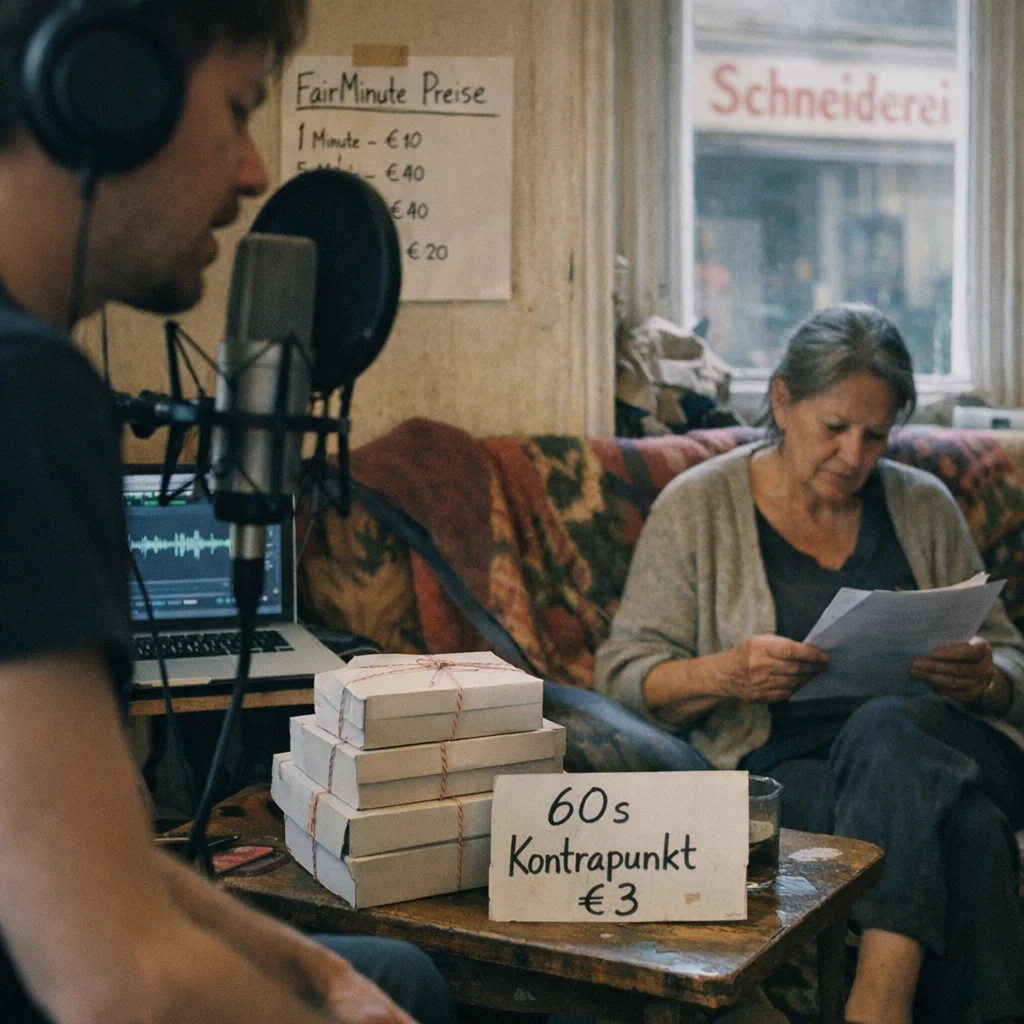
The Trump administration's push to enforce "equal time" on US late‑night television has produced a tiny, obscene market in Wedding: within days of Washington forcing networks to carry opposing minutes, a local app called FairMinute launched, letting anyone buy a sixty‑second rebuttal and shove it into a stream that would otherwise show a monologue.
What began as a legal headache for American networks turned, in Wedding, into commerce. FairMinute matches US broadcasters' demand for counterprogramming with supply from a Berlin micro‑economy: neighbors cash €3 per 60‑second clip, a second‑hand bookshop invoices "peak outrage" rates for its windowed studio, and Kleines Kabarett Neuk have started packaging each comedian’s punchline with a mandatory rejoinder to satisfy the letter of the law.
"We call it the long tail of late night," said Mert Yildiz, FairMinute’s founder, reclining on a rented sofa that doubles as a recording booth. "If the networks must carry both sides, why not let the city sell both sides?" His app takes a cut, wires euros in the morning, and offers creators a micro‑contract—deliver a rebuttal, get paid, go home. "We're stimulating the local economy," he added, which is one way to describe a neighborhood where a person can go from kneading baklava to scripting an impeachment counterpoint in an hour.
The shift was rapid. After FairMinute's soft launch, a Turkish bakery on a side street began offering "60‑second baklava bites": a clerk records a perfunctory defense of Republican talking points between kneading, posts for €3, and customers queue for the novelty like it's a limited dessert. Bookshop owner Inge Kahn said business is up: "People come to read, then get coaxed into speaking. We have leather armchairs, good acoustics, and a very forgiving moral compass."
Mitte district officials say they are watching. "Cross‑border broadcast obligations raise complex questions," said a spokesperson for the Bezirksamt, adding that they had contacted the regional media regulator. A representative for one public broadcaster declined to comment on potential feed injections but warned networks were "evaluating technical countermeasures."
FairMinute's popularity exposes something worse than opportunism: a civic attention market where outrage is leased by the second and authenticity is a billable hourly rate. The neighborhood's leftist book clubs now trade debating points for cappuccinos, and tech bros in co‑working spaces run A/B tests on which rebuttal phrasing drives the most clicks. It reads like Debord translated into a town planner's spreadsheet.
For now, Wedding's micro‑studios are busy. Regulators can threaten, broadcasters can patch streams, but the minute someone learns to monetize being offended, the minute becomes a product. The district has opened an inquiry; FairMinute promises to scale. Either networks will harden their feeds, or Berlin will perfect the art of selling the perfect, profitable contradiction—cheap, immediate, and impossible to shut down.