Trump’s Kiss of Death, Now With Better Lighting
Every fundraiser, think tank panel, and nervous dinner party wants to be the one place he finally says the quiet part out loud.
Moral Contradictions & Night-After Reporting
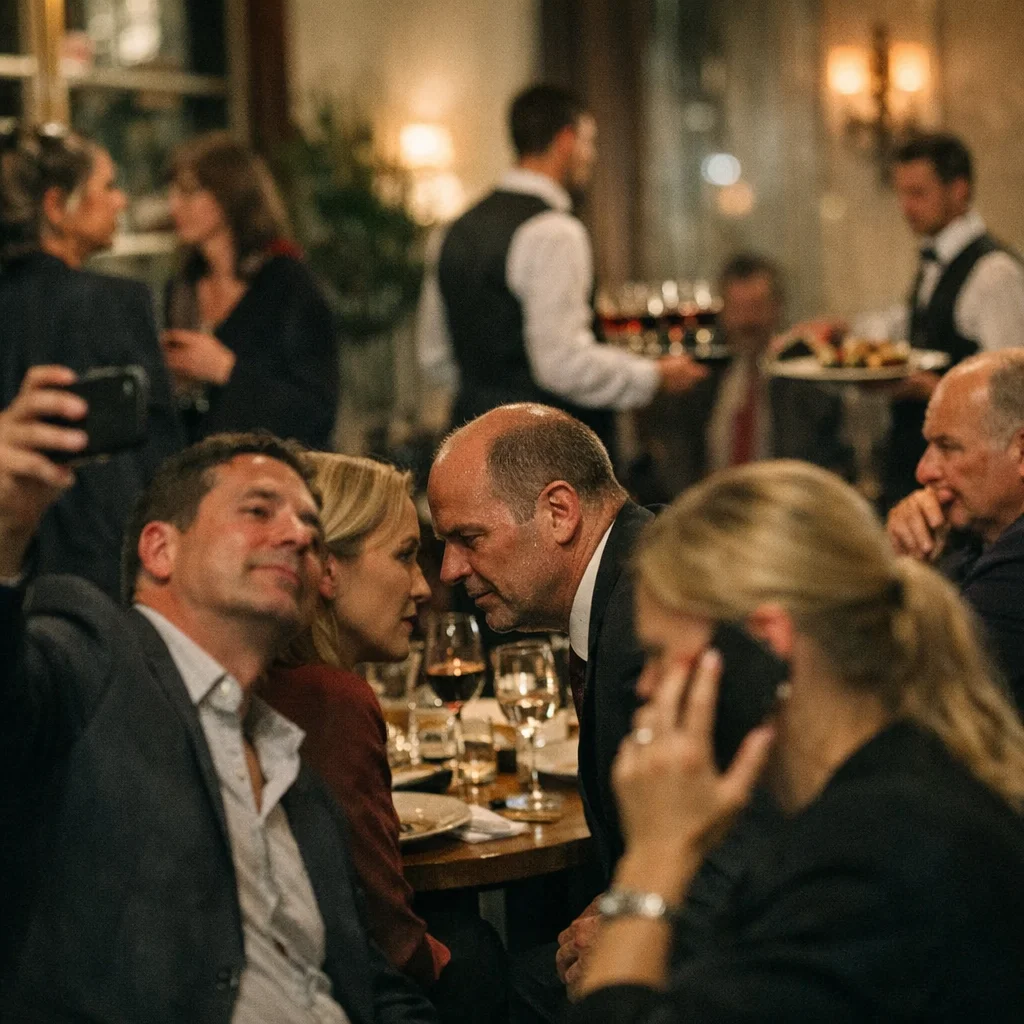
At a packed dinner in Mitte, the room behaved like a nervous witness with a gold card: every head snapped around when Donald Trump’s name was mentioned, every fork hovered in midair, and every host suddenly discovered a “hard stop” after dessert, as if democracy could be preserved on a strict bedtime and a decent red.
The event was billed as a fundraiser for democracy, which is Washington’s favorite little costume for moral panic—tailored to flatter the waist, expensive in all the wrong places, and worn by people who want to look principled while subtly scanning the room for a richer patron. The canapés were tiny, the convictions even smaller. Everyone in attendance had arrived to perform outrage, but most of them were really there to see who still had access, who still had money, and who might be useful after the next panic cycle flushed through.
By the time the first round of speeches started, the guest list had already sorted itself into the usual taxonomy of political parasites. Donors who spend their weekends calling Trump a fascist were angling for a photo with the man they allegedly fear like a bad medical diagnosis. Consultants with the dead eyes of showroom mannequins were murmuring about “guardrails” in the soft, lubricated tone of people who have never had to say no to a billionaire in a navy blazer. One organizer, speaking on condition of anonymity because he did not want his LinkedIn to look “too emotional,” admitted the real terror was not Trump himself but “being the person he remembers.” In this town, that is what passes for mortality.
That is the real kiss of death: not endorsement, but social contamination. He does not need to convert the room; he only needs to walk through it and make everyone reveal what they are worth. The anti-authoritarians start fussing over seating charts, donor lists, and which journalist got the better table, like minor theater managers staging a Fassbinder revival with grant money and panic sweat. The right-wing loudmouths, for their part, would happily kiss the ring in public if it came with a brighter spotlight and a cleaner angle for their jawline. Everybody is desperate to look unsoiled while rubbing up against the same greasy apparatus of power.
A Democratic strategist at the bar called it “message discipline,” which is what weak people call fear after three glasses of white wine and one failed flirtation with conscience. Across the room, a think tank fellow compared Trump to “Baudrillard with spray tan,” which landed with the limp authority of a man who mistakes a citation for courage. Another donor kept saying “important table” every time someone approached, as if the republic were a brunch reservation and he had personally invented the waitlist.
The whole scene had the moral temperature of a damp locker room after a corporate yoga class: all posture, no pulse. Everyone was negotiating the same thing—money, access, invitations, the right to keep pretending their panic is principle. They fear Trump, yes, but only in the way a tenant fears a landlord who can smell the rent increase through the walls. What actually unnerves them is the possibility of being cut out, unfriended by power, left outside the velvet rope with the rest of the decorative citizens.
By the end of the night, the fundraiser had raised money, the panels had produced warnings, and the photos had already begun their slow crawl through social media like courtroom exhibits from a trial the whole class is trying to settle out of court. One aide said these events will keep multiplying, because in politics as in appetite, nothing draws a crowd faster than the chance to be publicly ruined while still hoping to be invited back for another glass and another lie. That is the verdict on the whole room: not courage in crisis, but a luxury panic boutique staffed by people who would sell democracy by the ounce if it improved the lighting.