Trump Weighs Pulling Out While Iran Holds The Cards
The president faces mounting pressure from voters who never wanted this fight yet his inner circle now demands a show of strength before any exit can be negotiated.
Global Affairs & Kiez Mischief Correspondent
The city’s most expensive panic button
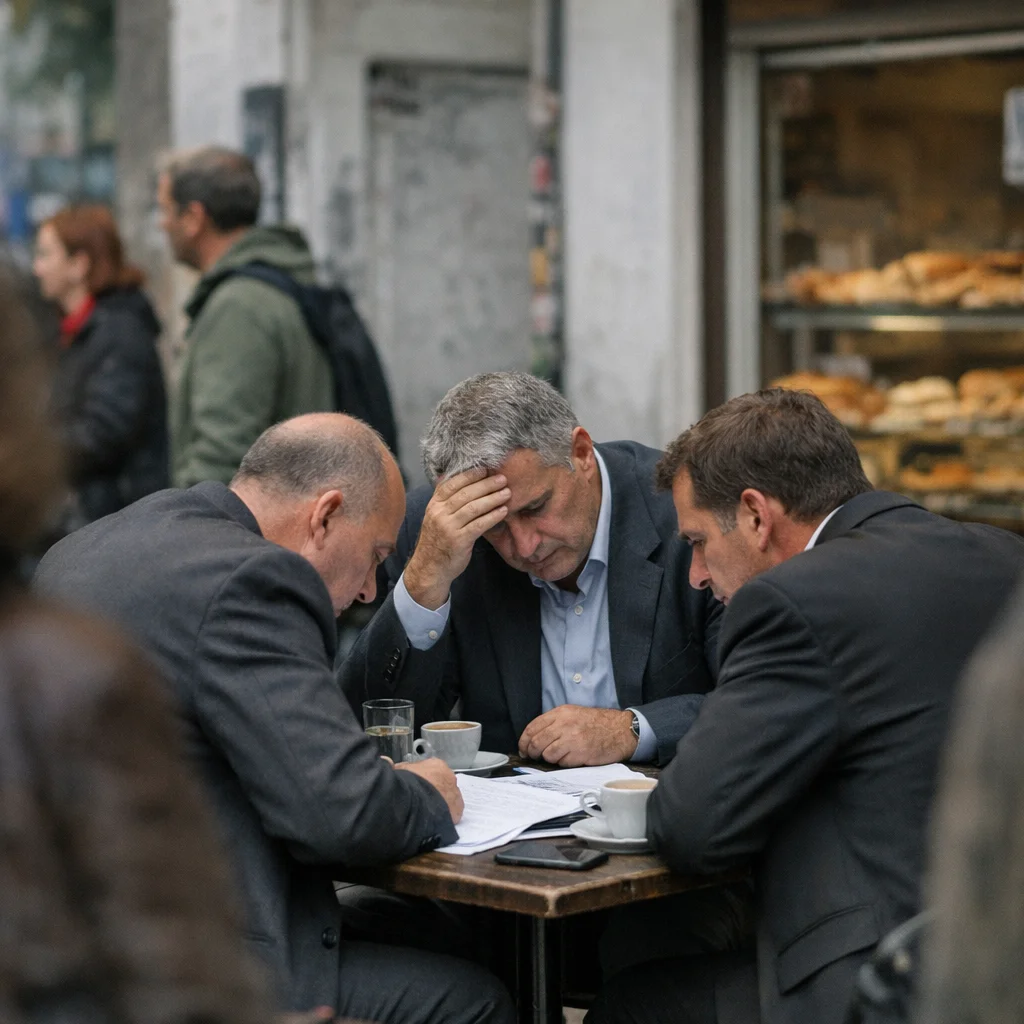
On a gray morning in Wedding, a circle of men in tailored coats and expensive caution gathered around a conference table to discuss Trump’s latest problem in Iran: how to look forceful enough to survive the exit, but not so forceful that voters notice the exit is happening at all. The same trick is familiar in Berlin, where every landlord, party donor, and district consultant now speaks fluent crisis while quietly searching for the nearest door.
At a neighborhood café near Leopoldplatz, the talk was not about strategy so much as posture. The Americans wanted a way out with enough smoke on it to pass for victory, a retreat dressed up like a takeover, the old commander’s fantasy of withdrawing while still being treated like the one in charge. Berliners, who have spent years watching weak men confuse movement with domination, recognized the performance immediately. One retired electrician sipping bitter coffee said Trump looked like a tenant who had trashed the flat and was now trying to negotiate the security deposit with the fire brigade.
“They all want the same thing,” said Yusef Demir, who owns a Turkish bakery two streets over and has watched fewer cars come down his block and more people pretending to be local after two weeks on a shared flat lease. “A clean ending, no blame, and somebody else to pay for the mess. That is very fashionable now.”
By midday, the same energy had migrated to the city’s policy class, which never misses a chance to moralize about war while outsourcing its own consequences to someone else’s neighborhood. A Green-era peace panelist from a foundation office in Mitte, with a tote bag full of contradictory principles and a mouth full of borrowed caution, called the options “deeply troubling,” which in local usage means he would prefer the bloodshed to stop only after a funding round, a workshop, and a press photo.
The district office offered the usual dead-eyed sentence about monitoring developments and staying in contact with relevant partners, the administrative equivalent of a shrug in a pressed shirt. A security analyst at a think tank near Friedrichstraße, speaking on condition of anonymity because his last confident prediction was about electric scooters, said the president’s team was “looking for a ladder down while still standing on the roof and yelling about strength.” In the neighborhood version of that sentence, it sounded less like strategy than a man backing out of a room while insisting he was still leading the conversation.
That is the part Berlin understands best. The city runs on people who insist they are above the mess while renting desks inside it. The startup guys want peace as long as it is brand-safe. The activists want outrage with a grant number attached. The old residents want everyone to stop talking and leave the block alone. And Trump, apparently, wants a way out of Iran that lets him keep the costume, the posture, and the right to pretend he was never pinned there in the first place.
What remains is the ordinary arithmetic of cowardice dressed as resolve: the more he delays, the more leverage slips away; the harder he performs strength, the more obvious the retreat becomes. In the end, the people with the microphones get to call it a strategic exit, the people with the invoices call it damage, and everyone else gets to watch the strongest man in the room spend the afternoon trying to pull out without admitting who was holding the cards.