Turnstiles, Therapy, and a Smile Audit
A local public service keeps asking riders to behave like grateful children while charging them to prove they are not poor, angry, or in need of help.
Administrative Grief Correspondent
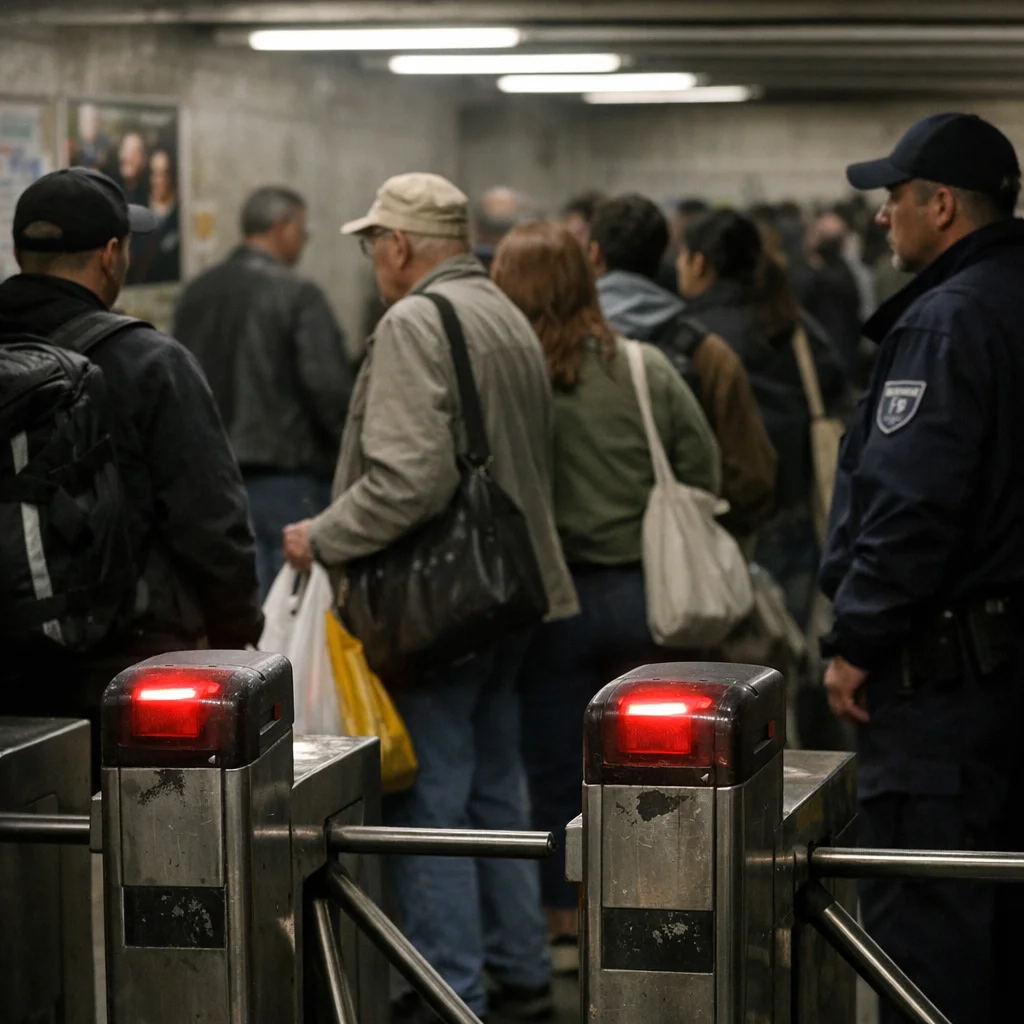
The gates at Wedding station were supposed to be a small lesson in urban dignity: tap, pass, move on, pretend the city still recognizes your face. Instead, riders spent Monday morning in a damp little theater of compliance while the validators blinked out, the turnstiles jammed, and the announcements told everyone to remain calm in the tone of a dentist apologizing before the drill.
By the time the platform filled up, the whole station had adopted the emotional range of a benefits interview. A woman in a supermarket uniform, a courier with sweat darkening his collar, a pensioner with a plastic bag of rolls, two students with the hollow-eyed confidence of people paying half their rent in hope, and a middle-aged man in work boots all stood in the same penitent line, waiting to be sorted by machines that looked designed by a committee of sleepwalkers and landlord sympathizers. One screen flashed a cheerful message about inclusion. Another rejected every ticket with the icy smugness of a sublet that knows you are desperate.
This is what civic tenderness looks like in Wedding: a district full of people already being leaned on by rent, paperwork, and the price of staying upright, then asked to perform gratitude for the privilege of being delayed in public. The neighborhood does not need another seminar on “user experience.” It needs the bloody machine to work long enough for people to get to shifts, appointments, childcare, the Arbeitsagentur, and whatever humiliating errand is currently eating their morning alive.
“This is not customer care,” said Derya Yilmaz, who has used the station for 18 years and requested anonymity because she has no interest in becoming a mascot for municipal self-congratulation. “It is a smile audit. They want us soft, grateful, and slightly ashamed before we even board.”
She is right, and the insult is almost elegant in its cowardice. The system does not merely check fares; it checks posture. Angry riders are told to stay civil. Confused riders are told the app will explain everything, which is city language for please let the software gaslight you in peace. Older residents are nudged toward digital tools built by people who appear to believe a paper ticket is a quaint superstition, like cash or rent control.
One transit spokesperson, when asked about the failures, offered the usual disinfected soup of phrases about “accessibility,” “customer journey,” and “continuous improvement,” that corporate lullaby sung by institutions while they rummage through your pockets with latex gloves. It is the vocabulary of people who want credit for saying the right words in the same week they fail to open a gate.
The security staff, meanwhile, stood around the architecture like decorative debt collectors: visible enough to suggest control, useless enough to prove it was theatrical. One guard, speaking on condition of anonymity because nobody wants their name attached to a machine’s bad mood, described the job as “crowd psychology with a uniform and a pension brochure.” Which is almost sweet, if you ignore the part where the crowd is being trained to wait obediently while the public sector peels dignity off them one beep at a time.
The district office said it was in contact with transit officials over “accessibility and user experience,” which is bureaucratic code for we have discovered the outage and are now licking the glass around it. The transit operator said technical faults were being addressed and asked passengers for patience, that velvet little demand from an institution that treats patience like a tax on the poor and the tired.
By noon, riders were bypassing the broken gate with the exhausted coordination of people escaping a bad date: awkward, resigned, and too public about the whole thing. A poster about respect fluttered beside the validator, which was almost touching in the way a cheap apology is touching—especially when it arrives after the damage and expects applause. In Wedding, where rent pressure, migrant labor, students, pensioners, and shift workers all collide in the same exhausted corridor, the city keeps promising frictionless mobility while serving up humiliation with a recycled smile and a dead screen.
Repairs were scheduled for later in the week. Until then, the lesson remains beautifully rotten: keep your ticket ready, keep your face neutral, and do not expect the city to stop fondling your throat just because it calls the gesture inclusion.