Twelve People on Speed Draft a ‘Queue Constitution’ Outside Wedding’s Hardest DJ Night, Immediately Try to Amend It With Eyeliner
Locals cite ‘equal access’ while practicing selective compassion: everybody deserves entry, except you, your friend, and anyone who looks hydrated.
Street Rituals & Bad Decision Policy Reporter
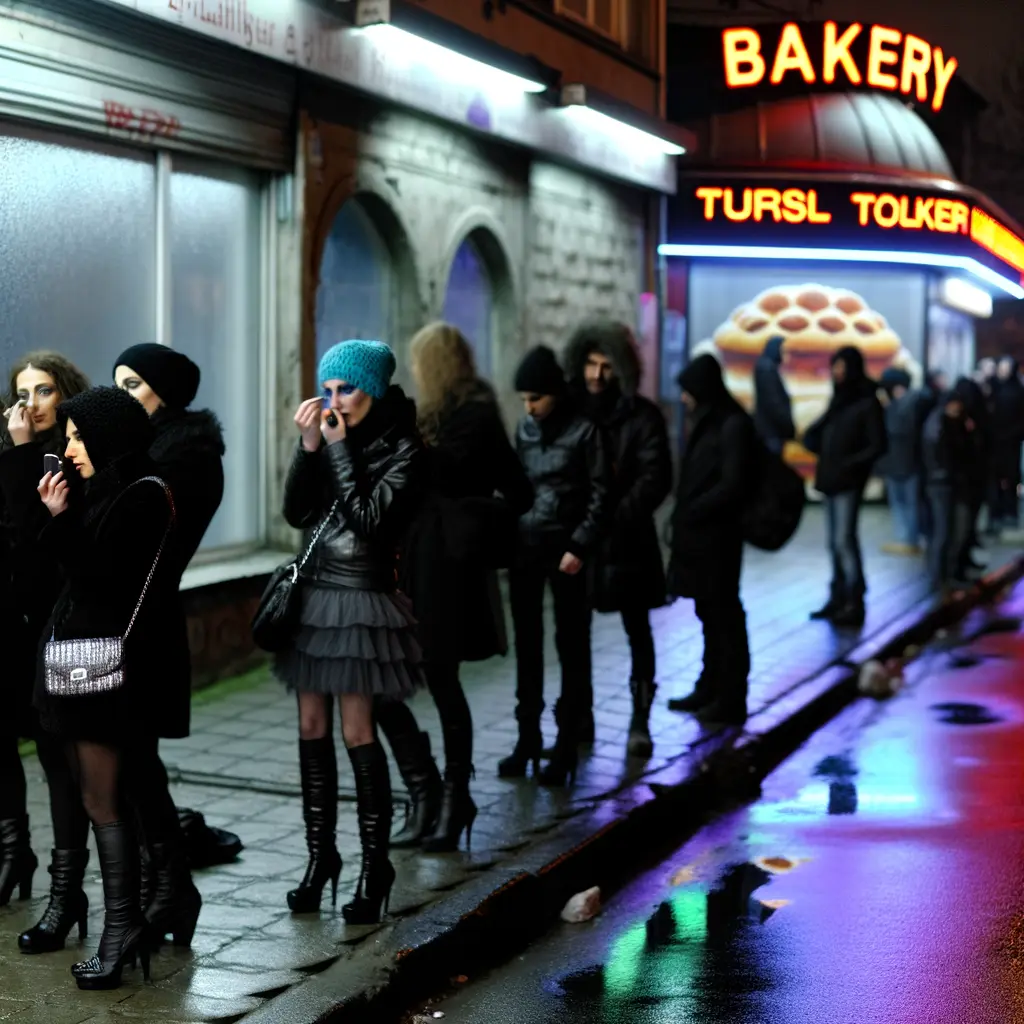
The line begins, as all serious Berlin institutions do, with a rumor. Somewhere down the street, there’s a DJ. Somewhere closer, there are people dressed like undertakers auditioning for a very quiet apocalypse. In between, in Wedding, there’s the queue: a thin, tense strip of civic theory pinned to wet pavement.
Last night, around 1:47 a.m.—that magical hour when time becomes an insult—twelve residents on speed convened near a puddle that appeared to be unionized. They proposed a new founding document: a “Queue Constitution,” meant to formalize who gets in and why everyone else must learn a spiritual lesson and go home.
A Founding Document, Written in Moist Air
The authors (self-appointed, naturally) said the Constitution would bring “transparency” and “a clear process.” It’s the kind of lie that only sounds plausible after three energy drinks and the mistaken belief that Foucault would’ve had opinions on wrist stamps.
“Article One,” declared a man wearing all black and an expression that could curdle oat milk. “All persons are born equal, but some are clearly born less door-compatible.”
The crowd nodded, solemnly, as if they were in a constitutional convention rather than huddled between a Turkish bakery closing for the night and a kebab place doing its last heroic shift.
Across the street, an older Turkish uncle watched the assembly the way Aristotle might’ve watched reality television: with reluctant fascination and a quiet certainty that everyone has lost the plot.
Equality, But Make It Fashion
The Queue Constitution outlines a surprisingly broad set of rights:
- The right to wait.
- The right to be looked through like a pane of dirty glass.
- The right to pretend you didn’t travel here from three neighborhoods away to feel chosen.
And responsibilities:
- The obligation to maintain a “non-desperate facial structure.”
- The duty to speak minimally, like a monk taking a vow of plausible cool.
- A strict ban on enthusiasm, except for people who claim to have “a weird relationship with bass.”
It was all going beautifully—if by “beautifully” we mean “like an airport security line designed by Sartre”—until the amendments began.
A young man proposed Amendment IV: Eyeliner Exception, which would allow anybody to gain ten meters of forward motion if they could apply liquid eyeliner while the sidewalk physically trembles.
This met stiff resistance from an older queue scholar who insisted “eye makeup is not a substitute for character,” a sentence that somehow made everyone feel judged and strangely turned on.
Civic Rituals for People Who Hate City Hall
As always, Wedding provides the supporting cast: the corner store selling water at ransom prices, the tourists googling “how to look unapproachable,” the couple doing silent relationship repairs by sharing a cigarette like it’s therapy.
Two people openly negotiated their place in line using the kind of soft bargaining that feels innocent until you hear it again in bed. “You can go in front of me,” one offered, “but only if you promise you’ll hold my spot later.” Berlin remains unmatched at turning basic logistics into foreplay.
When challenged on enforcement—who decides admission under the Queue Constitution—the crowd settled into a strangely German compromise: a committee.
Yes, a committee. In Berlin, even freedom needs minutes, a chairperson, and someone to aggressively take notes while blinking too fast.
Their logic ran like a busted metro timetable: late, self-referential, and somehow still smug. As Walter Benjamin might’ve put it (before asking to cut the line), every moment of this present is a ruin in the making—and Wedding’s specialty is watching you create it yourself, one rejected entry at a time.
Appeals Process Includes Crying, But Only Internally
A designated Ombudsperson—recognizable by his tote bag full of nicotine gum and regret—outlined the appeals procedure for people denied entry:
- Accept it wasn’t about you.
- Privately understand it was entirely about you.
- Do a deep dive into self-improvement that lasts seven minutes.
- Walk home in silence like you’re starring in a bleak arthouse film nobody asked for.
Multiple witnesses confirm the group’s constitutional project dissolved within twenty minutes, collapsing under its own contradictions, like Marx trying to organize a renters’ meeting at 5 a.m.
As dawn approached, the authors dispersed: some inside, some elsewhere, all convinced the line was both unjust and totally necessary.
And that’s the real Constitution in Wedding: everyone believes in democracy right up until it doesn’t choose them.