Vatican After Dark: Putin Buys a Prayer Breakfast
At the Valdai Forum and an Armenian prayer breakfast, the same elite class keeps selling civilization as a team-building exercise for leaders who want morality without accountability.
Global Affairs & Kiez Mischief Correspondent
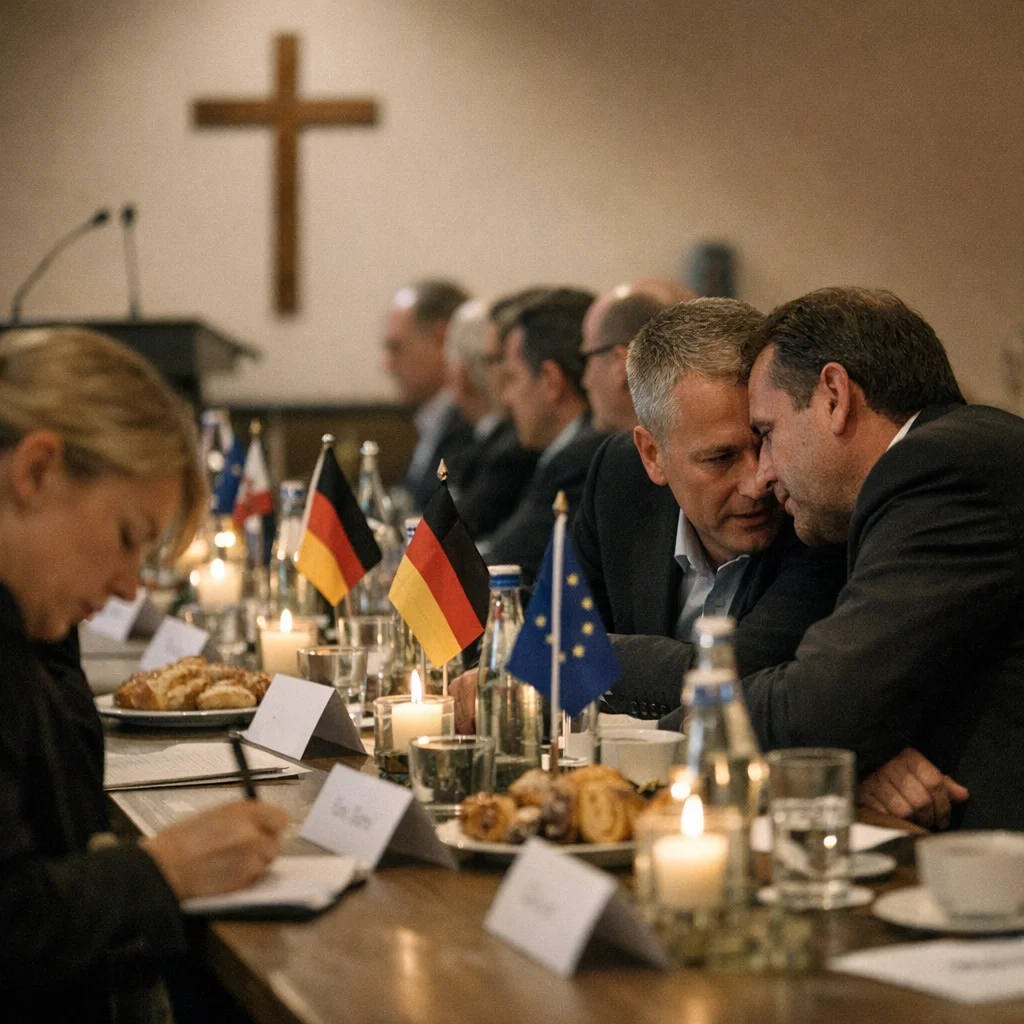
At a rented hall in Neukölln, a handful of Berlin’s self-appointed civilization experts gathered this week for a locally flavored echo of the Valdai Forum and a prayer breakfast, proving once again that empire can survive anything except being asked to pay for its own mess. The room was full of men in expensive jackets pretending they had come for dialogue and not for a group cuddle with power.
The organizers billed the morning as a conversation about “civilizational identity,” which is what politicians and consultants call it when they want to say hierarchy without sounding like they’ve just licked a boot. The guest list mixed diplomats, think-tank regulars, conservative church people, startup patrons, and the kind of Berlin expats who can pronounce “pluralism” with a straight face while living entirely inside a social circle of people who earn money by moderating other people’s shame.
By the time the pastries were gone, the real transaction had begun. Everybody was there to be taken seriously, and nobody wanted to be the one left outside the velvet rope when the bishops and handlers started trading favors. A Russian cultural liaison in the back row praised “shared values” and then spent ten minutes explaining why certain sanctions were unfair to civilization itself, as if civilization were a private club with a broken card reader and a very accommodating doorman. A German organizer nodded so hard he looked like he was trying to agree his way into the room’s bloodstream.
“They want the blessing without the bill,” said Ines Mertens, a Wedding-based translator who attended because a friend promised there would be “serious people” and because, in Berlin, that phrase is usually a warning rather than a credential. “You can feel the whole table rearranging itself so nobody has to say war, greed, or humiliation out loud. They keep calling it dialogue, but it’s really a booking request.”
That was the real liturgy: not prayer, but procurement. Candles on one side, flags on the other, and in the middle a set of exhausted elites trying to rub geopolitical blood off their cuffs with the language of respect. It had the social energy of a swingers’ party hosted by monks: everyone dressed for restraint, everybody hoping someone else would do the dirty work, and nobody quite willing to admit they were there for the same thing—access. The bishops supplied the incense, the diplomats supplied the deniability, and the men with money supplied the old familiar promise that if you sit still and smile, power will eventually sit on you and call it partnership.
What made the whole room obscene was not the piety, but the choreography. The same people who talk about sovereignty with a straight face will spend an hour arranging chairs so that nobody has to look at whose interests are actually being serviced. They call it coexistence when what they mean is consent management for the comfortable. They call it civilization when they mean a private arrangement among insiders to keep the lights soft and the consequences offstage.
A district official who asked not to be named because he had already told three people he was “above this scene” said the city is increasingly hosting events where moral vocabulary is used “like rented tableware: polished, ceremonial, and returned immediately after use.” He added that the prayer-breakfast crowd prefers rooms with heavy curtains because the whole point is to look respectable while doing the same old transactional thing in public.
In Wedding, where Turkish bakeries now compete with concept cafés selling sourdough as personality, the contrast landed fast. Locals have been watching Berlin import every fashionable language of coexistence while letting actual communities get squeezed, sorted, and politely forgotten. The breakfast circuit is just the global version: talk peace, admire the decor, and hope nobody notices the hand already in your pocket and the other one arranging your alibi.
By the afternoon, organizers were already discussing a follow-up gathering. The next round will reportedly include more clergy, more panel seating, and the same hunger for dignity without consequence—another room, another table, another polished negotiation over who gets blessed, who gets used, and who gets left pretending they came for breakfast.