Venus in the Washing Room
A Wedding laundromat has started running a “priority spin” queue that lets customers buy faster service, softer smiles, and a faint sense of being chosen.
By Arda Kismet
Kiez Mischief & Access Economy Correspondent
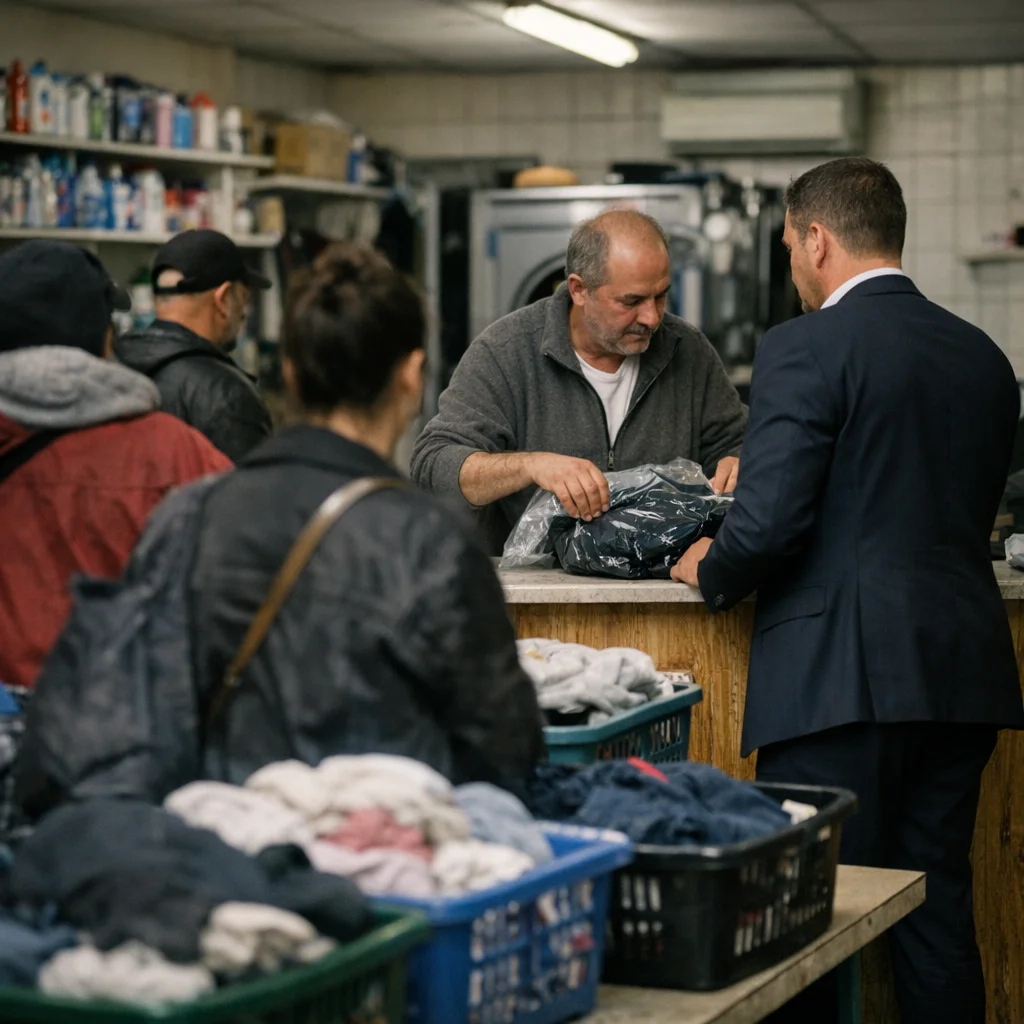
Residents of Wedding say the laundromat on Müllerstraße has begun sorting customers the way a landlord sorts applicants: by who gets taken in front, who gets left outside, and who is expected to smile about the arrangement because the machine beeps politely. The shop’s new “priority spin” lane lets anyone with a premium card slide their basket ahead of the ordinary queue, where wet socks and damp resentment now wait under fluorescent light like unpaid bills with legs.
The system appeared last week after the owner, Mehmet Kaya, installed a second counter beside the detergent shelf and began offering faster wash cycles, folded towels, and what one regular called “the kind of smile you only get when the terminal already likes your name.” By Monday morning, the front row had been claimed by consultants in black coats, a yoga teacher with a tote bag full of linen, and one man who said he was “very community-oriented” while paying extra to be handled first and kept separate from the crowd.
“People are not buying laundry,” said Nadia Demir, 54, who has brought bedding there for nine years and now waits with three other customers while the premium baskets glide through like they’ve been promised a private room. “They are buying the right to stand above everyone else and pretend it is efficiency. It is not efficiency. It is a little ritual of being chosen so nobody has to admit they enjoy being above somebody else.”
Kaya defended the lane as a response to demand, though his explanation kept slipping into the language of appointments, access, and intimate preference. “Some customers want to be seen, some want to be handled quickly, some want a little attention,” he said, standing beside a machine still dripping from the last cycle. “We give people choices. If someone wants the front of the line, they can pay for the front of the line.”
That choice is the real commodity. The premium lane does not just move clothes. It stages a small civic seduction: the card taps, the basket advances, the shoulders loosen, and the customer gets to feel briefly and expensively selected. The ordinary queue watches the whole thing unfold beside the counter, where the payment terminal flashes first, the folding table waits obediently, and the machine door keeps opening for the same people who can afford to call waiting a personal insult.
Even the folding table has become a class diagram. Crisp shirts from the fast lane land flat and clean, while school uniforms and work trousers from the regular line sit in plastic baskets long enough to look like they have been stood up. A baby blanket was left near the lint tray for so long that one customer asked whether it had been “put on hold,” which seemed exactly right. In this room, being served first is sold as luxury, but it lands more like submission: pay enough and the shop will pretend your impatience is a virtue.
One regular, who asked not to be named because his wife would object to him sounding this pleased with himself, said the service reminded him of “a private club for people who like being taken at the front and called practical for it.” That seemed to be the appeal. The new clientele arrives with organic soap, imported guilt, and the animal certainty that somebody else should wait so they can leave feeling lightly handled and fully justified.
The district office said it had received no formal complaint, though a spokesperson noted that businesses are permitted to differentiate service as long as they do not advertise humiliation as a feature. The wording was so neat it could have been printed on a receipt: legal on paper, degrading in the body. Several customers said they would keep using the shop anyway, because their shirts were already in the machine and dignity, like a spin cycle, is easiest to lose when someone promises to bring you out first.
By early evening, the regular line was still backed up to the window while the priority customers left with warm bundles and the satisfied look of people who had paid to be taken in front, only to discover they were the ones being worked over the hardest by the system they mistook for service.