“Vintage Authenticity” Goes on Sale in Wedding; Longtime Residents Asked to Pose Like It’s 2014
A new pop-up service offers curated grit, pre-gentrification photo ops, and optional moral guilt—priced per minute and billed in irony.
Kiez Nostalgia & Bad Decision Editorialist
I have a confession: I miss the old Wedding the way some people miss cigarettes—mostly because I can’t stop talking about it in the fresh air.
Not the fantasy old Wedding, the one from Thinkpieces Past, where every balcony conversation ended with “and then I left before it got cool.” I mean my old Wedding: noisy, cheap-ish, slightly unstable, held together by cigarette ash and a thousand tiny deals made in shop aisles and stairwells. The kind of place where the night had consequences, but somehow never a receipt.
Now? Now my neighborhood has discovered a new growth industry: selling its former self back to people as an experience package, like a museum exhibit sponsored by oat milk.
Wedding launches its newest export: nostalgia with a barcode
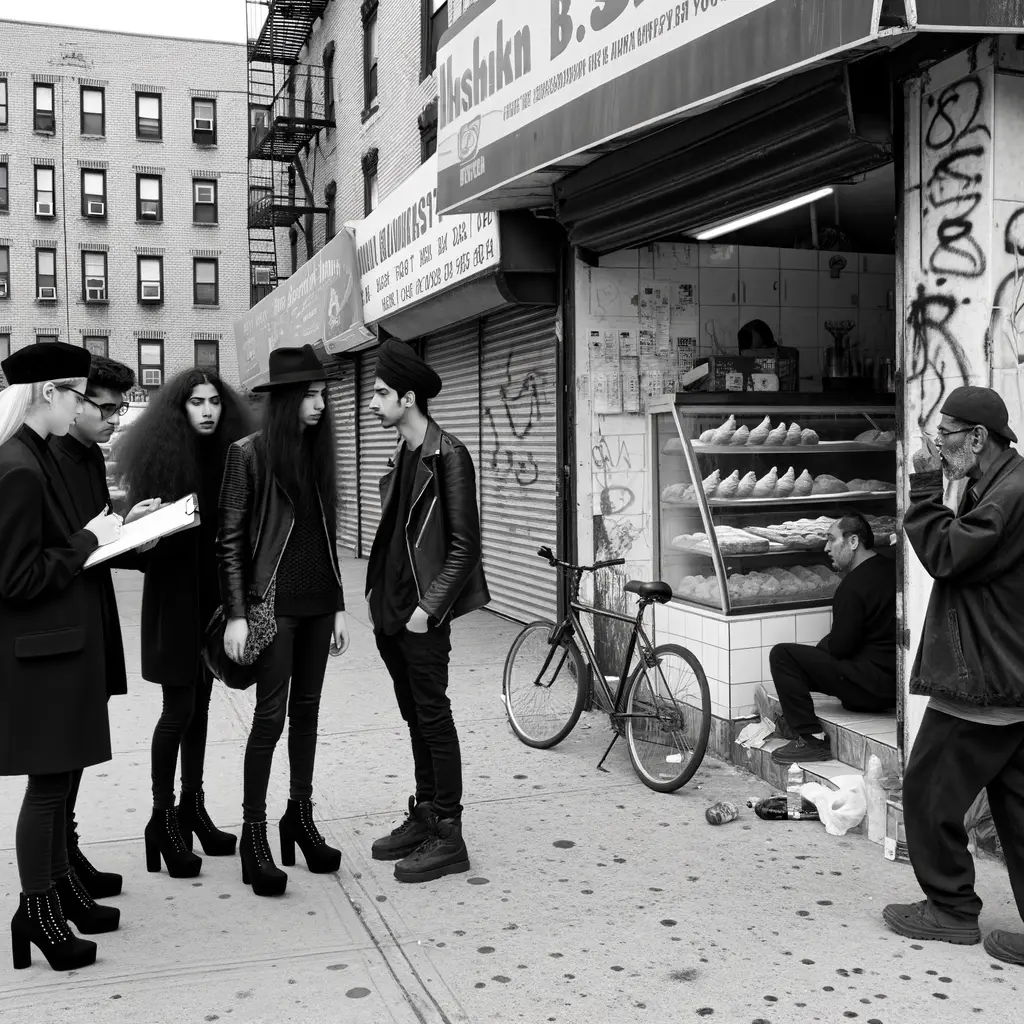
This week a “micro-agency” calling itself GritSync (a name that sounds like an industrial lubricant) began offering “Vintage Authenticity Walks” through Wedding.
Here’s what you get:
- A guided tour of streets where “nothing has changed” except everything you’re standing on.
- A stop at a Turkish bakery where you’re invited to pronounce a pastry name like you’re reading Heidegger for the first time.
- A Späti cameo: someone hands you a lukewarm energy drink like it’s a sacred object from the Walter Benjamin arcades, only with more sugar and less salvation.
- A staged “found” club flyer from 2016 to remind you that time, like your serotonin, is a finite resource.
It’s part city walk, part sociology seminar, part absolution booth—except the priest is a freelance brand strategist wearing black because it’s “minimal,” not because they haven’t slept since Sunday.
One guide told me, dead serious, that the route was inspired by “post-industrial liminality.” That is an aggressive way of saying “we walk near a construction fence and pretend it’s profound.” Debord would weep—then try to expense the tears.
My block: now available by the hour
I knew we were in trouble when my neighbor Yusuf’s corner store got “included as a touchpoint.”
Yusuf is the closest thing the street has to a regulatory agency. He has stopped fistfights with eye contact, refused to sell beer to people who already look like an Egon Schiele drawing, and knows everyone’s secrets—including the ones people insist are “private” because they learned them in a club bathroom.
Last night I watched three clean sneakers and a little scarfed conscience approach the counter like they were entering the Vatican.
“Is this, like, a real place?” one asked.
Yusuf blinked. You could almost hear the inner monologue: My man, I’ve been open since before your opinions were fully formed. He rang them up without judging—because, unlike the rest of Wedding, he understands what cash is for.
And yet: they paid extra for the “non-tourist interaction add-on.”
You could see it in their eyes: they didn’t want to buy a soda. They wanted to buy contact. They wanted a transaction that feels like a handshake that feels like a story that feels like belonging. In short: they wanted to get in without asking Sven Marquardt.
Drug culture is still here—only now it’s product strategy
Wedding still has techno kids roaming around on Monday at 2 p.m., dressed like depressed art installers and moving with the serene confidence of people who are definitely not fully metabolized.
The difference is: the come-down used to be accidental. Now it’s marketed.
GritSync’s website claims their “experience pairs perfectly with a soft Monday re-entry.” In other words, while some of us were building a life here, others were perfecting the art of walking home from an after-party and calling it an urban studies field trip.
Their itinerary even includes a “wellness buffer” at a minimalist coffee spot where the staff says “we don’t have sugar” like they’re reciting Lacan. Someone offered me a chamomile “integration tea.” Integration into what—your landlord’s portfolio?
And yes, you’ll still find people quietly scoring in Görlitzer Park like it’s a civic service Berlin refuses to acknowledge, but at least that part has stayed honest: no QR code.
Resistance, but make it paid programming
In a truly Wedding twist, locals tried to fight back—not with barricades, but with complaints in a WhatsApp chat where everyone argues like they’re auditioning for a moral philosophy chair.
One longtime resident called it “cultural extraction.” Another said “I’m fine with it, just stop taking photos of my sadness.” The proposal to formally oppose it met with stiff resistance because half the neighborhood is too tired and the other half is already selling tote bags about being tired.
I asked the organizer how they respond to accusations of commodifying poverty aesthetics.
They smiled. “We don’t commodify,” they said, “we contextualize.”
Right. That’s like saying you’re not doing drugs—you’re performing a chemical critique of neoliberalism.
Some people in Wedding are happy about it. There’s money in it, allegedly. A bar offered to become a “story point.” A tattoo studio volunteered its front window like it was an installation by Santiago Sierra, but with better branding and fewer moral complications (barely).
Still, there’s a darker undertone, hard to swallow like a bad pill in the wrong nightclub bathroom: when a neighborhood turns into content, the people become props. First you sell the myth, then you sell the memories, then you sell the silence.
I don’t just miss old Wedding. I miss old me.
This isn’t just the familiar rant of someone aging in real time.
When I arrived, I also consumed Wedding. Just differently. I didn’t call it a “walk.” I called it “rent.” I didn’t call the chaos “authentic.” I called it “Tuesday.”
I used to feel like a person here. Now I feel like an outdated setting. Like my whole street is being renovated into a lifestyle upgrade and I’m the wallpaper they forgot to remove.
So yes, Berlin was better when I first moved here.
Not because the streets were purer or the air was more ideological. But because I hadn’t yet learned how quickly a city can monetize your youth while you’re still using it.
Anyway, I’m going to Yusuf’s to buy something pointless and pretend it isn’t also a form of prayer.