Waiting Room of Venus at the Bürgeramt
A new appointment rule makes clerks judge applicants by whether they can keep smiling while the line behind them dies of boredom.
Administrative Grief Correspondent
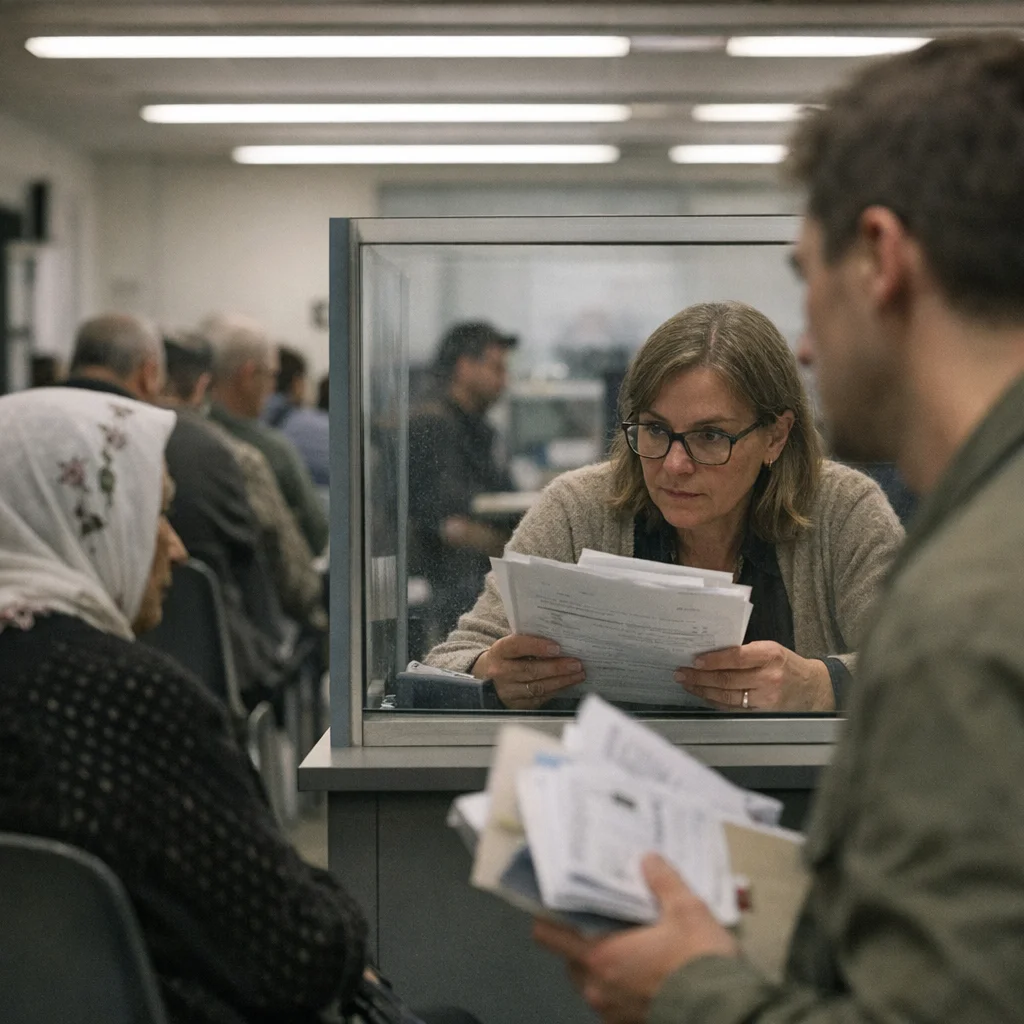
At the Bürgeramt in Wedding, certain applicants are now being sent to what staff call an “aesthetic review,” a holding pattern where forms stop moving until a clerk decides whether the visitor looks grateful enough, needy enough, and easy enough to shame. The rule began quietly last month, according to employees who described it as a way to “reduce aggressive entitlement,” which is bureaucratic language for making people present themselves like hopeful suitors at a state-run velvet rope.
The procedure is simple in the way a bad date is simple. You take a number, sit under fluorescent light, and wait to be sized up for access. The clerk does not merely read your papers; they read your face like it owes the building a response. Collar, shoes, posture, mouth, the little tremor of compliance around the eyes — all of it gets weighed as if citizenship were a flirtation and the office had the right to withhold the room until you looked properly eager to be chosen.
If you look too polished, you are treated like a liar with a co-working membership and a private-school jaw. If you look too tired, you are treated like a nuisance who has arrived already spent, which in this temple counts as bad manners. If you look angry, the file mysteriously develops a “missing attachment.” The clerk’s favorite trick is to ask for “a warmer expression,” as though a passport could be issued only after the applicant performs gratitude with enough cheekbone.
“I had my papers, my appointment, everything,” said Deniz Aydin, 34, who came in to update his address and instead spent nearly an hour being told to “soften his expression.” “The woman behind the glass told me I was giving ‘hostile energy,’ which is rich coming from a desk that smells like old toner and punishment. It felt less like an office than being made to audition for permission to remain visible.”
Inside, the room has taken on the moral elegance of a nightclub no one wants to enter but everyone must survive. Clerks with the spiritual warmth of customs officers now ask people to “try again with a more open face,” as if residency could be granted by acting less like a person with rent, children, or blood pressure. One man in a bicycle helmet was told he looked “overconfident for someone requesting paperwork,” which is the kind of line only bureaucracy can produce: a sentence that sounds like a rebuke, a proposition, and a threat to keep waiting.
A Turkish grandmother from Müllerstraße was asked why she seemed “so accustomed to this process,” which is what a coward says when he wants to sound gentle while rubbing salt into the wound and calling it service. Another applicant said a clerk told her to “stand a little closer to the counter if she wanted to be considered,” a phrase that would be embarrassing in a bar and obscene in a public office, which is why it fits so perfectly in Wedding.
The office calls this communication. In practice it is a selection ritual: the building plays hard to get, the line performs patience, and the clerk gets to decide who may advance and who must linger outside the favor curtain with their documents and dignity hanging open. The humiliation is not incidental. It is the product.
A district spokesperson said the office was only trying to “improve communication” and “lower stress at the counter,” a phrase that landed like cologne sprayed over sewage. Staff unions, meanwhile, said the system has given clerks a fresh way to play royalty on state wages, using facial expression as a loyalty test and boredom as a disciplinary tool. One union representative described the new procedure as “a kissing booth with no kissing, just the part where you wait to be told whether you’re attractive enough to deserve a stamp.”
Outside, people compared notes like survivors leaving a badly lit screening room where the film was their own dependence. Inside, the line kept feeding the machine. By late afternoon, the office had started handing out delayed appointments for anyone who failed the review, meaning the premium service in Wedding is no longer speed but access by audition: the right face, the right posture, the right level of obedient hunger, and the blessed ability to smile while the state decides whether it wants to let you in at all.