Waymo Hires a Human to Apologize
The driverless future keeps running into the same Berlin problem: nobody trusts a car that can’t be blamed, insulted, or asked where it’s from.
By Otto Minimal
Startup Strangeness Correspondent
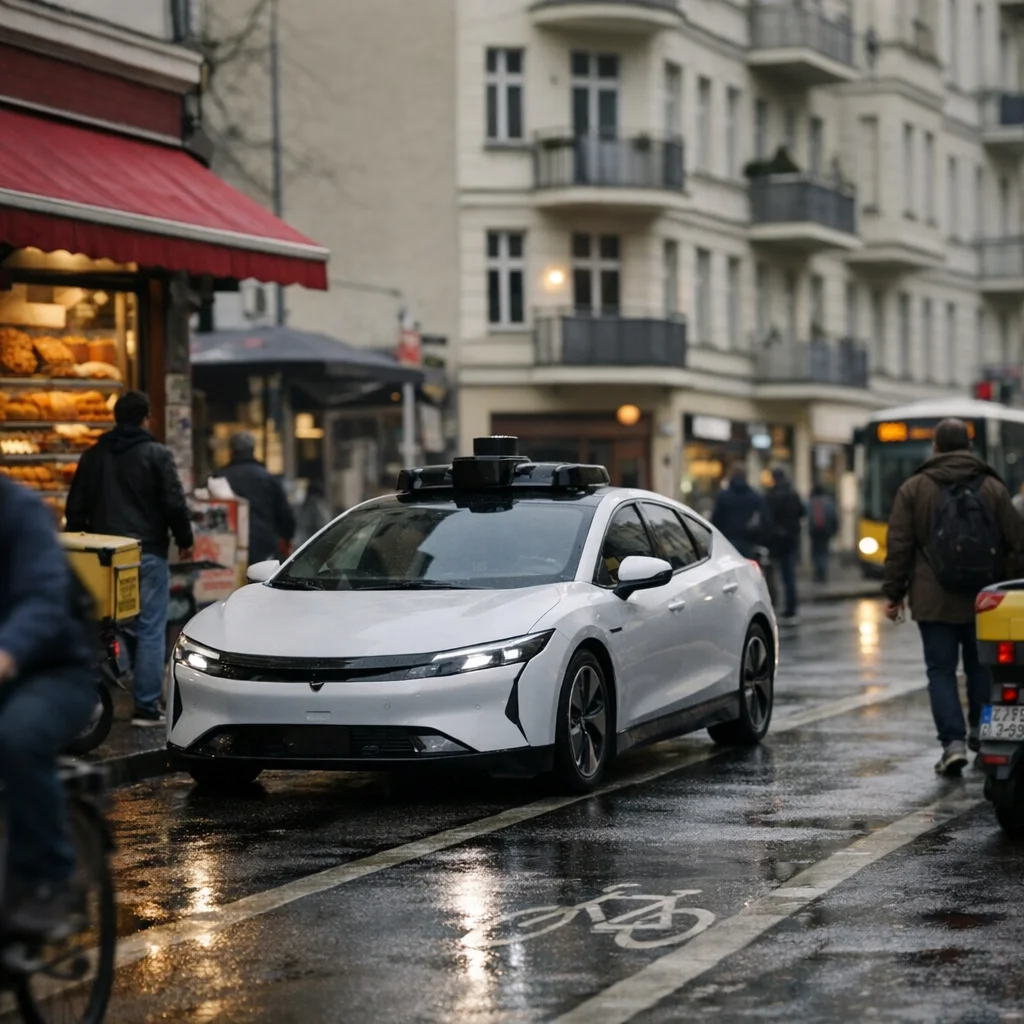
A premium car for people who fear being seen
There’s a specific Berlin customer who hears “driverless car” and feels their conscience purr. No driver to tip. No immigrant laborer to underpay while pretending to love diversity. Just a sleek box on wheels, arriving without a face, which is how this class prefers its politics.
Waymo’s Berlin fantasy isn’t about transport. It’s about escape from the oldest civic inconvenience: other people. Especially those who can still talk back.
Wedding will not perform your moral hygiene
Put the car in Wedding and the whole performance starts sweating. Not because Wedding is “rough,” but because it doesn’t flatter startup mythology. The neighborhood offers Turkish bakeries, delivery scooters, BVG delays, and bike lanes occupied by everyone except the cyclists urban planners worship.
The robot car glides in like a baptized thesis. The street responds with a man on a cargo bike, a pensioner crossing wherever she likes, and a guy with a cigarette who looks at the car suspiciously, ready with excellent insults.
That’s the problem. A human driver can be negotiated with. A machine offers no such pleasures. It cannot be worked or winked at. It cannot be humiliated into admitting it took the wrong turn.
The new bourgeois dream: no labor, no blame, no smell
The people selling this future are absurdly sincere about their cleanliness. They talk about “smart mobility” like missionaries used to talk about salvation, except with more glass surfaces. They want a city where traffic is frictionless, emissions are low, and responsibility has been airbrushed out.
Meanwhile, the actual city remains filthy with consequences.
- The landlord renovates an Altbau into a “curated living experience,” then raises the rent like a ransom note.
- The urban planner adds a bike lane, then acts shocked when courier vans treat it like decorative paint.
- The tech founder posts about “community” from a café table needing zoning approval.
- The expat who moved here for authenticity complains the baker doesn’t speak enough English while buying a croissant the size of a small political betrayal.
Waymo fits this ecosystem perfectly because it removes the one thing Berlin does honestly: interpersonal friction. No driver to argue with, no one to blame, just premium automation for those wanting the city without its humiliating humanity.
The car as confessional booth for the rich
Picture it: a polished vehicle rolling past the concrete sincerity of Wedding, carrying a founder in a black coat who says “we’re really thinking about access” while checking if his ride is being photographed. He wants the optics of a public service and the emotional texture of a private sin.
Inside, he can rehearse his innocence. Outside, Berlin keeps doing what it does best: refusing to be optimized by people whose idea of civic engagement is ordering the neighborhood to be more tasteful.
And that’s why the robot taxi is such a perfect elite object. It absolves the passenger of the social labor of being a person. No driver to acknowledge. No local to tip. Just a deodorized moral chamber on wheels.
Of course, it still needs roads, workers, police, map data, and a municipal apparatus held together by exhausted people who don’t get venture-capital poetry in return. But the customer doesn’t have to see that. He arrives feeling like the future, the oldest scam in urban history.
Berlin will still be Berlin, thank God
The city isn’t waiting to be saved by software. It’s waiting to survive another round of people who think inconvenience is a design flaw and not the reason a place remains legible.
So let Waymo come to Wedding. Let it nose through the bus stop, kebab smoke, cargo bikes, late-night drunks, and the polished circus of people wanting a cleaner city without becoming less disgusting themselves.
In Berlin, the machine may be driverless. But the blame will still be outsourced, the rent will still rise, and someone in a blazer will still blame the neighborhood for not behaving like a product demo.