‘We’re a Family,’ Says the Jobcenter
Wedding’s most cheerful welfare office now runs like a corporate culture workshop with sanctions.
By Jax Delayski
Transit Meltdown & After-Hours Logistics Reporter
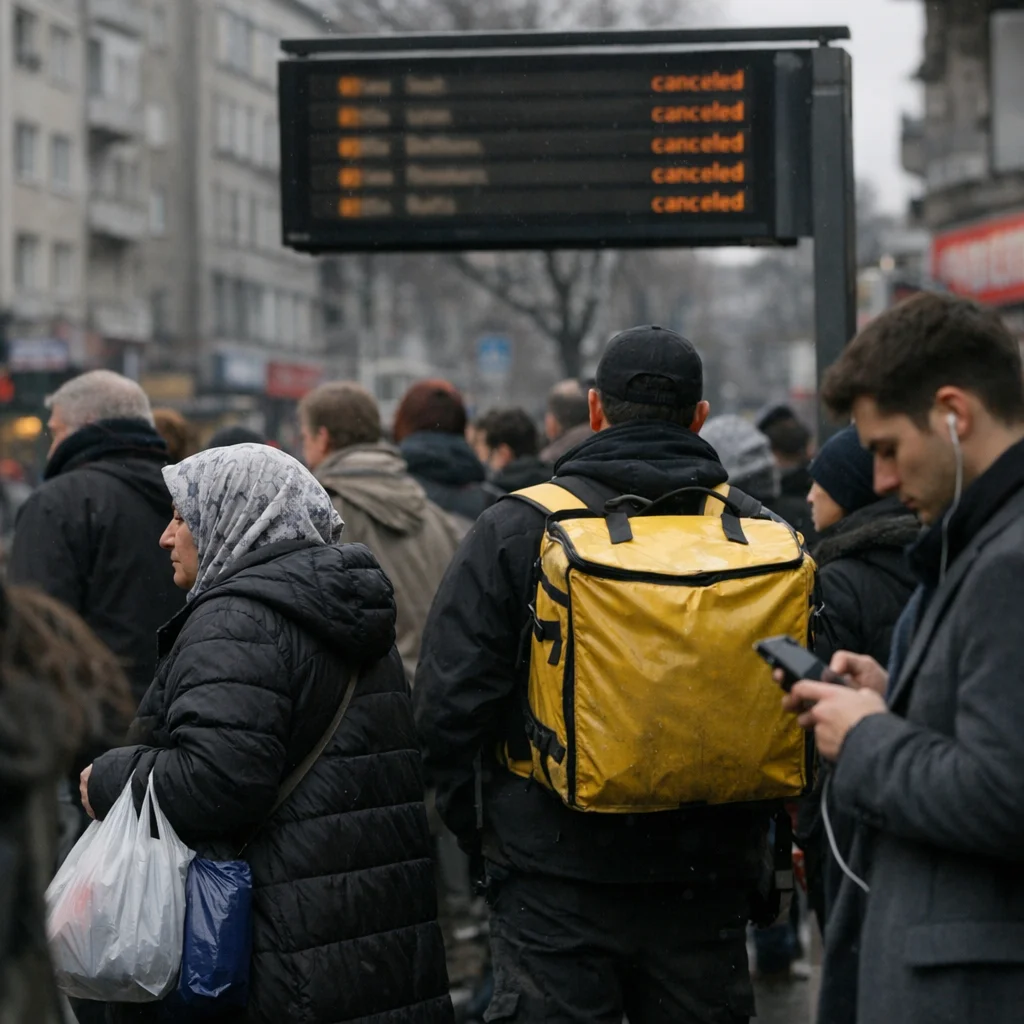
BVG riders in Wedding spent another morning being taught the difference between public service and public humiliation, which in Berlin is mostly a matter of branding. The buses vanished, the app lied with a clean conscience, and the city’s favorite little sermon about sustainability arrived wrapped around a very old message: wait, shut up, and be glad you are being disciplined in a neighborhood the authorities still pretend to remember.
At stops along Müllerstraße, commuters stood with their coffee, their groceries, and their private little moral biographies collapsing in real time. One canceled bus is a glitch. Three is policy. By the fourth, the people on the curb stop pretending to be citizens and start looking like abandoned livestock with transit cards. A nurse in clogs, a pensioner with a wheeled cart, a delivery rider with one glove missing, and a man in a suit already sweating through the underarms all got the same lesson from the same machine: the city loves mobility in the abstract because it can’t be delayed, packed, or made to smell like cold wet wool.
A bakery owner on Müllerstraße, who asked not to be named because his family still entertains the fantasy that this district is administered by adults, watched schoolchildren miss the same connection twice and laughed in the exhausted way of someone who has already paid the tax of pretending to be surprised. “They call it operational adjustments,” he said. “That’s the kind of language people use when they want to sound gentle while committing administrative battery.” He looked at the stop display, which continued to glow like a smug little altar to false promises, and added: “It’s corporate therapy for a system that keeps kicking you in the shins and asking you to reflect on your resilience.”
BVG later said it was “working intensively” to restore reliability, which in Berlin generally means someone has opened a spreadsheet, stroked their own conscience, and decided the public can be managed with apology-flavored vapor. This is the city’s favored style of governance: soft-voiced coercion. Welfare office, transit office, district office—it is all the same perfume. They offer support, then punish you for needing it. They speak about inclusion with the warm eyes of a hostage negotiator and the administrative tenderness of a creditor.
That is where the real obscenity lives. Not in the delay itself, but in the moral theater built around it. City officials talk about climate, dignity, and access the way cheap men talk about intimacy: loudly, in public, and with no intention of following through. The middle-class commuters who lecture everyone about shared sacrifice become feral the second a bus fails to arrive. Their faces harden. Their leftism evaporates. The tote bag becomes a shield, the bike lane a religious relic, and the person beside them—cleaner, courier, cashier, auntie, nurse, anyone with an actual schedule—suddenly looks like an obstacle to their self-image. Everyone becomes socialist for twelve minutes, then starts haggling over a shared taxi like they’ve never once used the word solidarity without a trigger warning.
A young office worker in a padded coat, his expression stretched thin by the erotic disappointment of another morning spent waiting for a vehicle that may as well have been a rumor, said he had canceled two meetings and one attempt at being professionally important. “You can feel the city fingering your patience through the app,” he said. “It keeps opening, closing, opening again. By the time the bus comes, if it comes, everyone’s already been made late, irritated, and vaguely horny for revenge.”
By late morning, some passengers had walked, others had gone into a café where oat milk is sold as if it were an ethical position rather than a warm beige apology. That is the Berlin class script in miniature: inconvenience for the many, artisanal denial for the few, and a district office somewhere saying it is “monitoring the situation,” the bureaucratic equivalent of holding a damp cloth to a broken jaw.
The next round of cancellations is expected later this week. Riders will again be asked to remain patient, flexible, and preferably invisible, which is exactly what the city requires when it wants to look compassionate while tightening the screws.