Wedding Clubs’ ‘24/7 Awareness’ Hotline Is Just a Night Manager Who Learns Your Name for the Police
The borough sells it as care for vulnerable ravers; the real genius is that every “support” call quietly doubles as a trust exercise in self-incrimination.
Paperwork Trauma Correspondent
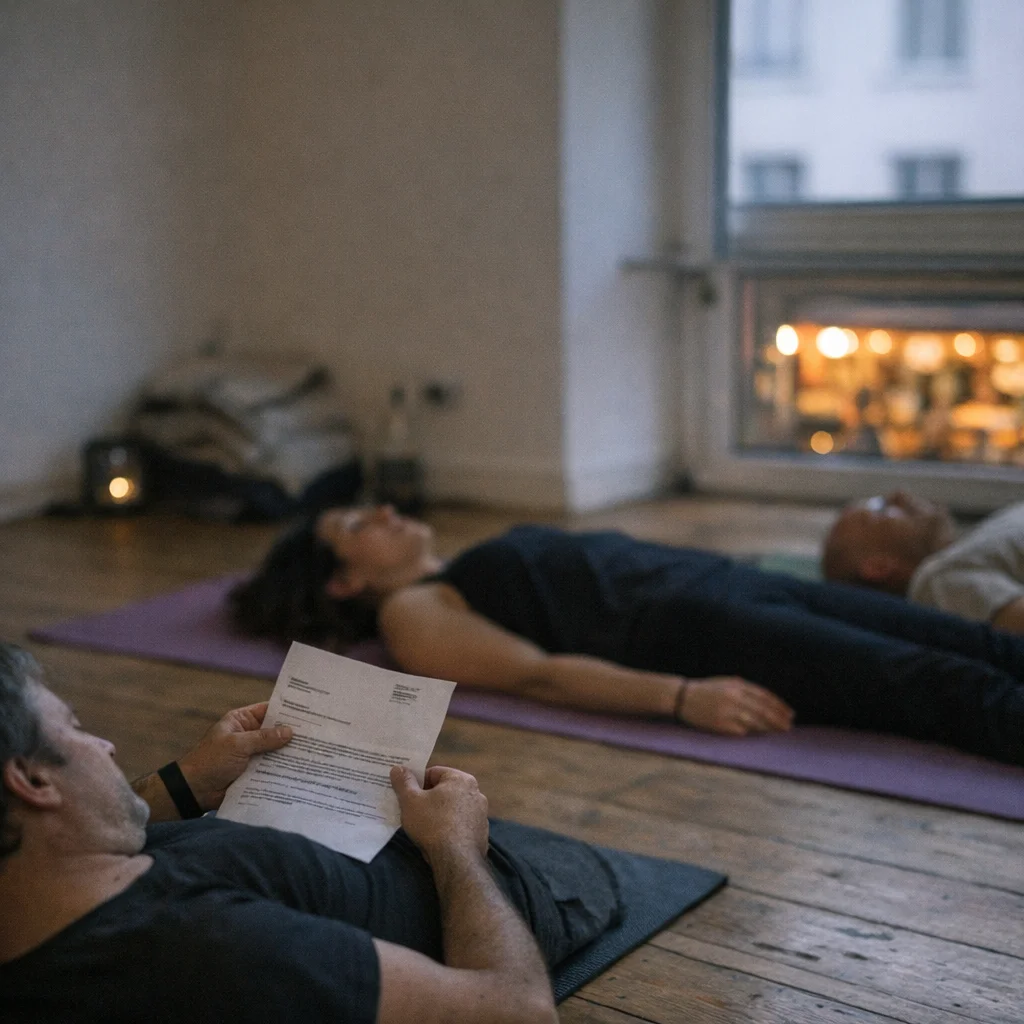
In a move that would make a mindfulness coach and a claims adjuster share one damp, knowing smile, several Berlin health insurers are now quietly tolerating what they call “dissociative recovery sessions” in Wedding apartments, basement studios, and one offensively calm room above a Turkish bakery near Leopoldplatz. The brochure language is all nervous-system literacy and post-trauma tenderness. The actual attraction is simpler: if you can keep people chemically parked, softly lit, and too woozy to ask for an MRI, you have invented savings.
It starts, as every Berlin scam dressed as care does, with a form that pretends to be therapeutic and functions like a snare. Applicants are asked to describe their “regulation goals,” list prior therapy, and prove that their descent is at least curated. One case manager, speaking in the municipal whisper reserved for cowardice, called the program “adjacent to prevention.” That means: if you are already halfway out of your body, please do the rest on a mat where we can invoice the atmosphere.
The insurers love this arrangement because it lets them cosplay compassion without ever touching the patient’s actual life. They get to say “resilience” with a straight face while paying for a cheaper, prettier version of neglect. A person who comes back from a ketamine hole calm, compliant, and vaguely embarrassed is not wellness; it is a reduced-liability citizen with the edges sanded off.
On the ground, the ritual looks less like healing than a department store version of surrender. The usual crowd from Mitte arrives in black socks, oat-milk breath, and the glazed, overworked expression of people who have outsourced their personality to playlists. They drop onto mats, disappear for an hour, then emerge claiming to have “met themselves,” which usually means they briefly made eye contact with rent, loneliness, or the humiliating fact that everyone at the club is pretending not to want anybody and still leaving together.
The operators are never plain about the motive because plain speech would ruin the scam. They speak instead in the velvet dialect of people laundering vice through concern. “Awareness,” “integration,” “containment” — all those little antiseptic verbs that make a room smell like policy. The club owners, for their part, adore any system that lets them sell danger as sophistication and then hand the hangover to a hotline staffed by one tired adult with a headset and a benevolent voice. It is the Berlin dream: get high, get seen, get absolved, and never once admit you were just trying to feel touched by something that didn’t cost extra.
“Call it meditation if you want,” said Ayla Demir, 34, a Wedding resident whose aunt runs a bakery on Müllerstraße and has better judgment than three district offices combined. “The insurance people only care whether you come back calm enough to survive another week without demanding a scan, a specialist, or a human being who has to say no to your face.”
That is the trick, of course. Berlin’s wellness class pretends it has discovered transcendence when it has really found a cleaner way to sedate itself before Monday. The club operators call it care because the word lets them keep their mirrors, their guest lists, and their plausible deniability. The insurers call it prevention because they would rather sponsor a soft-focus disappearance than a real treatment. Everyone gets to perform virtue in the same room. Nobody has to pay for the damage.
A spokesperson for one insurer said it does not “recommend unsupervised altered-state practice,” which is a charming sentence from an industry that has turned half the city into a waiting room with mood lighting and an exit survey. The district office, meanwhile, said it was “monitoring developments” and reminded residents that any wellness offering with a phone charger, a cancellation policy, and a man saying “no pressure” in the tone of a hostage negotiator may require a permit.
For now, the immediate consequence is simple: more clients are asking whether their hole counts as therapy. In Berlin, that question is never rhetorical for long.