Wedding Learns Gerrymandering From Cable News — Now We Redraw Streets to Win Swings and Charging Points
After a crash-course in U.S. redistricting, locals are 'packing' toddlers and 'cracking' pensioners on neighborhood maps — blissfully unaware that German electoral math and bored borough clerks have other plans.
Nightlife Identity & Self-Deception Correspondent
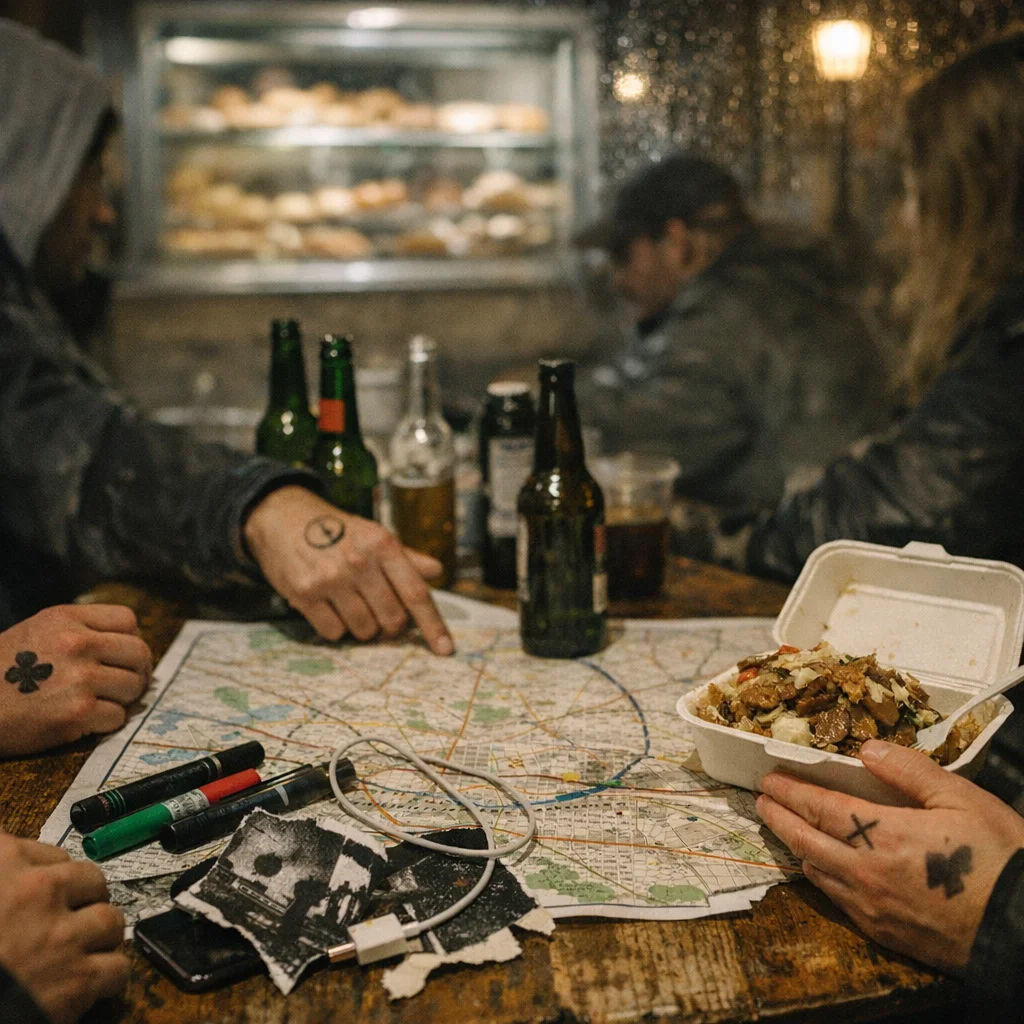
In response to "What to Know About How Redistricting Is Different in the U.S.," residents of Wedding have launched an after-hours course in American map‑hacking — except here it mostly decides who gets the swing set, the fast phone charger, and the legal excuse to hold a Sunday all‑ages afterparty. Every Thursday night a crowd gathers with beer, felt‑tip pens and a printout of the borough map, subdividing the hood so each homemade district snags one playground swing and a fast‑charger.
The experiment borrows U.S. jargon — "packing" toddlers into one block, "cracking" pensioners into five — and then discovers German reality. "We watched the examples from the U.S. and thought, why not try?" said Murat Yilmaz, 42, who runs a döner stand on Müllerstraße and organised the first map night. "If you pack enough strollers into a precinct you can win the swings. Also, the stamps from the clubs make good proof of residency." He lifted a hand marred by an ink stamp that looks suspiciously like an oversize party seal.
The nightlife connection is deliberate. Regulars from About Blank, Tresor and Sisyphos attend, inked hands and all; for locals the trick question of "how to tell if someone is on drugs in Berlin" has a simple answer: you don't — they show up with a stamp, a tired smile and an opinion about municipal charging infrastructure. "They're all on something — commitment to the table, maybe ketamine, possibly caffeine," said Lena, 29, a longtime doorwoman who pops by after her shift. "If you have a festival stamp and can draw a convincing boundary, you get a swing."
Bezirksamt Mitte was less amused. "Citizen drawings are charming but nonbinding," said Martina Schubert, the district press officer, who described the Thursday sessions as "creative civic engagement" and warned participants that Germany's electoral system and administrative rules do not respond to beer mats. Officials have promised to ignore any maps submitted with nightclub ink as an authentication method.
Still, the project exposes a schism: Americans fight over lines because lines decide seats; in Wedding the same impulse looks like a planning meeting for who gets the next EV plug and which corner will tolerate a four‑day afterparty. Borges would have smiled at a map that argues harder than the people who drew it; Kafka would have enjoyed the paperwork.
Next step: the group plans a public workshop with a municipal planner — described on the flyer as "penetrating the bureaucracy" — and a promise that, if nothing else, the district will at least know where to put another charger. Whether the charger follows or the charger organizers simply buy the block remains unresolved; in Berlin you can draw a line, but you cannot always finish the job.