Wedding’s “Affordable” Apartment Ads Are Just Landlords Advertising to Their Own Nerves
The real product isn’t housing; it’s the soothing fiction that a crumbling building can be rebranded into a moral achievement if the listing sounds inclusive enough.
Imported Scandal & Social Pretending Correspondent
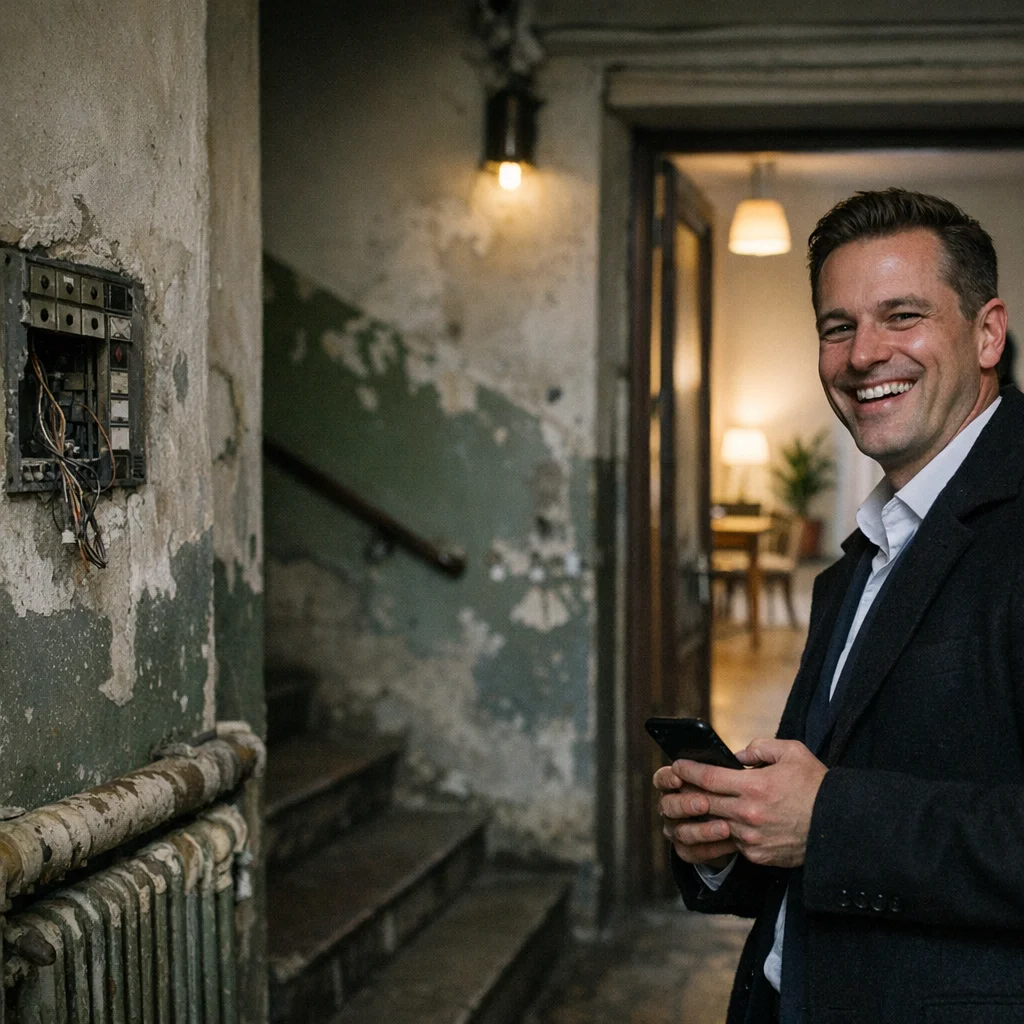
Wedding has become the kind of place where a landlord can leave a building half-rotting, then ask for praise because the ad copy says “community-oriented.” That is the whole morality play now: the hallway smells like wet plaster and old cooking fat, the intercom hasn’t worked since the previous coalition of lies, but the listing platform is very proud to tell you the flat is “full of character.”
Character is what people call neglect when they want to charge extra for it.
The apartment-ad ecosystem in Wedding has perfected this little fraud. A property owner with the emotional range of a damp radiator hires a broker who smells faintly of perfume, espresso, and surrender. The broker photographs the bright corner of the room, not the mold line above the window. The courtyard trash is cropped out with almost erotic discipline. The broken elevator becomes “historic access.” The cracked stairwell, where the paint curls like dead skin, is rebranded as “authentic Altbau charm,” even when the building is younger than the shame of the person writing the listing.
And the language. Always the language. “Affordable” means the rent only ruins your month instead of your entire year. “Inclusive” means the ad has one English sentence, as if bilingualism were a disinfectant. “Ideal for creatives” means the landlord would like you poor, quiet, and grateful enough to perform personality while the pipes cough brown water. “Well-connected” means you can leave the apartment quickly after realizing you have been sold a decorative emergency.
There is a special kind of moral laundering at work here. The investor class cannot say, out loud, that it is profiting from deferred maintenance and municipal exhaustion, so it invents a vocabulary of tenderness. It wraps a busted building in soft-focus language and calls the whole arrangement socially responsible. The same people who would never spend one night in the unit without a heater suddenly discover the neighborhood’s “potential.” They adore decay in the same way people adore a body only when it can be photographed from the right side.
A broker in the area, who asked not to be named because even shame has a public-relations budget now, described the standard pitch with the confidence of a man selling mercy by the square meter. “We want to show Wedding’s soul,” he said, which is a magnificent sentence if you don’t mind the soul being listed without heating and the bathroom door not closing properly. He said tenants want “urban grit” but also “stability,” by which he meant they want to flirt with hardship from a safe distance and still have a functioning outlet for their laptop.
That is the real tenant class in these ads: not the people already surviving Wedding, but the hunters of curated hardship. They want the neighborhood to look raw, but not smell raw. They want a courtyard with weeds, not a courtyard with rats. They want the romance of the working-class zone with none of the inconvenience of actual workers, actual noise, actual life. They want poverty with good lighting, dirt with a deposit, and the erotic thrill of proximity to collapse without the obligation to live inside it.
Meanwhile the building itself keeps telling the truth in the ugliest possible dialect. The radiator bangs like it’s angry about the rent. The stairwell light flickers with the exhausted dignity of a municipal apology. The front door sticks, the intercom wheezes, and every room has that peculiar Berlin winter atmosphere: not cold exactly, but administratively neglected. Yet the ad calls it “a rare find.” Rare, yes. In the same sense that finding a clean lie in a dirty market is rare.
Wedding is full of this theatre now: renovation theater, affordability theater, diversity theater. Everyone is cast as a tolerant pioneer except the person actually paying to sleep there. The landlord gets to pose as a steward of urban opportunity. The broker gets to perform benevolent access. The platform gets clicks from people pretending they are above the whole racket while refreshing the listing every seven minutes like a starving animal with a salary.
The obscene part is not that the buildings are bad. Berlin has always been a city of peeled paint and self-regard. The obscene part is the polish. The bad housing is no longer merely bad; it is aspirational bad, curated bad, bad with a decent filter and a little moral instruction attached. The apartment ad asks you to confuse scarcity with style, and then thanks you for your openness.
So yes, the flat is “affordable.” If you ignore the rent, the repairs, the lies, and the fact that the entire offer has the emotional honesty of a landlord’s smile, it is practically a social project.