Wedding's Bass Forecast: The City Declares a Subwoofer Storm Over the Kiez
Municipal weather maps now treat late-night clubs as weather stations; bring earplugs, not umbrellas, when the BPM climbs.
Nightlife Identity & Self-Deception Correspondent
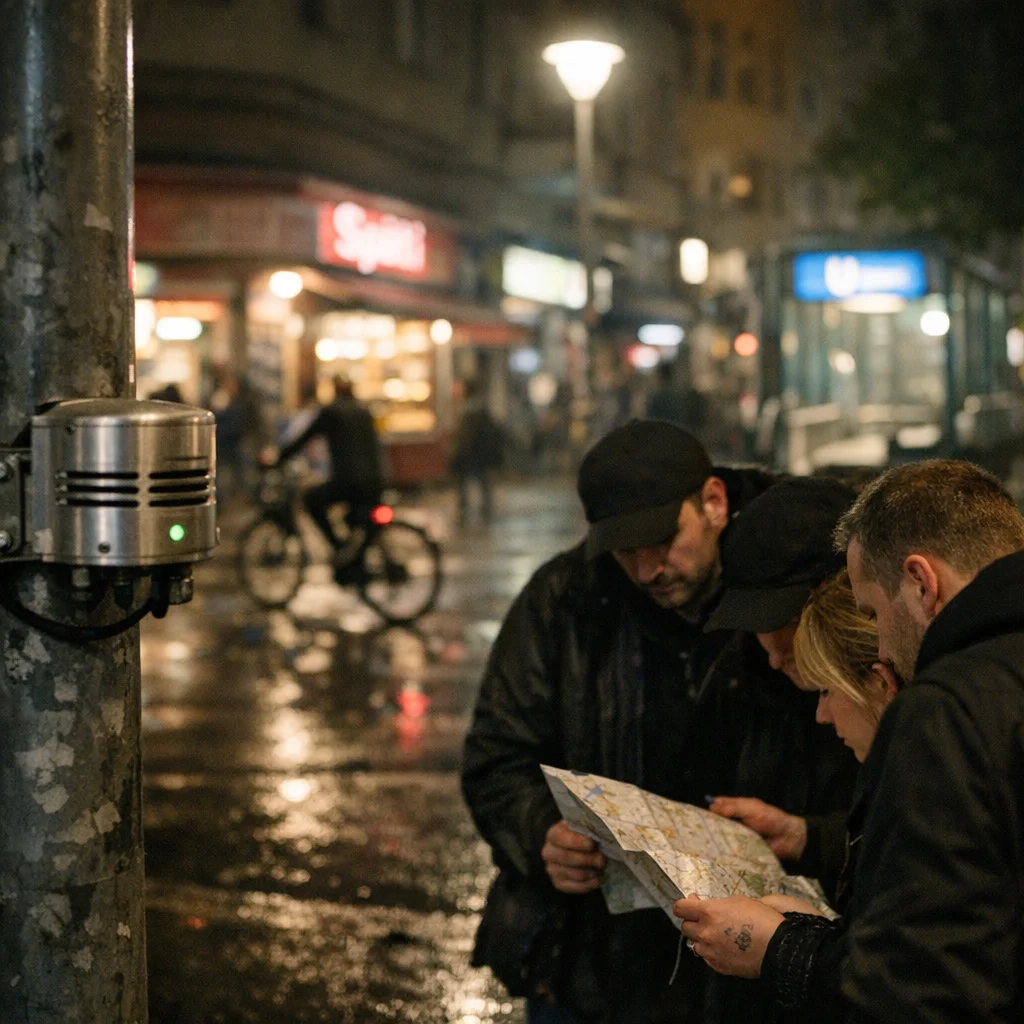
WEDDING—The district office this week unveiled what it called a “Bass Forecast,” a municipal bulletin that treats the neighborhood’s club basements like microclimates and the residents like disposable ear canals. The first map—printed on the same paper usually reserved for construction detours—marked pressure zones radiating from late-hour venues and BVG stations, with a red band labeled “Subwoofer Storm Likely.”
By early evening, the forecast had already found its true audience: the mid-30s arrivals who came to Berlin for techno, stayed for the stamp collections, and now live like divorced astronauts—still wearing mission patches for a mission that ended years ago. Outside a Späti, a group compared hand stamps the way other adults compare pediatrician appointments.
“I don’t even like it that loud anymore,” said Miles Hargrove, 36, clutching an energy drink like a court exhibit. “But the forecast said the drop would be heavy. I just… I had to be near it.” He paused, eyes scanning the map. “My therapist calls it ‘commitment issues.’ The city calls it ‘moderate turbulence.’”
The Bass Forecast’s surreal centerpiece is the Bassometer, a pole-mounted dial installed near key intersections that vibrates when the low end swells. A street musician on Müllerstraße reportedly synced his set to it, as if John Cage had been reborn as a municipal sensor with a hangover.
Around late evening, the map drove behavior that looked eerily like faith. People timed cigarette breaks, U-Bahn sprints, and emotional breakdowns around predicted bass fronts. A Turkish bakery owner, who asked to be identified only as Selma, watched a cluster of black-clad newcomers hover outside her window. “They buy one simit, then stand there for an hour like it’s a sacrament,” she said. “They’re waiting for the city to tell them when to feel alive.”
Police said no laws were broken, though officers acknowledged “increased sidewalk congregation and unusual facial expressions consistent with extended exposure to repetitive beats.” BVG issued a brief statement warning riders not to treat stations as “warm-up rooms” and reminded passengers that escalators are “not for interpretive stretching.”
Inside the scene, the identity crisis kept a firm grip on the rhythm. Some attendees described the forecast as “a public service,” others as “state-sponsored enabling,” and several asked whether the Bassometer could be adjusted for “emotional frequency,” preferably without asking anyone’s name.
The district office said the program will continue through the season, with additional Bassometers planned and a hotline for residents “experiencing unexpected early-morning clarity.” Next week’s forecast is expected to include a new warning category: “Extended Aftershock—May Cause Career Decisions.”