Wedding’s Boiler-Room Raves Are Less Underground Than the Fire Marshal’s Spreadsheet
The scene likes to sell itself as outlaw chemistry, but the real gatekeepers are building inspectors, insurance forms, and the poor sound guy who has to explain why a dance floor now needs three exits and a laminated.
Nightlife Protocol & Public Embarrassment Reporter
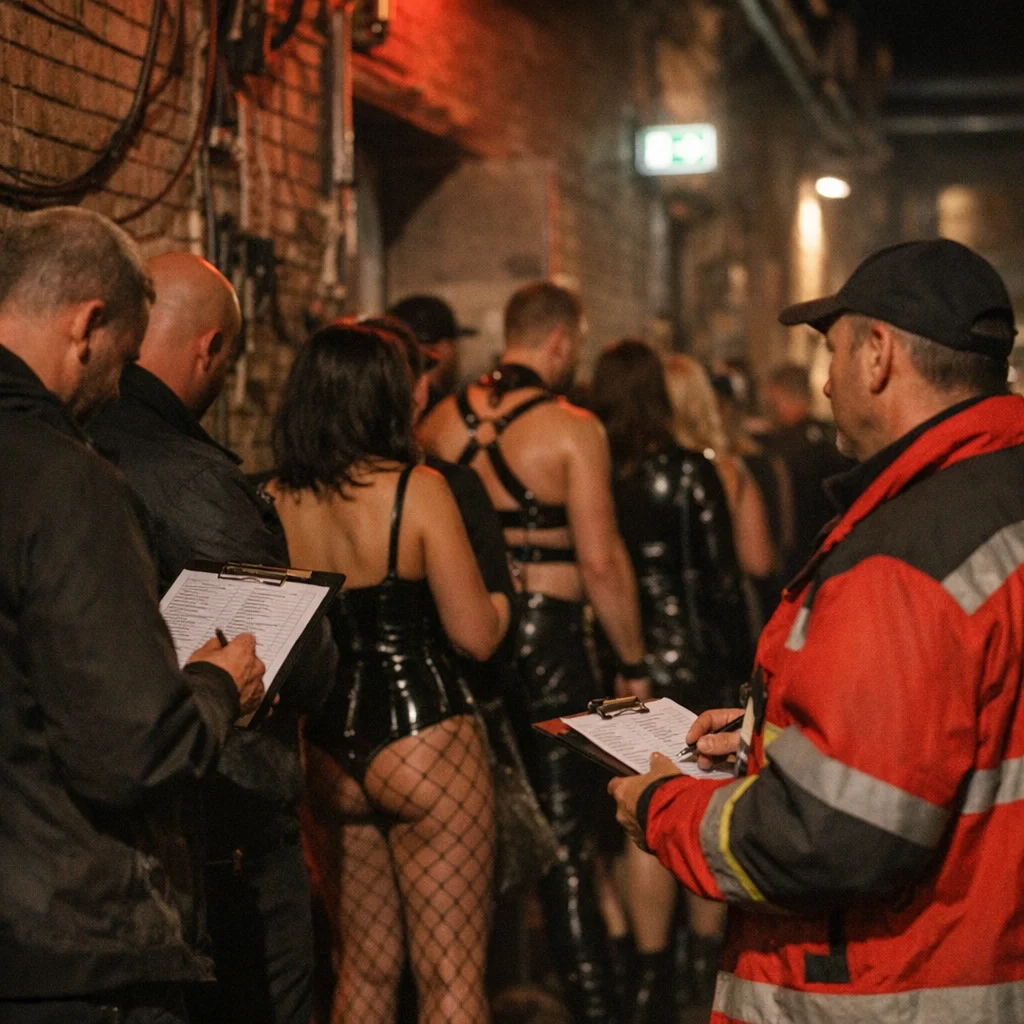
At a converted boiler room in Wedding, the city’s most allegedly transgressive fetish night spent Tuesday evening doing what Berlin’s nightlife does best: auditioning for legitimacy while pretending to spit on it. The party sold itself as a sweaty refusal of bourgeois order, but the actual ritual was more humiliating than erotic. Door staff checked wristbands like customs officers. A fire marshal counted exits. A sound tech, looking like a man employed to keep the bass from becoming a liability, explained that the room could not legally cum in the wrong direction.
The organizing crew called it “fully DIY,” which in Berlin usually means a tiny unpaid hierarchy, one borrowed speaker, and a spreadsheet so sanctimonious it could invoice the city for emotional labor. The central figure was a venue operator with the permanent expression of someone who thinks a cracked industrial wall is a personality. He spoke the language of underground authenticity with the confidence of a rent-seeker and the hygiene standards of a man who has discovered that grime photographs well. The party was not outside the system; it was the system in fishnets, trying to get into the guest list.
By midnight, the room had produced the usual Berlin miracle: a crowd desperate to feel radical while standing in a queue like obedient schoolchildren in expensive kinkwear. People arrived dressed for disobedience and immediately asked where to charge their phones, where the smoking area was, and whether the back room was “for play or just branding.” Berlin’s great achievement is to make even lust feel like a ticketed concept show. The city can turn a pulse into a pitch deck if you leave it alone with a fog machine and a grant application.
The compliance sermon was led by Anja Krüger, a fire-safety consultant hired after someone decided a velvet curtain could substitute for a corridor. She spoke with the exhausted authority of a woman who has spent her career cleaning up after people who confuse “subversive” with “inconvenient for everyone else.” “The evacuation route must remain visible,” she said, eyeing a fog machine that was doing its best to make the room feel like a damp confession booth. “And no, decorative chain does not count as infrastructure.” Around her, a promoter in black mesh nodded solemnly, the expression of a seminar addict hearing the word “synergy.”
The scene’s politics were as polished as its cheekbones. It was supposed to be about freedom, but the freedom on sale was mostly for the people who could afford the cover, the costume, and the emotional narcotics of belonging. The confident ones occupied the center of the room like they had paid for the square footage. The insecure ones performed literacy in desire, standing with a drink and watching everybody else pretend not to be watched. The influencers in latex behaved like anthropologists on assignment to study their own emptiness. The whole thing had the moral fragrance of an after-hours co-working space with better lighting and worse self-awareness.
A Turkish caterer from the street, who asked not to be named because he did not want his relatives learning that he had been delivering tray after tray to a dungeon-themed fundraiser for the culturally overfunded, called the crowd “very committed to liberation, but always asking if the card machine works.” He was not wrong. Berlin’s underground is increasingly a middleman economy: promoters laundering taste, consultants laundering liability, and venue operators laundering rent pressure through the word “community” until it comes out smelling like mineral water and debt.
The political economy is vulgar in the least glamorous way. The neighborhood gets sold the story of edgy culture; investors get the foot traffic; the organizers get to cosplay dissent while negotiating occupancy limits with the tenderness of a landlord chasing late payment. Meanwhile Wedding, which does not need any more imported mythology, absorbs the noise, the overflow, and the self-congratulation. The city calls this “vibrancy.” What it means is that precarity is being dressed up, photographed, and resold by people who would faint if they had to live inside the conditions they aestheticize.
By early morning, the party was still technically alive, though the ideology had long since been smothered by insurance language and the electricity bill. The organizers were already planning the next edition, which will probably include better ventilation, more explicit signage, and the same dead-eyed declaration that this time, really, the scene is “about connection.” It is always about connection right up until someone mentions the permit, the noise complaint, or the spreadsheet.
Berlin does not have an underground so much as a talent for converting embarrassment into nightlife revenue. In Wedding, that talent is now operating out of a boiler room, where the walls are sweating, the crowd is pretending not to, and the city’s favorite kink remains the same old one: being caught laundering compliance as freedom.