Wedding’s Café Receipt Printer Has Become a Political Office: Everyone Wants the Paper Trail, Nobody Wants the Bill
The neighborhood’s self-proclaimed progressive brunch crowd loves demanding transparency from small businesses right up until the moment the card terminal asks them to tip, split, or admit they came for the sourdough.
By Lena Veneer
Gentrification & Cultural Displacement Correspondent
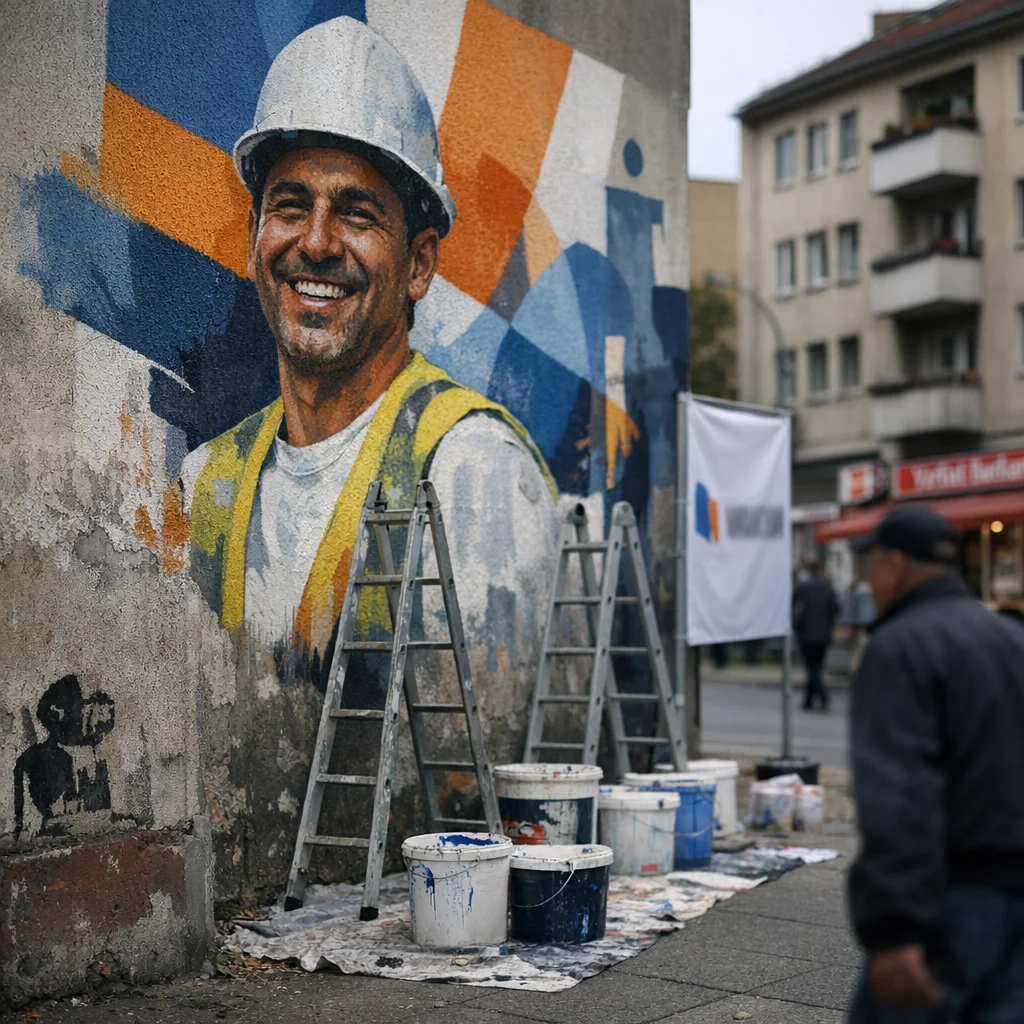
By the time the first corporate mural went up on a freshly renovated corner in Wedding, the neighborhood’s old street artists had already been informed that their work was “too expressive,” which in this city means too poor, too free, and too likely to survive contact with a property manager. What replaced it was a six-story face with the emotional depth of a procurement spreadsheet: a smiling logistics worker holding a reusable cup, rendered in colors so approved they looked pre-approved by legal and licked into shape by a focus group.
The real scandal is not that the murals are ugly, though some of them are offensively decorative in the way a tax shelter can be said to have a conscience. It is that they arrive with the full confidence of civic virtue and the metabolism of a marketing department that has discovered charity as foreplay. One wall near the canal now carries a giant abstract pattern commissioned by a fintech firm that claims to “honor local identity,” which in practice means hiring a designer from Mitte to simulate grit the way a perfume ad simulates sweat. The old tags underneath were not erased so much as nuzzled into aesthetic probation.
At the consultation meeting in a district office off Müllerstraße, residents were served coffee, little pastries, and the kind of patient humiliation usually reserved for children and tenants. A woman from a placemaking nonprofit smiled with both cheeks and told the room that objections were “valuable input,” which is the bureaucratic equivalent of being patted on the head while someone slips a hand into your pocket. A branding consultant with an expression like polished cutlery explained that the mural needed “warmth” and “community resonance,” as if the neighborhood were a mattress to be tested rather than a place where people pay too much for too little and still get called difficult.
“Street art used to be vandalism with an opinion,” said Mehmet Yildiz, who runs a Turkish kiosk nearby and has watched three different creative-culture rescue missions come and go. “Now the wall gets a sponsor, a launch event, and a statement about inclusion. Same narcissism, better lighting.” He requested anonymity because his nephew works in branding and would otherwise bring the entire family to the dinner table to defend the honor of a deck.
The beneficiaries are never mysterious. There are the district-office climbers who convert public boredom into career oxygen. There are the nonprofit placemakers, those professional believers in curated togetherness, forever arranging the neighborhood’s organs on a table and calling it participation. There are the branding consultants who speak in the dead language of authenticity while charging enough to make a dentist blush. And then there are the landlords, the calm little parasites in the background, cashing the check after the paint dries and acting as if the rent pressure was an act of weather.
The sequence is familiar because it is so lubricated. First comes the neighborhood consultation, where people say “community” until the word turns slick and obscene. Then the permits. Then the muralists hired through a tender process that somehow always produces the same three names and one smiling intern with a Behance portfolio and a body language that says they’ve already decided who matters. By the end, the wall is no longer saying anything; it is posing. A little like cultural democracy, if cultural democracy had been cornered by a communications agency, given a tote bag, and told to keep its hands visible.
Even the district office sounded faintly ashamed, which is rare enough to qualify as local weather. A spokesperson said the murals are intended to “improve visual quality” and support “cultural exchange.” That phrase has the same aroma as a gym locker room after closing time and a tax loophole after a corporate breakfast. One can almost admire the efficiency: rebellion is now easier to manage because it has been subcontracted, branded, and given a sponsor deck with soft gradients and a moral erection that never quite has to perform in public.
A longtime stencil artist who has been painting in Wedding for a decade said the issue is not taste but ownership. “They don’t hate street art,” she said. “They hate anything that can’t be monetized before lunch.”
For now, the old walls are vanishing under corporate confidence. The neighborhood gets its color, the firms get their virtue perfume, the consultants get to feel history rubbing against their thighs, and the artists get to watch their own visual language turned into the wallpaper of a district office lobby. The next permit hearing is scheduled for next month, which means the murals will probably be even cleaner by then—exactly the kind of sterilized seduction the people commissioning them mistake for culture.